THE ADVENTURE COLLECTIVE® · Independent discovery and booking for outdoor travel

Explore Luxor’s two compact but content-rich museums at your own pace with pre-paid entry and a private driver. Ideal for photographers and independent learners, this self-guided tour lets you linger over royal statuary, funerary objects, and mummification tools without a fixed schedule.
Explore Luxor’s two compact but content-rich museums at your own pace with pre-paid entry and a private driver. Ideal for photographers and independent learners, this self-guided tour lets you linger over royal statuary, funerary objects, and mummification tools without a fixed schedule.
The sun sits low over the Nile when you step from a cool, air-conditioned car onto Luxor’s palm-lined corniche — the city hums and ancient stone seems to hold its breath. Inside the museums, time slows; cases of gold and carved stone invite long looks, and the quiet lets you follow the artifacts at your own rhythm.
Verified experiences and guided adventures in the surrounding area.
Operated by Eyes of Egypt · Luxor, Luxor Governorate
The sun sits low over the Nile when you step from a cool, air-conditioned car onto Luxor’s palm-lined corniche — the city hums and ancient stone seems to hold its breath. Inside the museums, time slows; cases of gold and carved stone invite long looks, and the quiet lets you follow the artifacts at your own rhythm.
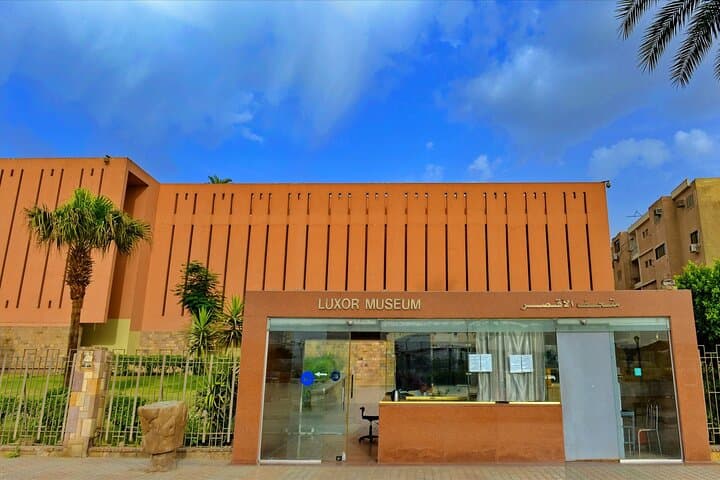
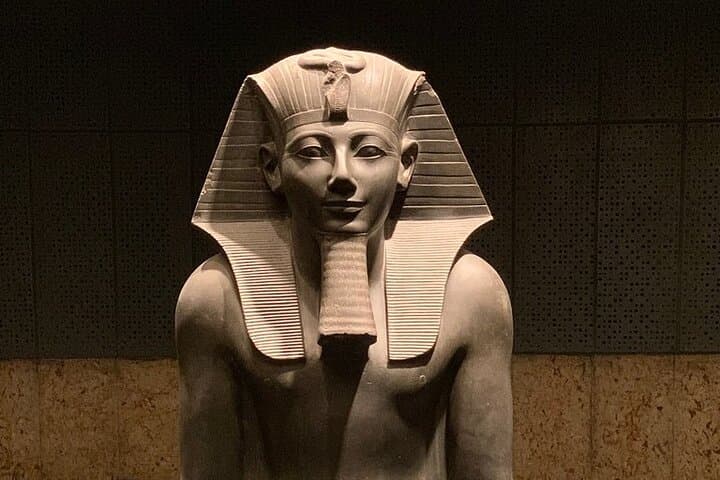
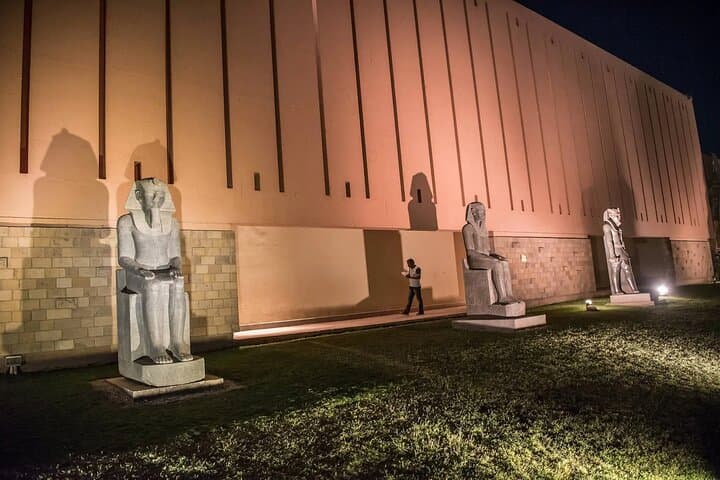
Luxor, once ancient Thebes, was the political and religious heart of Egypt’s New Kingdom. The Luxor Museum assembles statues, jewelry, and everyday objects recovered from the surrounding temples and tombs, while the Mummification Museum unpacks the ritualized science that prepared bodies for the afterlife. Geology and Nile floodplain dynamics made these monuments possible: mudbrick and limestone quarried locally, with sand preserving organic material for millennia.
Culture here is tactile — markets spill color near the museums, and local conservators work quietly to stabilize fragile wood, textile, and papyrus finds. Expect clear English labels; the self-guided format suits photographers, students, and travelers who value pace over commentary.
Practical notes: bookings include entry and a private driver who waits in the lot, so you control time spent in galleries without transit stress. Wear comfortable shoes for standing and pacing between exhibits, bring a wide-brim hat for short walks across the sunlit forecourts, and carry a water bottle — summer heat can be intense even when interiors are cool. Plan 3–4 hours to visit both museums without rushing, and leave space afterward for a slow coffee on the corniche or a walk toward Luxor Temple as evening light softens the stone.
easy.
3–4 hours.
Suitable for all fitness levels; requires walking and standing for 1–2 hours per museum
Yes — tickets for both Luxor Museum and the Mummification Museum are provided by your driver upon arrival.
No — exhibits have English labels and the tour is designed to be self-guided so you can explore at your own pace.
Accessible vehicles and assistance are listed as available; confirm any special requirements at booking so the driver can accommodate you.
Plan about 1.5–2 hours for each museum to read labels, photograph, and move at a relaxed pace.
Luxor grew from ancient Thebes, the New Kingdom capital where pharaohs built monumental temples and buried their dead across the river; many artifacts on display were excavated locally during 19th–20th century digs.
Museums in Luxor balance public access with conservation—avoid flash photography and do not touch objects; visitor pressure and climate control are ongoing preservation challenges.
Eyes of Egypt operates guided outdoor trips and adventures with an emphasis on safety, stewardship, and memorable experiences.
The sun sits low over the Nile when you step from a cool, air-conditioned car onto Luxor’s palm-lined corniche — the city hums and ancient stone seems to hold its breath. Inside the museums, time slows; cases of gold and carved stone invite long looks, and the quiet lets you follow the artifacts at your own rhythm.
The sun sits low over the Nile when you step from a cool, air-conditioned car onto Luxor’s palm-lined corniche — the city hums and ancient stone seems to hold its breath. Inside the museums, time slows; cases of gold and carved stone invite long looks, and the quiet lets you follow the artifacts at your own rhythm.
Luxor, once ancient Thebes, was the political and religious heart of Egypt’s New Kingdom. The Luxor Museum assembles statues, jewelry, and everyday objects recovered from the surrounding temples and tombs, while the Mummification Museum unpacks the ritualized science that prepared bodies for the afterlife. Geology and Nile floodplain dynamics made these monuments possible: mudbrick and limestone quarried locally, with sand preserving organic material for millennia.
Culture here is tactile — markets spill color near the museums, and local conservators work quietly to stabilize fragile wood, textile, and papyrus finds. Expect clear English labels; the self-guided format suits photographers, students, and travelers who value pace over commentary.
Practical notes: bookings include entry and a private driver who waits in the lot, so you control time spent in galleries without transit stress. Wear comfortable shoes for standing and pacing between exhibits, bring a wide-brim hat for short walks across the sunlit forecourts, and carry a water bottle — summer heat can be intense even when interiors are cool. Plan 3–4 hours to visit both museums without rushing, and leave space afterward for a slow coffee on the corniche or a walk toward Luxor Temple as evening light softens the stone.