THE ADVENTURE COLLECTIVE® · Independent discovery and booking for outdoor travel

Trace 2,000 years of commerce on a self-guided walking tour from London Bridge to St. Paul’s. This GPS-driven route reveals the City’s Roman roots, rebuilding after the Great Fire, and the skyscrapers that define today’s financial skyline.
Trace 2,000 years of commerce on a self-guided walking tour from London Bridge to St. Paul’s. This GPS-driven route reveals the City’s Roman roots, rebuilding after the Great Fire, and the skyscrapers that define today’s financial skyline.
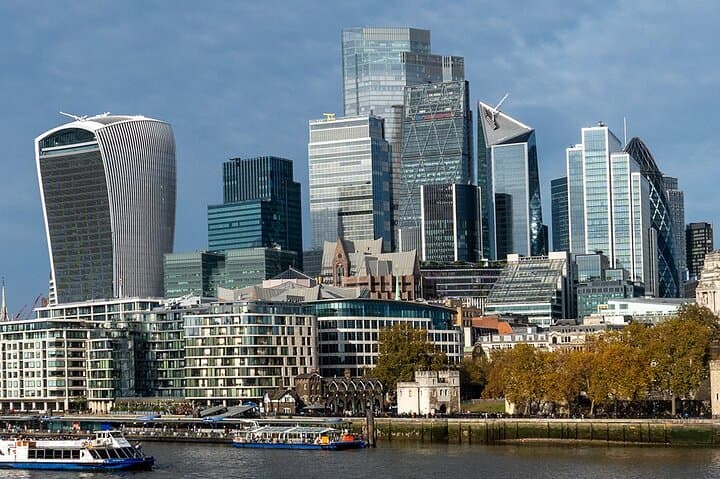
Morning light slides across the River Thames as the walk begins at London Bridge — commuters stream past, gulls wheel above, and the city’s stones already hum with centuries of trade. This self-guided route threads Roman Londinium into modern glass towers: follow narrow alleys from the Monument to the Great Fire of 1666, through the covered arcades of Leadenhall Market, and beneath the cantilevered silhouette of the Walkie-Talkie and the curving glass of the Gherkin.
Verified experiences and guided adventures in the surrounding area.
Operated by VoiceMap Audio Tours · London, Greater London
Morning light slides across the River Thames as the walk begins at London Bridge — commuters stream past, gulls wheel above, and the city’s stones already hum with centuries of trade. This self-guided route threads Roman Londinium into modern glass towers: follow narrow alleys from the Monument to the Great Fire of 1666, through the covered arcades of Leadenhall Market, and beneath the cantilevered silhouette of the Walkie-Talkie and the curving glass of the Gherkin.
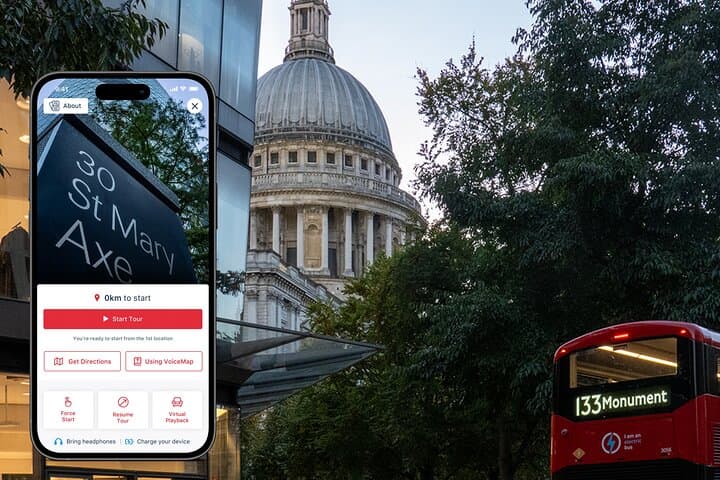
London’s story here is geological and civic: built on Thames alluvium and Roman street lines, the City evolved from a marshy crossing to a global finance center. Architectural shifts — from Wren’s neoclassical St. Paul’s dome to Victorian market halls and high-tech skyscrapers — trace changes in commerce, insurance, and empire. Along the way, local customs persist: market stalls, insurance plaques, and the hushed ceremonial spaces of Guildhall speak to civic ritual.
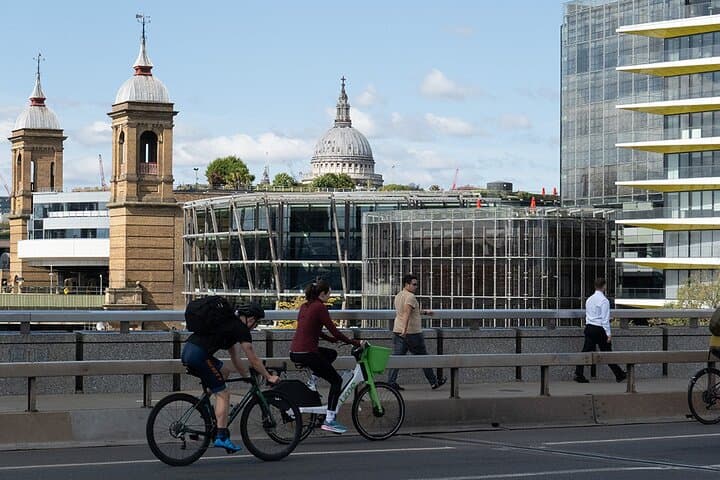
Practical guidance: expect 1.5–2 hours of mostly flat, paved walking with frequent photo stops. The route is fully accessible and easy underfoot but can be busy during commute hours; plan mornings or late afternoons for smaller crowds. Use the app’s offline maps and carry a portable charger — GPS prompts will guide you precisely. Stay aware of traffic on bridge approaches and keep to pedestrian crossings.
This tour suits history buffs and architecture fans who prefer moving at their own pace; it’s an urban walk that reads the City’s ledger in stone and glass while giving practical tools to explore confidently.
easy.
1.5–2 hours.
Suitable for most fitness levels; primarily flat urban walking with frequent stops
No — it’s self-guided with GPS, maps, and audio in English so you can explore at your own pace.
Plan 90–120 minutes of mostly flat walking with short inclines; it’s rated easy and accessible.
Yes — the itinerary and included access notes indicate wheelchair- and stroller-friendly surfaces throughout.
Early morning or late afternoon avoids peak tourist and commuter crowds and provides favorable light for photos.
This area grew from Roman Londinium and was reshaped after the Great Fire of 1666, a catastrophe that also accelerated modern insurance and urban rebuilding.
Stick to paved paths, avoid touching fragile historic surfaces, and use public transport to reduce congestion and emissions in the City.
VoiceMap Audio Tours operates guided outdoor trips and adventures with an emphasis on safety, stewardship, and memorable experiences.

Morning light slides across the River Thames as the walk begins at London Bridge — commuters stream past, gulls wheel above, and the city’s stones already hum with centuries of trade. This self-guided route threads Roman Londinium into modern glass towers: follow narrow alleys from the Monument to the Great Fire of 1666, through the covered arcades of Leadenhall Market, and beneath the cantilevered silhouette of the Walkie-Talkie and the curving glass of the Gherkin.
Morning light slides across the River Thames as the walk begins at London Bridge — commuters stream past, gulls wheel above, and the city’s stones already hum with centuries of trade. This self-guided route threads Roman Londinium into modern glass towers: follow narrow alleys from the Monument to the Great Fire of 1666, through the covered arcades of Leadenhall Market, and beneath the cantilevered silhouette of the Walkie-Talkie and the curving glass of the Gherkin.
London’s story here is geological and civic: built on Thames alluvium and Roman street lines, the City evolved from a marshy crossing to a global finance center. Architectural shifts — from Wren’s neoclassical St. Paul’s dome to Victorian market halls and high-tech skyscrapers — trace changes in commerce, insurance, and empire. Along the way, local customs persist: market stalls, insurance plaques, and the hushed ceremonial spaces of Guildhall speak to civic ritual.
Practical guidance: expect 1.5–2 hours of mostly flat, paved walking with frequent photo stops. The route is fully accessible and easy underfoot but can be busy during commute hours; plan mornings or late afternoons for smaller crowds. Use the app’s offline maps and carry a portable charger — GPS prompts will guide you precisely. Stay aware of traffic on bridge approaches and keep to pedestrian crossings.
This tour suits history buffs and architecture fans who prefer moving at their own pace; it’s an urban walk that reads the City’s ledger in stone and glass while giving practical tools to explore confidently.