THE ADVENTURE COLLECTIVE® · Independent discovery and booking for outdoor travel

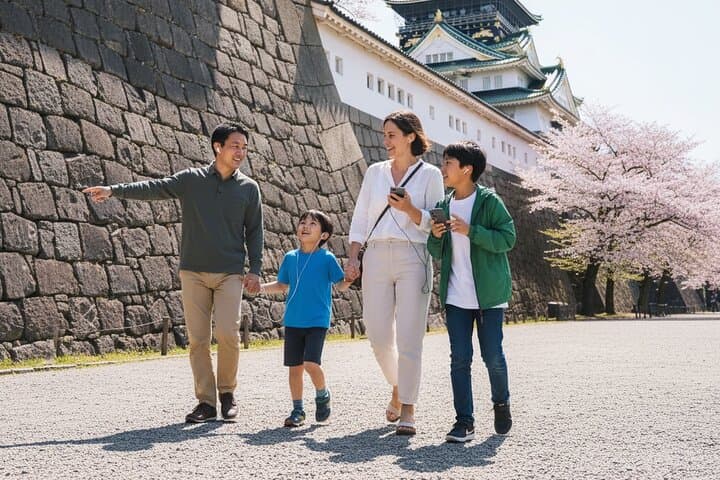
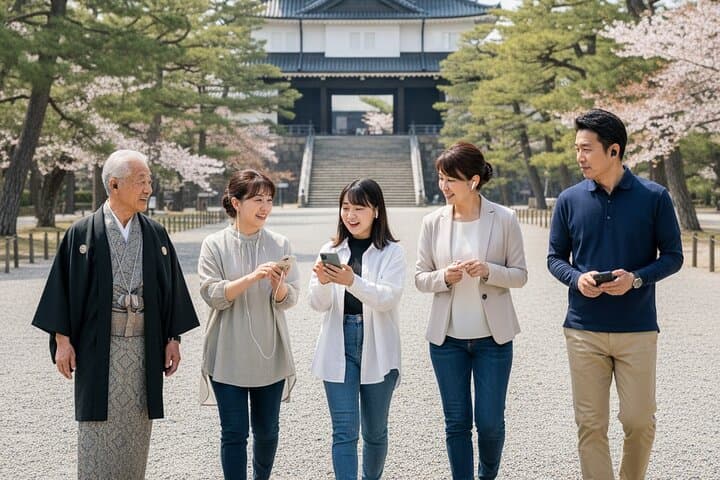
Move through Kyoto on your own terms with a 23-stop self-guided audio tour. Expert narration illuminates temples, shrines, and historic streets while an interactive map gives you the freedom to pace the day.
Move through Kyoto on your own terms with a 23-stop self-guided audio tour. Expert narration illuminates temples, shrines, and historic streets while an interactive map gives you the freedom to pace the day.
You step out from beneath Kyoto Station's glass canopy and the city unfolds like a living museum: narrow lanes lined with wooden machiya, the bright vermilion of torii gates, and the hush of temple gardens where gravel has been raked for centuries.
Verified experiences and guided adventures in the surrounding area.
Operated by Uvamai Niche Tourism · Kyoto, Kyoto Prefecture
You step out from beneath Kyoto Station's glass canopy and the city unfolds like a living museum: narrow lanes lined with wooden machiya, the bright vermilion of torii gates, and the hush of temple gardens where gravel has been raked for centuries.
This self-guided audio experience threads through Kyoto’s imperial-era center—once Japan’s capital from 794 to 1868—explaining the architecture, rituals, and social history that shaped each site. Geology plays a quiet role here: low hills of volcanic and sedimentary rock sculpt the city’s river valleys and temple terraces, while springs and canals historically determined settlement and shrine placement. The narration highlights cultural details most guidebooks miss—shrine offerings, temple garden principles, and the social meanings of machiya townhouses.
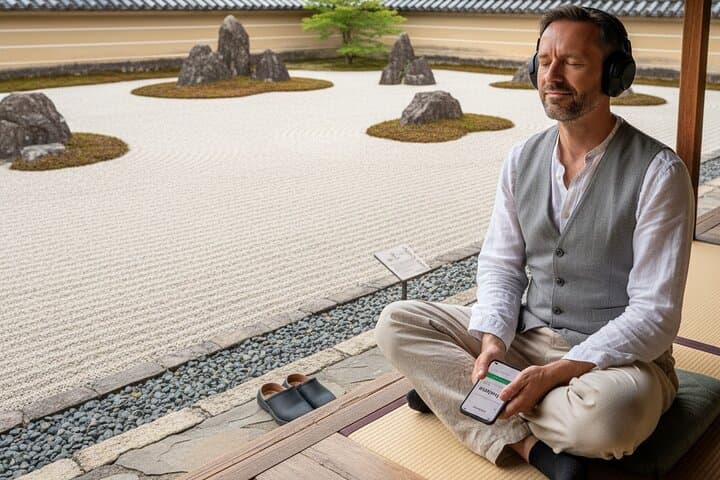
Expect flexible pacing: the package includes 23 short audio segments and an interactive map you control. Listen at a shrine’s gate or on a bench by a reflecting pond; follow the suggested order or pick highlights—Fushimi Inari’s torii tunnels, the Zen gardens of Ryoan-ji, or the Golden Pavilion’s reflective pond.
Practical edge: wear comfortable walking shoes for uneven stone paths, carry a charged phone and headphones, and budget time for lines at major temples. Public transport links are abundant—buses and subway lines place most stops within short rides—but central Kyoto is eminently walkable if you prefer to drift between neighborhoods. Aim to split the full route across a couple of days to reduce fatigue and better catch seasonal changes in foliage and light.
easy.
3–9 hours.
Light to moderate—suitable for people comfortable walking several kilometers and climbing stairs; not strenuous.
On your tour date you'll receive two private links: one to a SoundCloud playlist for audio files and one to a Google My Maps itinerary—open both in your phone browser.
You can begin at any point and listen to segments in any sequence; the suggested order is optional and designed for flow.
The guides are hosted online; download or pre-play tracks you expect to use and screenshot the map for offline backup.
Audio access is included, but any temple or garden admission fees, transport fares, and meals are paid separately.
Kyoto served as Japan’s imperial capital for over a millennium (794–1868), and many temples and shrines preserve urban layouts and rituals from those eras.
Respect sacred spaces by following posted rules, avoid touching artifacts, and support local conservation by using marked paths and not feeding wildlife.
Uvamai Niche Tourism operates guided outdoor trips and adventures with an emphasis on safety, stewardship, and memorable experiences.
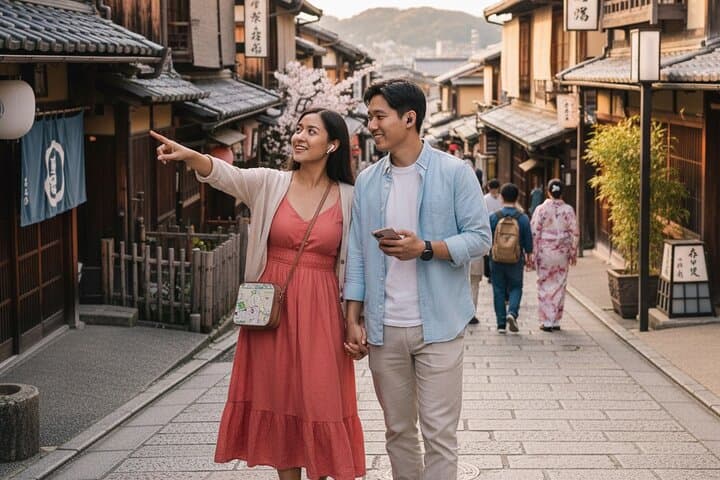
You step out from beneath Kyoto Station's glass canopy and the city unfolds like a living museum: narrow lanes lined with wooden machiya, the bright vermilion of torii gates, and the hush of temple gardens where gravel has been raked for centuries.
You step out from beneath Kyoto Station's glass canopy and the city unfolds like a living museum: narrow lanes lined with wooden machiya, the bright vermilion of torii gates, and the hush of temple gardens where gravel has been raked for centuries.
This self-guided audio experience threads through Kyoto’s imperial-era center—once Japan’s capital from 794 to 1868—explaining the architecture, rituals, and social history that shaped each site. Geology plays a quiet role here: low hills of volcanic and sedimentary rock sculpt the city’s river valleys and temple terraces, while springs and canals historically determined settlement and shrine placement. The narration highlights cultural details most guidebooks miss—shrine offerings, temple garden principles, and the social meanings of machiya townhouses.
Expect flexible pacing: the package includes 23 short audio segments and an interactive map you control. Listen at a shrine’s gate or on a bench by a reflecting pond; follow the suggested order or pick highlights—Fushimi Inari’s torii tunnels, the Zen gardens of Ryoan-ji, or the Golden Pavilion’s reflective pond.
Practical edge: wear comfortable walking shoes for uneven stone paths, carry a charged phone and headphones, and budget time for lines at major temples. Public transport links are abundant—buses and subway lines place most stops within short rides—but central Kyoto is eminently walkable if you prefer to drift between neighborhoods. Aim to split the full route across a couple of days to reduce fatigue and better catch seasonal changes in foliage and light.