THE ADVENTURE COLLECTIVE® · Independent discovery and booking for outdoor travel

Walk the compact heart of Koblenz at your own pace with a GPS audio guide in seven languages. This 5.3 km self-guided route visits the German Corner, St. Castor, the Ludwig Museum and tucked-away squares, with flexible timing and 33 narrated stops.
Walk the compact heart of Koblenz at your own pace with a GPS audio guide in seven languages. This 5.3 km self-guided route visits the German Corner, St. Castor, the Ludwig Museum and tucked-away squares, with flexible timing and 33 narrated stops.
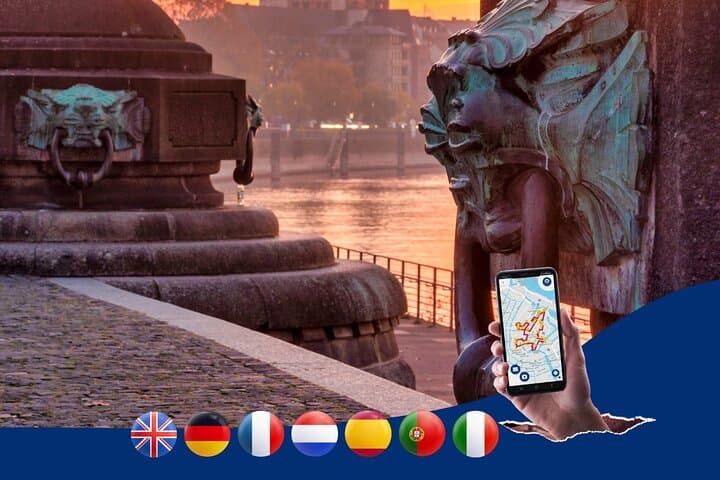
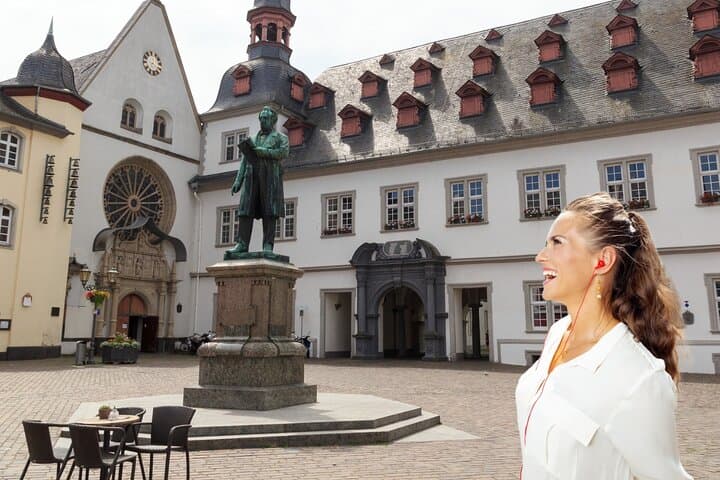
You step off the bridge and the river opens: two currents meet with a soft, persistent hush where the Rhine takes the Moselle into itself. Cobblestones lead you past a horse-mounted emperor at the German Corner and down narrow streets where Baroque facades lean in with stories.
Verified experiences and guided adventures in the surrounding area.
Operated by City App Tour · Koblenz, Rheinland-Pfalz
You step off the bridge and the river opens: two currents meet with a soft, persistent hush where the Rhine takes the Moselle into itself. Cobblestones lead you past a horse-mounted emperor at the German Corner and down narrow streets where Baroque facades lean in with stories.
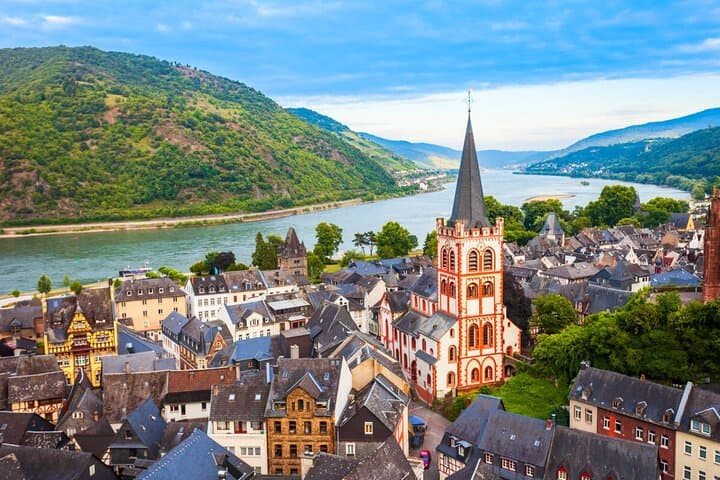
This self-guided audio walk threads 5.3 km through Koblenz’s compact center, passing St. Castor Basilica, the Ludwig Museum, Jesuitenplatz and the Four Towers. The route follows layers of history — Roman settlement, medieval fortifications and 19th-century nationalism — all readable in the city walls and river embankments. Geologically, you’re in the Middle Rhine Valley, a corridor carved by glacial melt and river erosion; the confluence here shaped trade and strategic defenses for centuries.
Culturally, Koblenz is both river town and regional cathedral: cafés spill into squares, museums host rotating contemporary shows, and local markets concentrate around Florinsmarkt. The audio guide’s 33 stops let you pause for a coffee, duck into a museum, or linger at viewpoints over the confluence.
Practical edge: the walk takes about 2–3 hours at a steady pace, but you have until the end of the next day to finish. Bring headphones, a charged phone (or powerbank), and comfortable shoes for mixed paving. Expect GPS prompts and short narrative segments — you control the tempo. Peak times are late morning and early evening for softer light and fewer tour groups. Respect historic sites, watch for cyclists, and plan a café stop—Koblenz rewards slow curiosity.
easy.
2–3 hours (flexible until next day).
Suitable for anyone comfortable walking 5 km over mixed city pavement; frequent stops reduce exertion
No — while the walk is about 2–3 hours, you have until the end of the next day to complete all stops.
Yes — narration is available in seven languages selectable in the app.
The activity requires GPS and generally an internet connection; download any offline content and ensure your phone is charged.
Much of central Koblenz has level pavements, but cobbles and steps at some historic sites can limit full accessibility; check specific stops before visiting.
Koblenz grew at the strategic confluence of the Rhine and Moselle; the German Corner and nearby fortifications reflect centuries of trade and military importance.
Riverbank restoration and regulated river traffic aim to protect aquatic habitats; follow signage and avoid feeding wildlife to minimize impact.
City App Tour operates guided outdoor trips and adventures with an emphasis on safety, stewardship, and memorable experiences.
You step off the bridge and the river opens: two currents meet with a soft, persistent hush where the Rhine takes the Moselle into itself. Cobblestones lead you past a horse-mounted emperor at the German Corner and down narrow streets where Baroque facades lean in with stories.
You step off the bridge and the river opens: two currents meet with a soft, persistent hush where the Rhine takes the Moselle into itself. Cobblestones lead you past a horse-mounted emperor at the German Corner and down narrow streets where Baroque facades lean in with stories.
This self-guided audio walk threads 5.3 km through Koblenz’s compact center, passing St. Castor Basilica, the Ludwig Museum, Jesuitenplatz and the Four Towers. The route follows layers of history — Roman settlement, medieval fortifications and 19th-century nationalism — all readable in the city walls and river embankments. Geologically, you’re in the Middle Rhine Valley, a corridor carved by glacial melt and river erosion; the confluence here shaped trade and strategic defenses for centuries.
Culturally, Koblenz is both river town and regional cathedral: cafés spill into squares, museums host rotating contemporary shows, and local markets concentrate around Florinsmarkt. The audio guide’s 33 stops let you pause for a coffee, duck into a museum, or linger at viewpoints over the confluence.
Practical edge: the walk takes about 2–3 hours at a steady pace, but you have until the end of the next day to finish. Bring headphones, a charged phone (or powerbank), and comfortable shoes for mixed paving. Expect GPS prompts and short narrative segments — you control the tempo. Peak times are late morning and early evening for softer light and fewer tour groups. Respect historic sites, watch for cyclists, and plan a café stop—Koblenz rewards slow curiosity.