THE ADVENTURE COLLECTIVE® · Independent discovery and booking for outdoor travel

Walk Jaipur’s walled city at your own pace with an app-guided 90-minute route that links Chandpol Gate, Johari Bazaar, Hawa Mahal and hidden havelis. Learn the planning, craft, and stories behind the pink façades while keeping practical tips for timing and navigation in mind.
Walk Jaipur’s walled city at your own pace with an app-guided 90-minute route that links Chandpol Gate, Johari Bazaar, Hawa Mahal and hidden havelis. Learn the planning, craft, and stories behind the pink façades while keeping practical tips for timing and navigation in mind.
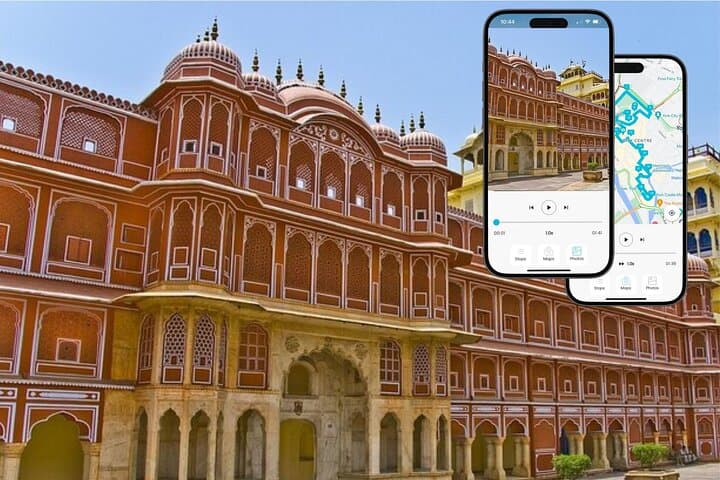
Morning light slides across a honey-colored façade and the narrow lanes of Jaipur’s walled city wake in a chorus of bicycle bells and vendor calls. Follow an app-guided route and the city rearranges itself into a readable map of power and craft—gates that marked processions, lanes where lac workers hammer jewelry, and courtyards that once sheltered royal households.
Verified experiences and guided adventures in the surrounding area.
Operated by Tourific · Jaipur, Rajasthan
Morning light slides across a honey-colored façade and the narrow lanes of Jaipur’s walled city wake in a chorus of bicycle bells and vendor calls. Follow an app-guided route and the city rearranges itself into a readable map of power and craft—gates that marked processions, lanes where lac workers hammer jewelry, and courtyards that once sheltered royal households.
Founded in 1727 as India’s first planned city, Jaipur’s grid and painted pink walls reflect Maharaja Sawai Jai Singh II’s intent to combine astronomy, defense and civic order. The geology of the region—arid plains edging the Aravalli foothills—keeps the streets bright and dry most of the year, while sandstone and lime plaster define the city’s palette. Culture here is tactile: craftsmen at open windows, spice-scented bazaars, and an everyday rhythm of bargaining and blessing.
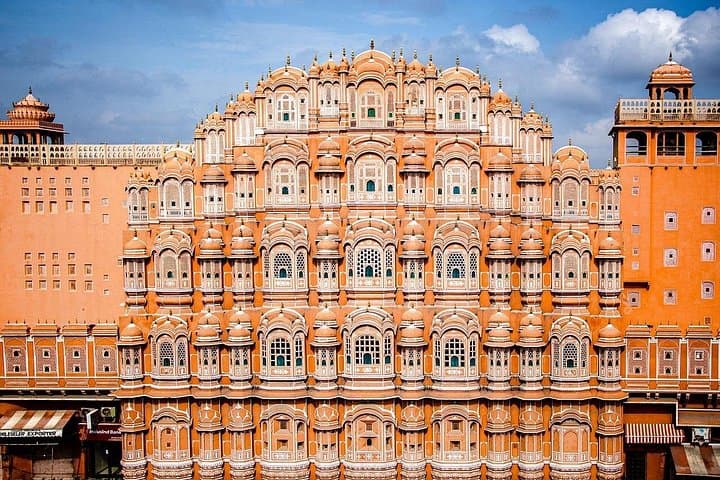
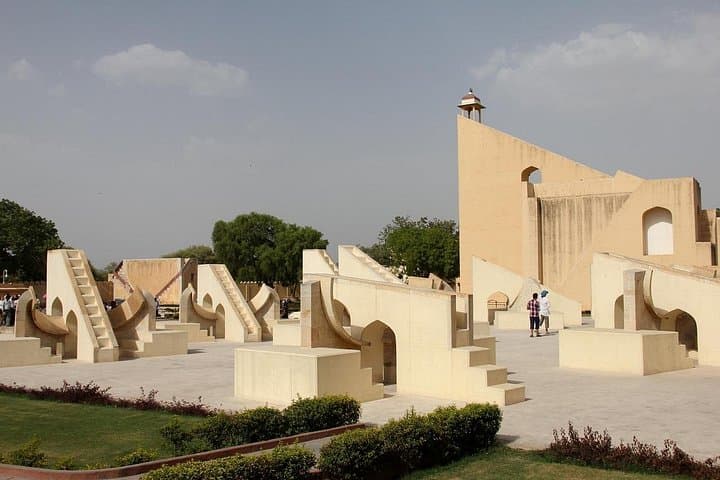
This 90-minute self-guided walk centers on Chandpol Gate, the jewelry lanes of Johari Bazaar, and the airy façade of Hawa Mahal, with optional stops at a temple and an observatory. Expect paved streets, irregular flagstones, and packed crowds during peak hours; elevation gain is negligible but the route covers roughly 2–3 km of stop-and-start exploration.
Practical edge: download the tour for offline use, go early to beat heat and traffic, wear closed shoes for cobbles, and keep a reusable water bottle and small change for purchases. Respect local dress near temples and be ready to slow your pace—Jaipur’s charms reveal themselves between shops, through gateways, and in the quiet of ancestral courtyards.
easy.
1–2 hours.
Suitable for most fitness levels; expect walking on flat but uneven urban surfaces
The guided route is designed for about 90 minutes and covers roughly 2–3 km with frequent stops at sights and markets.
No—this tour offers offline access once downloaded, including maps and audio for navigation without data.
Yes; the route is flat and family-friendly, but watch for crowds and uneven paving—take breaks as needed.
This is a self-guided experience; major monuments like the City Palace or Jantar Mantar have separate entrance fees if you choose to enter.
Jaipur was laid out in a grid by Sawai Jai Singh II in 1727; its pink color dates to a 19th‑century ceremonial repainting for a royal visit and has become the city’s signature.
Tourism centers should avoid blocking artisan workshops; support local crafts with fair purchases and minimize plastic waste in busy market streets.
Tourific operates guided outdoor trips and adventures with an emphasis on safety, stewardship, and memorable experiences.
Morning light slides across a honey-colored façade and the narrow lanes of Jaipur’s walled city wake in a chorus of bicycle bells and vendor calls. Follow an app-guided route and the city rearranges itself into a readable map of power and craft—gates that marked processions, lanes where lac workers hammer jewelry, and courtyards that once sheltered royal households.
Morning light slides across a honey-colored façade and the narrow lanes of Jaipur’s walled city wake in a chorus of bicycle bells and vendor calls. Follow an app-guided route and the city rearranges itself into a readable map of power and craft—gates that marked processions, lanes where lac workers hammer jewelry, and courtyards that once sheltered royal households.
Founded in 1727 as India’s first planned city, Jaipur’s grid and painted pink walls reflect Maharaja Sawai Jai Singh II’s intent to combine astronomy, defense and civic order. The geology of the region—arid plains edging the Aravalli foothills—keeps the streets bright and dry most of the year, while sandstone and lime plaster define the city’s palette. Culture here is tactile: craftsmen at open windows, spice-scented bazaars, and an everyday rhythm of bargaining and blessing.
This 90-minute self-guided walk centers on Chandpol Gate, the jewelry lanes of Johari Bazaar, and the airy façade of Hawa Mahal, with optional stops at a temple and an observatory. Expect paved streets, irregular flagstones, and packed crowds during peak hours; elevation gain is negligible but the route covers roughly 2–3 km of stop-and-start exploration.
Practical edge: download the tour for offline use, go early to beat heat and traffic, wear closed shoes for cobbles, and keep a reusable water bottle and small change for purchases. Respect local dress near temples and be ready to slow your pace—Jaipur’s charms reveal themselves between shops, through gateways, and in the quiet of ancestral courtyards.