THE ADVENTURE COLLECTIVE® · Independent discovery and booking for outdoor travel

Follow the footsteps of history through Whitechapel and Spitalfields with a self‑guided audio tour. Explore 40+ narration points from Gunthorpe Street to the Ten Bells while an offline map guides each stop.
Follow the footsteps of history through Whitechapel and Spitalfields with a self‑guided audio tour. Explore 40+ narration points from Gunthorpe Street to the Ten Bells while an offline map guides each stop.
A cold streetlight flickers over Gunthorpe Street as you tap the app and step from modern white noise into a sprawl of narrow alleys where gaslight would have once cast longer shadows. The tour threads from Flower and Dean Walk to Brick Lane, pausing at Mitre Square and the Ten Bells as the city’s brick facades and Victorian doorways press close.
Verified experiences and guided adventures in the surrounding area.
Operated by Trippy Tour Guide · London, England
A cold streetlight flickers over Gunthorpe Street as you tap the app and step from modern white noise into a sprawl of narrow alleys where gaslight would have once cast longer shadows. The tour threads from Flower and Dean Walk to Brick Lane, pausing at Mitre Square and the Ten Bells as the city’s brick facades and Victorian doorways press close.
This route is history in the raw: late‑19th‑century Whitechapel, built atop London Clay and marshy flats near the warming Thames, where boomtown poverty concentrated lodging houses and informal trades. The Jack the Ripper story sits inside a larger cultural context — migration, the East End’s rag trade, and rapid urban change — and the self‑guided audio places individual crime scenes inside those social forces.
Expect a mix of quiet backstreets, brick courtyards, and the bustle of Spitalfields Market. The app delivers 40+ narration points and an offline map, so you control pace and linger where the stone and ironwork attract you. Architectural notes — Georgian terraces on Fournier Street, Victorian market roofing — contrast with the modern curry houses and street art of Brick Lane.
Practical edge: allow two to three hours, wear supportive shoes for uneven paving, and avoid late‑night solo wandering in dim lanes. The tour is family‑sensitive but contains graphic historic detail; plan timing accordingly. Keep your phone charged and respect pub interiors and memorial sites as you move through one of London’s most literate, and still haunted, neighborhoods.
easy.
2–3 hours.
Suitable for most fitness levels; requires ability to walk on uneven pavement for a few hours.
It’s self‑guided: the tour runs through the Trippy Tour Guide app with 40+ audio stops and an offline map so you proceed at your own pace.
Plan for about 2–3 hours depending on how often you stop; the app timestamps suggest variable durations for each stop.
The tour contains graphic historical detail; participants under 18 should be accompanied by an adult and some stops may be skipped for younger audiences.
Yes—Whitechapel and Spitalfields are served by multiple Tube and bus lines; the app includes directions and public transport access nearby.
Whitechapel in 1888 was a densely populated, working‑class district where poverty, immigration, and rapid urbanization shaped daily life and set the stage for the Ripper murders.
Preserve historic doorways, plaques and memorials by avoiding graffiti and littering; support local businesses and heritage groups that maintain these streets.
Trippy Tour Guide operates guided outdoor trips and adventures with an emphasis on safety, stewardship, and memorable experiences.


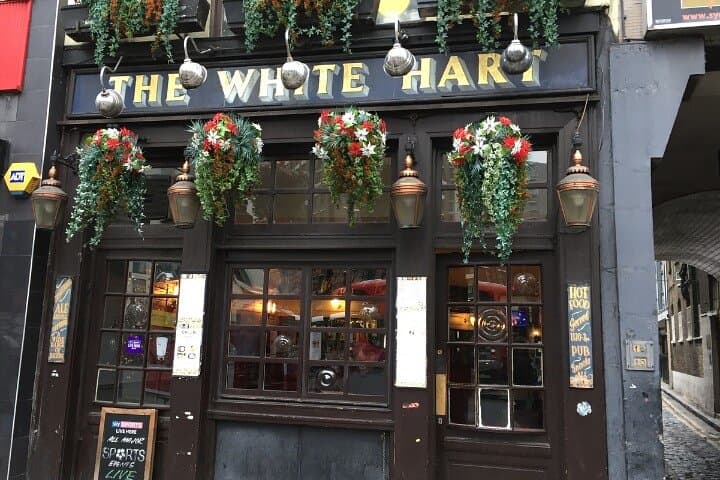

A cold streetlight flickers over Gunthorpe Street as you tap the app and step from modern white noise into a sprawl of narrow alleys where gaslight would have once cast longer shadows. The tour threads from Flower and Dean Walk to Brick Lane, pausing at Mitre Square and the Ten Bells as the city’s brick facades and Victorian doorways press close.
A cold streetlight flickers over Gunthorpe Street as you tap the app and step from modern white noise into a sprawl of narrow alleys where gaslight would have once cast longer shadows. The tour threads from Flower and Dean Walk to Brick Lane, pausing at Mitre Square and the Ten Bells as the city’s brick facades and Victorian doorways press close.
This route is history in the raw: late‑19th‑century Whitechapel, built atop London Clay and marshy flats near the warming Thames, where boomtown poverty concentrated lodging houses and informal trades. The Jack the Ripper story sits inside a larger cultural context — migration, the East End’s rag trade, and rapid urban change — and the self‑guided audio places individual crime scenes inside those social forces.
Expect a mix of quiet backstreets, brick courtyards, and the bustle of Spitalfields Market. The app delivers 40+ narration points and an offline map, so you control pace and linger where the stone and ironwork attract you. Architectural notes — Georgian terraces on Fournier Street, Victorian market roofing — contrast with the modern curry houses and street art of Brick Lane.
Practical edge: allow two to three hours, wear supportive shoes for uneven paving, and avoid late‑night solo wandering in dim lanes. The tour is family‑sensitive but contains graphic historic detail; plan timing accordingly. Keep your phone charged and respect pub interiors and memorial sites as you move through one of London’s most literate, and still haunted, neighborhoods.