THE ADVENTURE COLLECTIVE® · Independent discovery and booking for outdoor travel

Walk Savannah on your own timetable: start at the river, pass cathedral spires and shaded squares, and let GPS-triggered audio narrate the city’s colonial layout, cotton-era mansions, and quieter corners. Download the app, lace up comfortable shoes, and plan 1.5–2 hours for the full loop.
Walk Savannah on your own timetable: start at the river, pass cathedral spires and shaded squares, and let GPS-triggered audio narrate the city’s colonial layout, cotton-era mansions, and quieter corners. Download the app, lace up comfortable shoes, and plan 1.5–2 hours for the full loop.
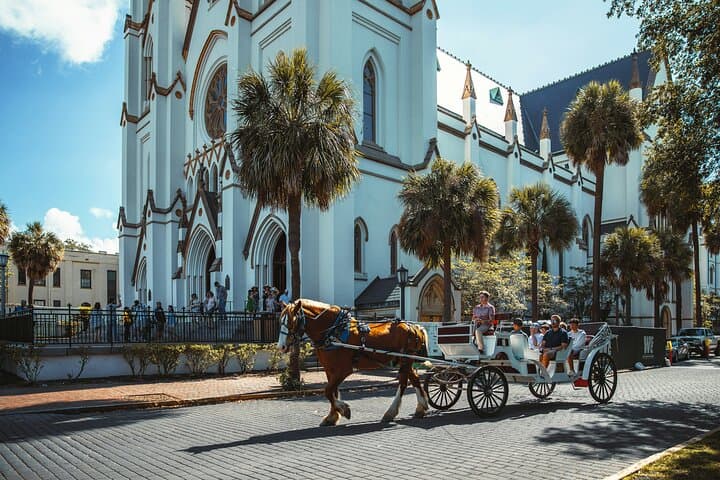
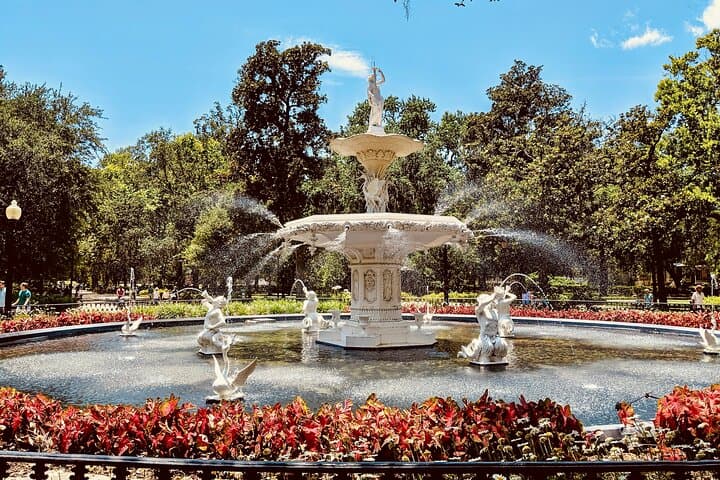
You step off the cobblestones at Rousakis Riverfront Plaza and the river exhales—boats push the current, gulls argue overhead, and brick warehouses climb the bluff like old ledgers. The walk unfolds as a sequence of rooms: shaded squares, narrow alleys, a cathedral spire that slices the skyline, and Forsyth Park’s fountain keeping quiet watch.
Verified experiences and guided adventures in the surrounding area.
Operated by Drives & Detours · Savannah, Georgia
You step off the cobblestones at Rousakis Riverfront Plaza and the river exhales—boats push the current, gulls argue overhead, and brick warehouses climb the bluff like old ledgers. The walk unfolds as a sequence of rooms: shaded squares, narrow alleys, a cathedral spire that slices the skyline, and Forsyth Park’s fountain keeping quiet watch.
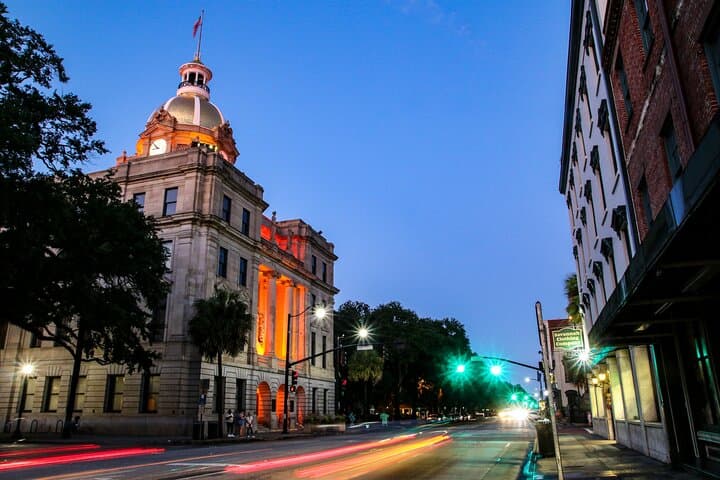
Savannah’s plan dates to 1733, when James Oglethorpe laid out a grid of public squares that shaped civic life. The city’s architecture records waves of change—Georgian and Federal homes from the 18th and early 19th centuries, Gothic Revival churches rebuilt after fires, and Victorian mansions that reflect the cotton economy and postwar reinvention. The River Street cotton factor buildings remind you the city once trafficked in commodities; the squares speak of civic design that prioritized public green and social ritual.
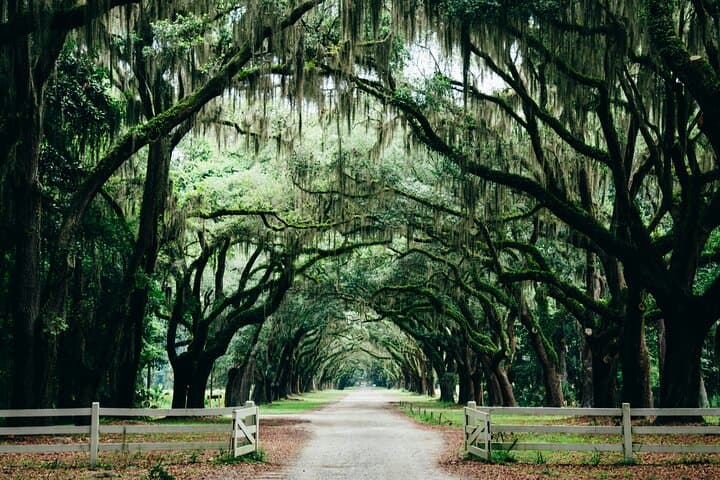
Locals move between morning coffee and gallery openings; Spanish moss drapes oaks and seems to listen. The Drives & Detours app triggers audio at each stop so history arrives with place-based sound and concise context.
Practical guidance: plan 1.5–2 hours, download the app and the tour before you go, and start at Rousakis Riverfront Plaza. Wear supportive shoes—cobbles and iron tracks are steady but uneven. Bring water and sunscreen in summer; choose morning or late afternoon for cooler light and fewer crowds. Respect private properties and active streets, and pause in small squares to read plaques and take in the layered stories. This is a city walk—easy on fitness but rich in details for anyone willing to look closely.
easy.
1.5–2 hours.
Suitable for most fitness levels; expect standing and walking over uneven, mostly flat terrain for up to two hours.
Go to Rousakis Riverfront Plaza (near 117 E River St), open the Drives & Detours app, select the Self-Guided Historic Savannah Walking Tour, enter your access code, and tap "Start Tour."
No—download the tour in the app before you arrive to ensure audio and maps work offline in areas with weak reception.
Much of the historic district has uneven cobbles, steps and narrow sidewalks; some segments and squares are accessible, but full route accessibility varies—contact local resources for specific accessible pathways.
The tour is available for flexible use and is valid for 180 days from purchase; there’s no set start time once downloaded.
Savannah was laid out in 1733 under James Oglethorpe’s square plan; its growth accelerated during the cotton economy and the antebellum period, leaving a dense architectural record.
Historic preservation groups actively manage restoration of homes and public squares; visitors help by staying on paths, avoiding damage to tree roots and Spanish moss, and supporting local museums and conservation fees.
Drives & Detours operates guided outdoor trips and adventures with an emphasis on safety, stewardship, and memorable experiences.
You step off the cobblestones at Rousakis Riverfront Plaza and the river exhales—boats push the current, gulls argue overhead, and brick warehouses climb the bluff like old ledgers. The walk unfolds as a sequence of rooms: shaded squares, narrow alleys, a cathedral spire that slices the skyline, and Forsyth Park’s fountain keeping quiet watch.
You step off the cobblestones at Rousakis Riverfront Plaza and the river exhales—boats push the current, gulls argue overhead, and brick warehouses climb the bluff like old ledgers. The walk unfolds as a sequence of rooms: shaded squares, narrow alleys, a cathedral spire that slices the skyline, and Forsyth Park’s fountain keeping quiet watch.
Savannah’s plan dates to 1733, when James Oglethorpe laid out a grid of public squares that shaped civic life. The city’s architecture records waves of change—Georgian and Federal homes from the 18th and early 19th centuries, Gothic Revival churches rebuilt after fires, and Victorian mansions that reflect the cotton economy and postwar reinvention. The River Street cotton factor buildings remind you the city once trafficked in commodities; the squares speak of civic design that prioritized public green and social ritual.
Locals move between morning coffee and gallery openings; Spanish moss drapes oaks and seems to listen. The Drives & Detours app triggers audio at each stop so history arrives with place-based sound and concise context.
Practical guidance: plan 1.5–2 hours, download the app and the tour before you go, and start at Rousakis Riverfront Plaza. Wear supportive shoes—cobbles and iron tracks are steady but uneven. Bring water and sunscreen in summer; choose morning or late afternoon for cooler light and fewer crowds. Respect private properties and active streets, and pause in small squares to read plaques and take in the layered stories. This is a city walk—easy on fitness but rich in details for anyone willing to look closely.