THE ADVENTURE COLLECTIVE® · Independent discovery and booking for outdoor travel

Wander Barcelona’s oldest streets at your own pace with a downloadable app that maps Roman ruins, medieval squares, and hidden modernist touches. This self-guided Gothic Quarter walk mixes history, architecture, and local lore—perfect for curious travelers who prefer their own rhythm.
Wander Barcelona’s oldest streets at your own pace with a downloadable app that maps Roman ruins, medieval squares, and hidden modernist touches. This self-guided Gothic Quarter walk mixes history, architecture, and local lore—perfect for curious travelers who prefer their own rhythm.
You step from the bright boulevard into a throat of shadow — narrow stone alleys that seem to remember footfalls from a thousand years. The Gothic Quarter’s lanes close around you, their worn stones guiding a slow reveal: a Roman temple pillar framed by a laundry-strewn balcony, an austere cathedral yard where geese patrol a marble cloister, and a quiet square still scored by 20th-century conflict.
Verified experiences and guided adventures in the surrounding area.
Operated by Tourific · Barcelona, Catalonia
You step from the bright boulevard into a throat of shadow — narrow stone alleys that seem to remember footfalls from a thousand years. The Gothic Quarter’s lanes close around you, their worn stones guiding a slow reveal: a Roman temple pillar framed by a laundry-strewn balcony, an austere cathedral yard where geese patrol a marble cloister, and a quiet square still scored by 20th-century conflict.
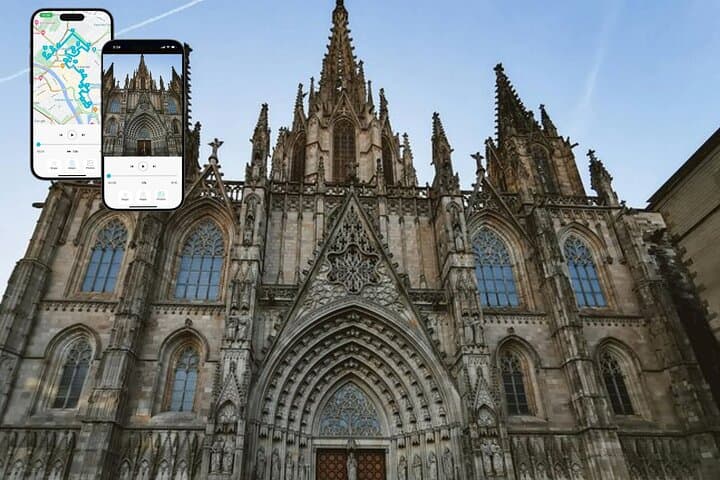
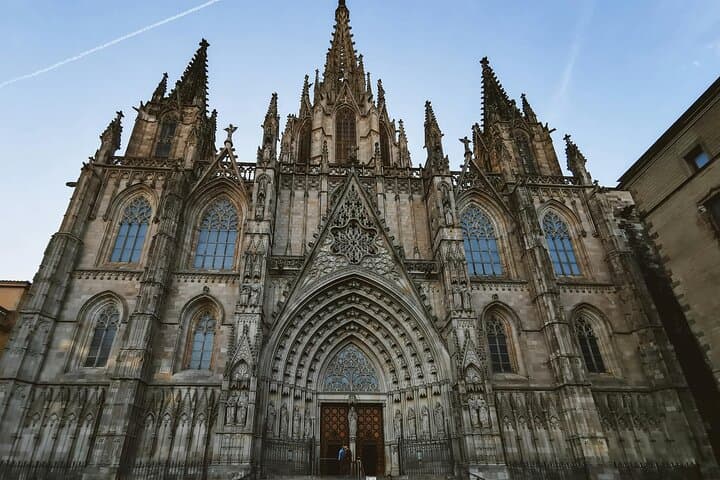
This self-guided tour threads together Barcelona’s oldest quarter, where Roman foundations underlie medieval façades and modernist touches hide in doorways. The Cathedral of Barcelona anchors the area; nearby, the Temple of Augustus’ surviving columns point to the city’s 2,000-year arc. Plaça Sant Felip Neri carries the rawer history of the Spanish Civil War, while side streets hold restaurants once frequented by Gaudí and Picasso.
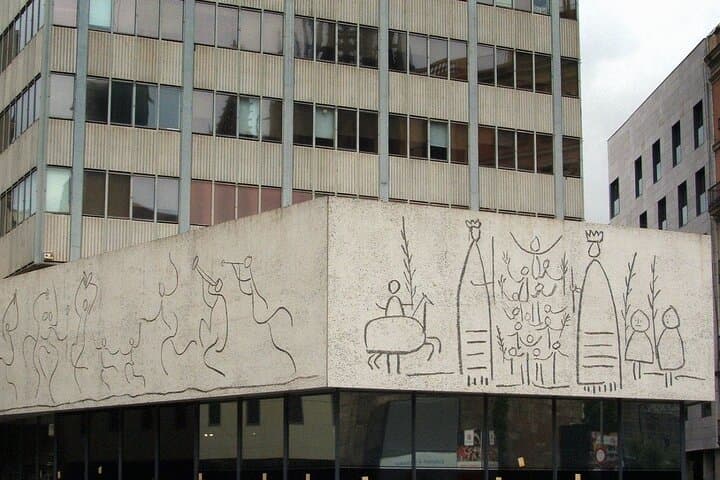
Cobbles and carved letterboxes reward slow attention: look for the “dancing egg” on a 15th-century doorstep and Picasso’s mural in the architects’ hall. The app provides offline maps and narrated stops so you can pause at a fountain or duck into a shaded courtyard without hunting for Wi‑Fi.
Practical guide: allow roughly 2–3 hours for the route and extra time for cafés or museums. Wear sturdy shoes—the cobbles are uneven and often damp. Midday is busiest; early morning or late afternoon gives softer light and cooler temperatures. Keep your phone charged and download the tour for offline use. Respect private courtyards and the fragile stonework: touch less, look more. This is an urban walk that rewards curiosity and slow steps.
easy.
2–3 hours.
Suitable for most fitness levels; requires standing and walking on uneven ground for a few hours.
The itinerary is designed for about 2–3 hours including walks between stops; plan more time if you want to linger in museums or cafés.
No—once downloaded the app and audio work offline, though initial download requires a connection and storage space.
Parts of the Gothic Quarter have narrow streets and cobbles that are difficult for wheelchairs; accessibility varies by street and entryway.
All stops on this tour are viewed from outside; entry to museums or the cathedral is not included and requires separate tickets.
The Gothic Quarter sits on Barcelona’s Roman core and grew through the Middle Ages; many streets follow patterns set during ancient and medieval town planning.
High foot traffic puts strain on fragile stonework and narrow courtyards—stick to paths, avoid touching carvings, and support small local businesses to keep restoration efforts viable.
Tourific operates guided outdoor trips and adventures with an emphasis on safety, stewardship, and memorable experiences.
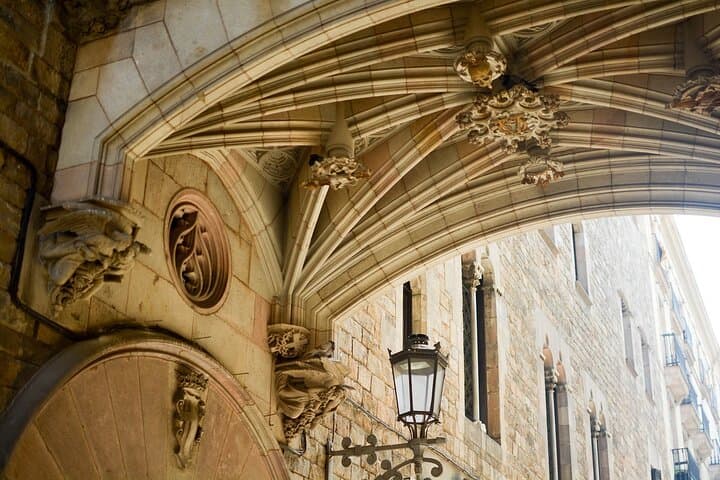
You step from the bright boulevard into a throat of shadow — narrow stone alleys that seem to remember footfalls from a thousand years. The Gothic Quarter’s lanes close around you, their worn stones guiding a slow reveal: a Roman temple pillar framed by a laundry-strewn balcony, an austere cathedral yard where geese patrol a marble cloister, and a quiet square still scored by 20th-century conflict.
You step from the bright boulevard into a throat of shadow — narrow stone alleys that seem to remember footfalls from a thousand years. The Gothic Quarter’s lanes close around you, their worn stones guiding a slow reveal: a Roman temple pillar framed by a laundry-strewn balcony, an austere cathedral yard where geese patrol a marble cloister, and a quiet square still scored by 20th-century conflict.
This self-guided tour threads together Barcelona’s oldest quarter, where Roman foundations underlie medieval façades and modernist touches hide in doorways. The Cathedral of Barcelona anchors the area; nearby, the Temple of Augustus’ surviving columns point to the city’s 2,000-year arc. Plaça Sant Felip Neri carries the rawer history of the Spanish Civil War, while side streets hold restaurants once frequented by Gaudí and Picasso.
Cobbles and carved letterboxes reward slow attention: look for the “dancing egg” on a 15th-century doorstep and Picasso’s mural in the architects’ hall. The app provides offline maps and narrated stops so you can pause at a fountain or duck into a shaded courtyard without hunting for Wi‑Fi.
Practical guide: allow roughly 2–3 hours for the route and extra time for cafés or museums. Wear sturdy shoes—the cobbles are uneven and often damp. Midday is busiest; early morning or late afternoon gives softer light and cooler temperatures. Keep your phone charged and download the tour for offline use. Respect private courtyards and the fragile stonework: touch less, look more. This is an urban walk that rewards curiosity and slow steps.