THE ADVENTURE COLLECTIVE® · Independent discovery and booking for outdoor travel

Walk Glasgow’s Historic Spine at your own pace—start at the cathedral, climb the Necropolis, and finish near Hope Street with an audio guide that explains the city’s medieval roots and Victorian grandeur. Perfect for independent explorers who prefer flexible timing and local detail.
Walk Glasgow’s Historic Spine at your own pace—start at the cathedral, climb the Necropolis, and finish near Hope Street with an audio guide that explains the city’s medieval roots and Victorian grandeur. Perfect for independent explorers who prefer flexible timing and local detail.
You step out onto damp flagstones beneath the carved gargoyles of Glasgow Cathedral, the city’s oldest stones cool underfoot and stories pressing outward from their joints. A brisk gust from the River Clyde drags the smell of wet pavement and roasting coffee across the lane, daring you forward along a route that traces Glasgow’s “Historic Spine.”
Verified experiences and guided adventures in the surrounding area.
Operated by Ciceru · Glasgow, Scotland
You step out onto damp flagstones beneath the carved gargoyles of Glasgow Cathedral, the city’s oldest stones cool underfoot and stories pressing outward from their joints. A brisk gust from the River Clyde drags the smell of wet pavement and roasting coffee across the lane, daring you forward along a route that traces Glasgow’s “Historic Spine.”
This self-guided loop threads medieval to Victorian Glasgow: Saint Mungo’s Gothic nave, the terraced graves of the Necropolis watching the city, and George Square’s ornate City Chambers. The march of time is visible in building fabric—medieval ashlar, Victorian sandstone, and the 19th-century glass and iron of the arcade—evidence of a city shaped by trade, industry, and the river that made both possible.
Culture and local color are close at hand: the irreverent cone on the Duke of Wellington statue, lunchtime bustle on Buchanan Street, and the possibility of a peat-forward whisky to close the route at a classic pub on Hope Street. The tour’s audio tracks add context—architectural notes, biographical sketches, and civic history—so the stones speak while you walk.
Practical side: the route is compact—plan 1.5–3 hours depending on stops—on mostly paved streets with occasional steps and gentle inclines up to the Necropolis terraces. Activate the tour on your smartphone, follow the simple map and audio triggers, and use off-line maps if data is limited. Wear waterproof layers, comfortable shoes, and carry a charged phone; Glasgow weather changes fast, but the city rewards curiosity with unexpected lanes, viewpoints, and a strong sense of place.
easy.
1.5–3 hours.
Suitable for most fitness levels; involves city walking with short inclines and steps to viewpoints.
The itinerary is designed for roughly 2 hours but is self-paced—you can pause audio and stop as long as you like; many walkers take 2–3 hours including breaks.
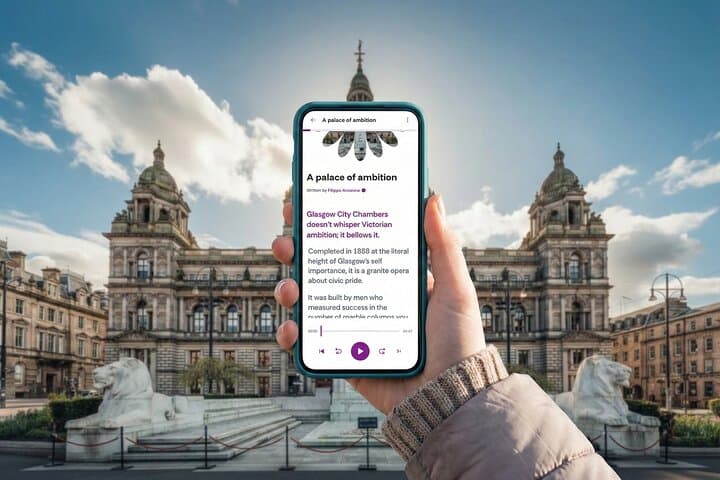
No app is required; activate your ticket via the provided link on a smartphone and play audio in your browser when you reach each stop.
Much of the route is on paved streets, but the Necropolis and some historic lanes include steep sections and steps—wheelchair access is limited in those areas.
Audio and text are available in English, Deutsch, Italiano, Français, Español, Português, and 中文.
Glasgow grew from a medieval ecclesiastical center around Saint Mungo into a Victorian industrial powerhouse; much of the city’s civic architecture dates to 19th-century prosperity tied to the Clyde’s shipbuilding and trade.
Stick to marked paths in green spaces and avoid touching delicate stonework; support local museums, cafés, and independent shops to help maintain the city’s heritage economy.
Ciceru operates guided outdoor trips and adventures with an emphasis on safety, stewardship, and memorable experiences.

You step out onto damp flagstones beneath the carved gargoyles of Glasgow Cathedral, the city’s oldest stones cool underfoot and stories pressing outward from their joints. A brisk gust from the River Clyde drags the smell of wet pavement and roasting coffee across the lane, daring you forward along a route that traces Glasgow’s “Historic Spine.”
You step out onto damp flagstones beneath the carved gargoyles of Glasgow Cathedral, the city’s oldest stones cool underfoot and stories pressing outward from their joints. A brisk gust from the River Clyde drags the smell of wet pavement and roasting coffee across the lane, daring you forward along a route that traces Glasgow’s “Historic Spine.”
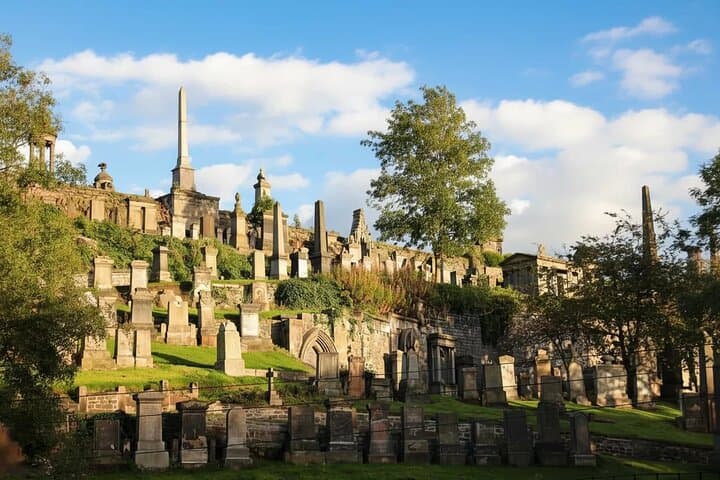
This self-guided loop threads medieval to Victorian Glasgow: Saint Mungo’s Gothic nave, the terraced graves of the Necropolis watching the city, and George Square’s ornate City Chambers. The march of time is visible in building fabric—medieval ashlar, Victorian sandstone, and the 19th-century glass and iron of the arcade—evidence of a city shaped by trade, industry, and the river that made both possible.
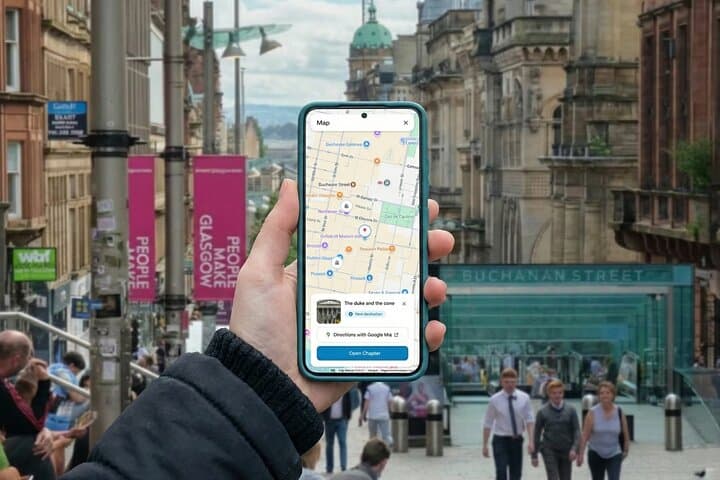
Culture and local color are close at hand: the irreverent cone on the Duke of Wellington statue, lunchtime bustle on Buchanan Street, and the possibility of a peat-forward whisky to close the route at a classic pub on Hope Street. The tour’s audio tracks add context—architectural notes, biographical sketches, and civic history—so the stones speak while you walk.
Practical side: the route is compact—plan 1.5–3 hours depending on stops—on mostly paved streets with occasional steps and gentle inclines up to the Necropolis terraces. Activate the tour on your smartphone, follow the simple map and audio triggers, and use off-line maps if data is limited. Wear waterproof layers, comfortable shoes, and carry a charged phone; Glasgow weather changes fast, but the city rewards curiosity with unexpected lanes, viewpoints, and a strong sense of place.