THE ADVENTURE COLLECTIVE® · Independent discovery and booking for outdoor travel

Turn Montpellier into a playable map with a self-guided e-scavenger hunt that blends local history, architecture, and family-friendly riddles. Start anytime and explore the Ecusson at your own pace with only a smartphone and curiosity.
Turn Montpellier into a playable map with a self-guided e-scavenger hunt that blends local history, architecture, and family-friendly riddles. Start anytime and explore the Ecusson at your own pace with only a smartphone and curiosity.
You tap start on the app and the Place de la Comédie spills out around you: tram rails humming, terrace chairs folding into the sun, stone facades leaning in with questions. The game maps a two-to-four hour loop through Montpellier’s compact historic core, nudging you from the Amphitheatre and Cathedral to quieter lanes where local shops fold their shutters.
Verified experiences and guided adventures in the surrounding area.
Operated by Qula · Montpellier, Occitanie
You tap start on the app and the Place de la Comédie spills out around you: tram rails humming, terrace chairs folding into the sun, stone facades leaning in with questions. The game maps a two-to-four hour loop through Montpellier’s compact historic core, nudging you from the Amphitheatre and Cathedral to quieter lanes where local shops fold their shutters.
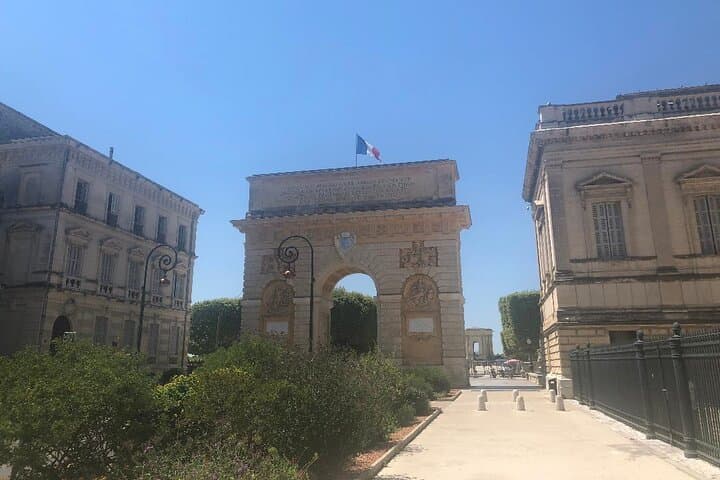
Montpellier’s streets carry layers: a Roman amphitheatre hints at antiquity, medieval merchants reshaped narrow alleys, and 18th-century engineers pushed water here — the Peyrou aqueduct still stands as a geometric spine. Geologically the city sits on limestone terraces above the Lez river; that stone gives façades their warm, chalky color and provides steps and viewpoints that invite a pause.
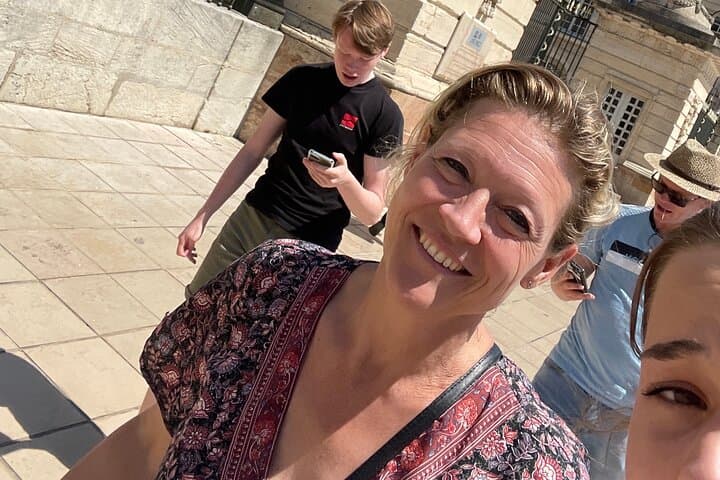
Culturally the Ecusson (old quarter) is practical and lively — small boucheries, markets, students from the university — and the game leans into those details with location-based riddles and small local history bites. The experience is social by design: family-friendly puzzles, options for teams up to six, and the freedom to start, stop, or detour whenever the city draws you in.
Practical guidance: bring a fully charged smartphone and a pocket battery, comfortable shoes for 2–4 hours of pavement walking, and a lightweight jacket for coastal breezes. Plan to begin at Place de la Comédie to follow the curated route, but allow time for cafés, the Jardin des Plantes, and the Promenade du Peyrou viewpoint. Use city maps and public transport to return to your base if you stop early.
easy.
2–4 hours.
Suitable for most fitness levels; requires comfortable walking ability for several hours
The tour is self-guided and available 24/7 after booking; you choose your start time and pace.
The app supports teams up to six people; bookings cover a single team per purchase.
Yes — the route is designed with stroller and wheelchair accessibility in mind; some historic surfaces may be uneven.
Cancel at least 24 hours before your start time for a full refund; last-minute cancellations are non-refundable.
Montpellier grew around a medieval trade crossroads and retains Roman and medieval sites—its Amphitheatre and the Peyrou aqueduct are visible reminders of successive eras.
Respect the historic center by staying on public paths, disposing of waste properly, and supporting local businesses; heavy foot traffic is managed by city preservation rules.
Qula operates guided outdoor trips and adventures with an emphasis on safety, stewardship, and memorable experiences.


You tap start on the app and the Place de la Comédie spills out around you: tram rails humming, terrace chairs folding into the sun, stone facades leaning in with questions. The game maps a two-to-four hour loop through Montpellier’s compact historic core, nudging you from the Amphitheatre and Cathedral to quieter lanes where local shops fold their shutters.
You tap start on the app and the Place de la Comédie spills out around you: tram rails humming, terrace chairs folding into the sun, stone facades leaning in with questions. The game maps a two-to-four hour loop through Montpellier’s compact historic core, nudging you from the Amphitheatre and Cathedral to quieter lanes where local shops fold their shutters.
Montpellier’s streets carry layers: a Roman amphitheatre hints at antiquity, medieval merchants reshaped narrow alleys, and 18th-century engineers pushed water here — the Peyrou aqueduct still stands as a geometric spine. Geologically the city sits on limestone terraces above the Lez river; that stone gives façades their warm, chalky color and provides steps and viewpoints that invite a pause.
Culturally the Ecusson (old quarter) is practical and lively — small boucheries, markets, students from the university — and the game leans into those details with location-based riddles and small local history bites. The experience is social by design: family-friendly puzzles, options for teams up to six, and the freedom to start, stop, or detour whenever the city draws you in.
Practical guidance: bring a fully charged smartphone and a pocket battery, comfortable shoes for 2–4 hours of pavement walking, and a lightweight jacket for coastal breezes. Plan to begin at Place de la Comédie to follow the curated route, but allow time for cafés, the Jardin des Plantes, and the Promenade du Peyrou viewpoint. Use city maps and public transport to return to your base if you stop early.