THE ADVENTURE COLLECTIVE® · Independent discovery and booking for outdoor travel

Tap into Scheveningen’s coastline with a self-guided e-scavenger hunt that mixes GPS checkpoints, short challenges, and local audio facts. Walk the pier, explore beachfront museums, and learn the town’s fishing and wartime stories at your own pace.
Tap into Scheveningen’s coastline with a self-guided e-scavenger hunt that mixes GPS checkpoints, short challenges, and local audio facts. Walk the pier, explore beachfront museums, and learn the town’s fishing and wartime stories at your own pace.
The wind off the North Sea carries salt and curiosity as players tap their phones and head toward the long wooden boards of Scheveningen Pier. The pier’s observation deck looms ahead like a waypoint in a map of wind and commerce; behind it, promenades and beach pavilions hum with local life. This self-guided e-scavenger hunt threads those visible scenes with hidden details—public art, fishing heritage, and surprising facts dropped at GPS-triggered points.
Verified experiences and guided adventures in the surrounding area.
Operated by Qula · Scheveningen, South Holland
The wind off the North Sea carries salt and curiosity as players tap their phones and head toward the long wooden boards of Scheveningen Pier. The pier’s observation deck looms ahead like a waypoint in a map of wind and commerce; behind it, promenades and beach pavilions hum with local life. This self-guided e-scavenger hunt threads those visible scenes with hidden details—public art, fishing heritage, and surprising facts dropped at GPS-triggered points.
Scheveningen grew from a small fishing village into The Hague’s recreational edge in the 19th century; dunes were fortified, piers rebuilt, and beachfront cafés multiplied. Geologically, the area is reclaimed coastal plain—sand shoved and shaped by centuries of North Sea storms and Dutch engineering. Culture here blends seaside leisure with civic gravitas: the Atlantic Wall remnants and Museum Beelden aan Zee sit near surf and sand.
Expect 2–3 hours of walking on flat, accessible pavement and beach approaches, punctuated by short on-site assignments and multilingual audio guides. The game uses GPS checkpoints around the pier, the Kurhaus promenade, local museums, and beachfront sculptures—no set start time and pause/play flexibility make it family-friendly. Practical edge: bring a charged smartphone and a shell or windproof layer; weather changes fast, and the sea will remind you.
Plan to start in the morning to avoid peak crowds, allow extra time for museum detours, and keep a portable charger handy. For wheelchair users and families with strollers, the route is largely accessible. This is a low-impact way to learn local history while moving through the town—interactive, flexible, and rooted in place.
easy.
2–3 hours.
Suitable for casual walkers and families—ability to walk on flat pavement and short beach approaches for a few hours.
Yes—after booking you receive instructions and can start, pause, and finish the tour whenever you choose during its validity period.
Plan on 2–3 hours for the standard route, longer if you stop at museums or cafés along the way.
Most promenades and checkpoints are wheelchair and stroller accessible, though brief sandy approaches may be encountered near the beach.
The experience covers up to six people per booking using a single device and account, per the listing inclusions.
Originally a fishing village, Scheveningen expanded as a 19th-century seaside resort; wartime defenses like the Atlantikwall also left a visible imprint on the coastline.
Coastal dune restoration and beach management are active here—stay on marked paths to protect fragile dune vegetation and nesting birds.
Qula operates guided outdoor trips and adventures with an emphasis on safety, stewardship, and memorable experiences.

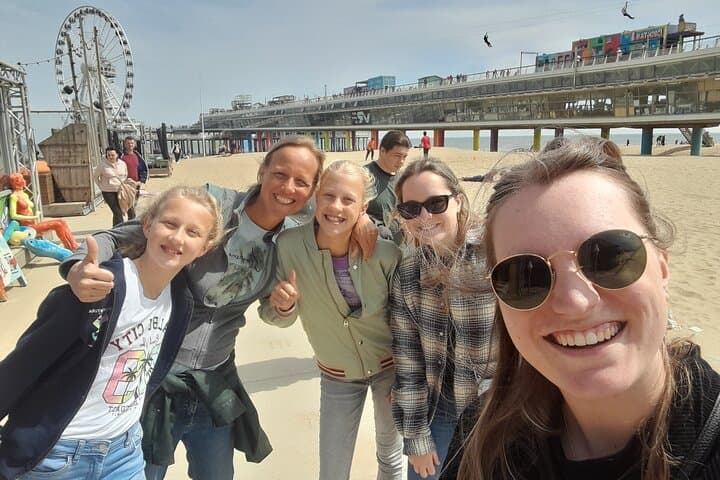

The wind off the North Sea carries salt and curiosity as players tap their phones and head toward the long wooden boards of Scheveningen Pier. The pier’s observation deck looms ahead like a waypoint in a map of wind and commerce; behind it, promenades and beach pavilions hum with local life. This self-guided e-scavenger hunt threads those visible scenes with hidden details—public art, fishing heritage, and surprising facts dropped at GPS-triggered points.
The wind off the North Sea carries salt and curiosity as players tap their phones and head toward the long wooden boards of Scheveningen Pier. The pier’s observation deck looms ahead like a waypoint in a map of wind and commerce; behind it, promenades and beach pavilions hum with local life. This self-guided e-scavenger hunt threads those visible scenes with hidden details—public art, fishing heritage, and surprising facts dropped at GPS-triggered points.
Scheveningen grew from a small fishing village into The Hague’s recreational edge in the 19th century; dunes were fortified, piers rebuilt, and beachfront cafés multiplied. Geologically, the area is reclaimed coastal plain—sand shoved and shaped by centuries of North Sea storms and Dutch engineering. Culture here blends seaside leisure with civic gravitas: the Atlantic Wall remnants and Museum Beelden aan Zee sit near surf and sand.
Expect 2–3 hours of walking on flat, accessible pavement and beach approaches, punctuated by short on-site assignments and multilingual audio guides. The game uses GPS checkpoints around the pier, the Kurhaus promenade, local museums, and beachfront sculptures—no set start time and pause/play flexibility make it family-friendly. Practical edge: bring a charged smartphone and a shell or windproof layer; weather changes fast, and the sea will remind you.
Plan to start in the morning to avoid peak crowds, allow extra time for museum detours, and keep a portable charger handy. For wheelchair users and families with strollers, the route is largely accessible. This is a low-impact way to learn local history while moving through the town—interactive, flexible, and rooted in place.