THE ADVENTURE COLLECTIVE® · Independent discovery and booking for outdoor travel

Explore Lübeck at your own pace with an interactive, phone-driven scavenger hunt that guides you past Holstentor, Marienkirche and riverside promenades. Family-friendly and wheelchair accessible, the self-guided tour blends local history with playful challenges for about 3–4 hours.
Explore Lübeck at your own pace with an interactive, phone-driven scavenger hunt that guides you past Holstentor, Marienkirche and riverside promenades. Family-friendly and wheelchair accessible, the self-guided tour blends local history with playful challenges for about 3–4 hours.
You step out onto cobbled streets where brick towers watch the river Trave push carefully past quays and promenades. The game begins on your phone: tasks appear, clues nudge you toward a Gothic gate, and the Holstentor looms into view — its twin towers a practical checkpoint in a living medieval map.
Verified experiences and guided adventures in the surrounding area.
Operated by Qula · Lübeck, Schleswig-Holstein
You step out onto cobbled streets where brick towers watch the river Trave push carefully past quays and promenades. The game begins on your phone: tasks appear, clues nudge you toward a Gothic gate, and the Holstentor looms into view — its twin towers a practical checkpoint in a living medieval map.
Lübeck grew wealthy as a Hanseatic port; its red-brick churches and Rathaus reflect centuries of trade, guild power, and maritime law. The city’s geology is flat postglacial plain, so the walking stays easy but the architecture provides vertical drama: Marienkirche’s nave, cathedral spires, and a 50-meter viewing platform make for memorable waypoints. Cultural touchstones — Willy Brandt’s birthplace, captain’s courtyards, and riverside An der Obertrave — frame stories of commerce, resilience, and reconstruction after wartime damage.
Practically, expect a 3–4 hour loop of roughly 3–5 km on mostly flat, cobbled surfaces; elevation gain is negligible. The experience is self-paced and mobile-driven: clues, photos, and short assignments are handed to one team or to competing small groups. Accessibility is high — stroller- and wheelchair-friendly routes are noted — but watch for uneven stones and occasional steps at historic sites. Bring a charged smartphone, a portable battery, comfortable shoes, and a light rain layer. Start whenever you like after receiving digital instructions, pause the game as needed, and use public transit to return to your lodging. This is an ideal introduction to Lübeck’s layered history for families and curious explorers who prefer discovery at their own tempo.
easy.
3–4 hours.
Suitable for most fitness levels; requires standing and walking several kilometers at a relaxed pace.
After booking you receive digital instructions and a link; open the link on your phone and begin when ready — the game can be paused and resumed.
Yes — the experience is designed to allow wheelchair and stroller access on recommended routes, though some historic buildings may have steps.
Yes — play solo, as one team, or form small competing teams; each booking supplies access for the number indicated.
The tour is self-guided and not cancelled for weather; bring rain gear or wait to start on a clearer day — refunds follow the provider’s 24-hour cancellation policy.
Lübeck was a leading city of the Hanseatic League; many brick Gothic buildings and the Rathaus speak to eight centuries of mercantile governance.
Respect historic surfaces and private courtyards; follow marked paths, avoid trampling greenways, and dispose of litter in city bins to protect this compact UNESCO-area urban habitat.
Qula operates guided outdoor trips and adventures with an emphasis on safety, stewardship, and memorable experiences.

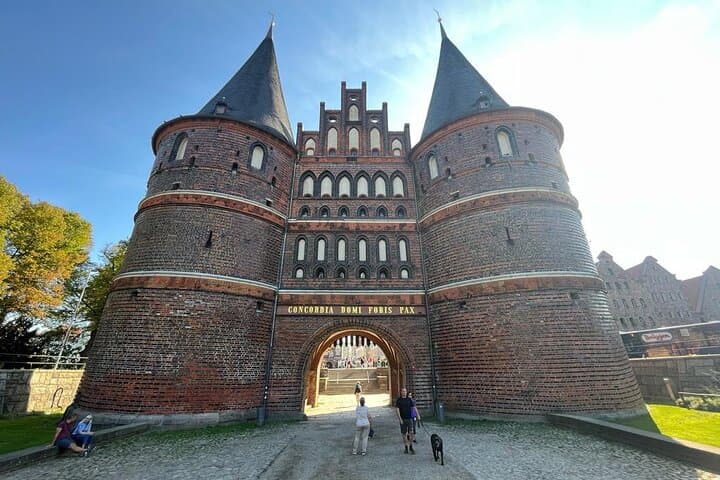
You step out onto cobbled streets where brick towers watch the river Trave push carefully past quays and promenades. The game begins on your phone: tasks appear, clues nudge you toward a Gothic gate, and the Holstentor looms into view — its twin towers a practical checkpoint in a living medieval map.
You step out onto cobbled streets where brick towers watch the river Trave push carefully past quays and promenades. The game begins on your phone: tasks appear, clues nudge you toward a Gothic gate, and the Holstentor looms into view — its twin towers a practical checkpoint in a living medieval map.
Lübeck grew wealthy as a Hanseatic port; its red-brick churches and Rathaus reflect centuries of trade, guild power, and maritime law. The city’s geology is flat postglacial plain, so the walking stays easy but the architecture provides vertical drama: Marienkirche’s nave, cathedral spires, and a 50-meter viewing platform make for memorable waypoints. Cultural touchstones — Willy Brandt’s birthplace, captain’s courtyards, and riverside An der Obertrave — frame stories of commerce, resilience, and reconstruction after wartime damage.
Practically, expect a 3–4 hour loop of roughly 3–5 km on mostly flat, cobbled surfaces; elevation gain is negligible. The experience is self-paced and mobile-driven: clues, photos, and short assignments are handed to one team or to competing small groups. Accessibility is high — stroller- and wheelchair-friendly routes are noted — but watch for uneven stones and occasional steps at historic sites. Bring a charged smartphone, a portable battery, comfortable shoes, and a light rain layer. Start whenever you like after receiving digital instructions, pause the game as needed, and use public transit to return to your lodging. This is an ideal introduction to Lübeck’s layered history for families and curious explorers who prefer discovery at their own tempo.