THE ADVENTURE COLLECTIVE® · Independent discovery and booking for outdoor travel

Explore Lisbon at your own pace with a self-guided e-scavenger hunt that combines history, viewpoints and playful clues. Perfect for families and independent travelers who want a flexible 3–4 hour walking game across Baixa, Alfama and the riverfront.
Explore Lisbon at your own pace with a self-guided e-scavenger hunt that combines history, viewpoints and playful clues. Perfect for families and independent travelers who want a flexible 3–4 hour walking game across Baixa, Alfama and the riverfront.
The day opens on a sun-warmed praça and your phone buzzes with the first clue—Lisbon’s hills roll ahead like a series of puzzles to be solved on foot.
Verified experiences and guided adventures in the surrounding area.
Operated by Qula · Lisbon, Lisbon
The day opens on a sun-warmed praça and your phone buzzes with the first clue—Lisbon’s hills roll ahead like a series of puzzles to be solved on foot.
This self-guided e-scavenger hunt stitches together Baixa’s grid, Alfama’s lace of alleys, the Elevador de Santa Justa’s ironwork and the terraces that watch the Tagus dare you to cross it with your eyes. The routing hits Miradouro de São Pedro de Alcântara, Praça do Rossio, Praça de Figueira and the Bica funicular, combining short bursts of climbing with flat, cobbled promenades.
Lisbon’s story is visible underfoot: Pombaline rebuilds after the 1755 earthquake, Neo‑Manuelist flourishes at Rossio station, and azulejo-clad façades that map centuries of trade and craft.
Expect roughly 3–6 miles (5–10 km) depending on detours, with cumulative elevation of 150–250 m as you move between viewpoints and riverfront. Terrain alternates cobbles, steps and paved squares—strollers and wheelchairs can access many areas, but some steep lanes have steps.
Practically, the app times this for 3–4 hours; you start, stop, and reroute on your schedule. Bring a fully charged phone and spare battery, wear grippy shoes for uneven stone, and plan for midday sun on exposed terraces. Use trams or short metro rides to skip the steepest climbs.
The experience is part city tour, part puzzle game—best for curious walkers who want history, quick local lore, and a flexible way to see Lisbon without a guide.
moderate.
3–4 hours.
Suitable for walkers in average fitness who can manage short climbs and several flights of steps; take breaks as needed.
The suggested duration is 3–4 hours, but you can stop and restart—many groups spread it over a half day with breaks.
No—this is fully self-guided and can be started whenever the app grants access after booking.
Many central squares and parts of Baixa are accessible, and the operator notes wheelchair and stroller access, but expect some steep streets and steps in Alfama that may be challenging.
Follow the app’s built-in navigation; if problems persist, use local metro or tram stations (well-signed) to reorient or contact the operator via the booking link for support.
Much of central Lisbon’s Baixa was rebuilt after the 1755 earthquake under the Marquês de Pombal, creating the grid and anti-seismic ‘Pombaline’ structures you’ll walk through.
Tourists are encouraged to respect narrow residential lanes, avoid littering, and support small local businesses; preserving azulejos and historic tram routes depends on low-impact visitation.
Qula operates guided outdoor trips and adventures with an emphasis on safety, stewardship, and memorable experiences.

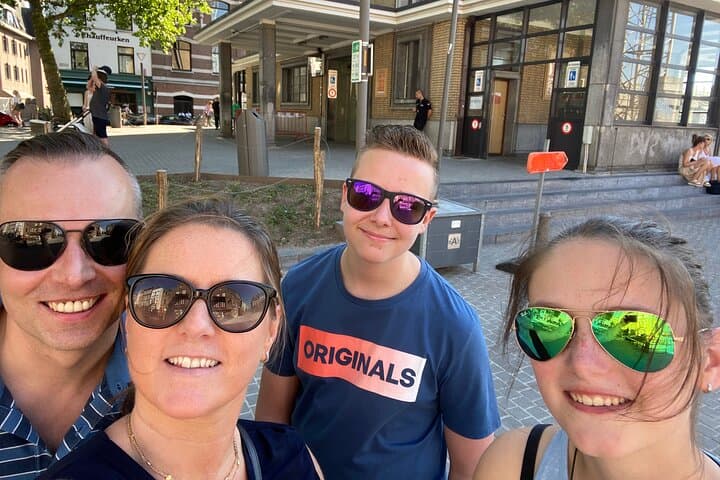


The day opens on a sun-warmed praça and your phone buzzes with the first clue—Lisbon’s hills roll ahead like a series of puzzles to be solved on foot.
The day opens on a sun-warmed praça and your phone buzzes with the first clue—Lisbon’s hills roll ahead like a series of puzzles to be solved on foot.
This self-guided e-scavenger hunt stitches together Baixa’s grid, Alfama’s lace of alleys, the Elevador de Santa Justa’s ironwork and the terraces that watch the Tagus dare you to cross it with your eyes. The routing hits Miradouro de São Pedro de Alcântara, Praça do Rossio, Praça de Figueira and the Bica funicular, combining short bursts of climbing with flat, cobbled promenades.
Lisbon’s story is visible underfoot: Pombaline rebuilds after the 1755 earthquake, Neo‑Manuelist flourishes at Rossio station, and azulejo-clad façades that map centuries of trade and craft.
Expect roughly 3–6 miles (5–10 km) depending on detours, with cumulative elevation of 150–250 m as you move between viewpoints and riverfront. Terrain alternates cobbles, steps and paved squares—strollers and wheelchairs can access many areas, but some steep lanes have steps.
Practically, the app times this for 3–4 hours; you start, stop, and reroute on your schedule. Bring a fully charged phone and spare battery, wear grippy shoes for uneven stone, and plan for midday sun on exposed terraces. Use trams or short metro rides to skip the steepest climbs.
The experience is part city tour, part puzzle game—best for curious walkers who want history, quick local lore, and a flexible way to see Lisbon without a guide.