THE ADVENTURE COLLECTIVE® · Independent discovery and booking for outdoor travel

Turn Kristiansand into a gameboard with an app-led scavenger hunt that guides you between the harbor, Posebyen and Odderøya. Play solo or in teams—this flexible, wheelchair-accessible urban walk combines local history, market culture and coastal views into 3–4 hours of exploration.
Turn Kristiansand into a gameboard with an app-led scavenger hunt that guides you between the harbor, Posebyen and Odderøya. Play solo or in teams—this flexible, wheelchair-accessible urban walk combines local history, market culture and coastal views into 3–4 hours of exploration.
You start at the harbor where the sea nudges the quay and the city’s white wooden houses lean into the light. A phone buzzes, a map blooms on screen, and Kristiansand becomes a course of puzzles, local stories and short walks between landmarks: Posebyen’s timber facades, the Market Square, Kilden’s glass face and the winding paths of Odderøya.
Verified experiences and guided adventures in the surrounding area.
Operated by Qula · Kristiansand, Agder
You start at the harbor where the sea nudges the quay and the city’s white wooden houses lean into the light. A phone buzzes, a map blooms on screen, and Kristiansand becomes a course of puzzles, local stories and short walks between landmarks: Posebyen’s timber facades, the Market Square, Kilden’s glass face and the winding paths of Odderøya.
Founded in 1641 as a planned port city, Kristiansand carries military traces — the 17th-century fortress on the hill — alongside vibrant maritime trade. The coastline is old metamorphic bedrock shaped by ice and sea; low cliffs, small beaches and a working waterfront give the game a diverse urban-geologic texture that reveals how the city grew around harbor and defense.
Culturally, the route threads market stalls, cafés and concert-hall architecture; players will encounter fishmongers at Fiskebrygga, wooden streets with 18th- and 19th-century homes, and modern cultural hubs. The e-scavenger format lets families or small teams pause, split up and replay sections at their own pace.
Practical guidance: allow 3–4 hours, wear comfortable walking shoes, and bring a fully charged smartphone plus a power bank — clues are delivered through the device and can use GPS. Start in the morning to avoid cruise-ship crowds at the quay and carry a light rain shell year-round. The course is wheelchair-accessible on main thoroughfares, but some Odderøya paths are uneven. Expect 6–8 km of walking with frequent stops for answers and photos; pace yourself, hydrate, and enjoy the city as both playground and classroom.
easy.
3–4 hours.
Light walking fitness; suitable for most ages and abilities
Plan on 3–4 hours depending on how often you stop; the itinerary covers roughly 6–8 km with frequent short stops.
Yes — the game is family-friendly and many central streets and paths are stroller-accessible; note some uneven sections on Odderøya.
This is a self-guided experience — instructions and access are provided after booking and you can start, pause and end whenever you choose.
Main downtown sections and market areas are wheelchair-accessible, but some Odderøya trails have steps or uneven surfaces; check specific route segments before setting off.
Kristiansand was founded in 1641 as a royal port and later fortified; remnants of the 17th-century fortress and historic wooden quarter reflect its maritime and defensive origins.
Respect shoreline habitats by staying on marked paths and avoiding disturbance of nesting sea birds; local groups run periodic coastal cleanups to protect the harbor environment.
Qula operates guided outdoor trips and adventures with an emphasis on safety, stewardship, and memorable experiences.

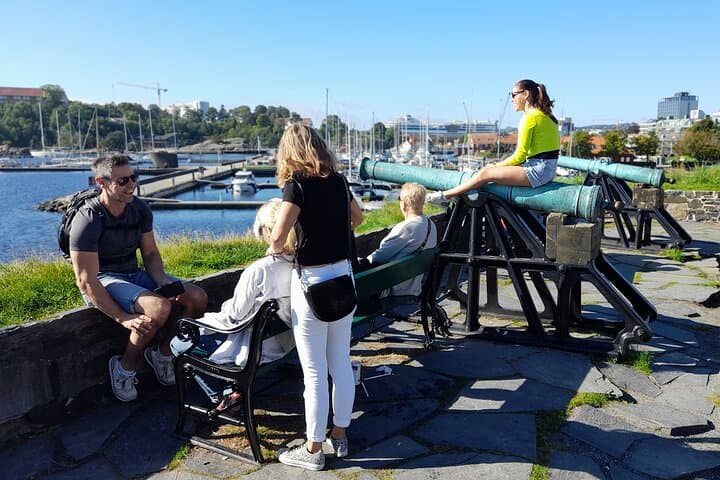


You start at the harbor where the sea nudges the quay and the city’s white wooden houses lean into the light. A phone buzzes, a map blooms on screen, and Kristiansand becomes a course of puzzles, local stories and short walks between landmarks: Posebyen’s timber facades, the Market Square, Kilden’s glass face and the winding paths of Odderøya.
You start at the harbor where the sea nudges the quay and the city’s white wooden houses lean into the light. A phone buzzes, a map blooms on screen, and Kristiansand becomes a course of puzzles, local stories and short walks between landmarks: Posebyen’s timber facades, the Market Square, Kilden’s glass face and the winding paths of Odderøya.
Founded in 1641 as a planned port city, Kristiansand carries military traces — the 17th-century fortress on the hill — alongside vibrant maritime trade. The coastline is old metamorphic bedrock shaped by ice and sea; low cliffs, small beaches and a working waterfront give the game a diverse urban-geologic texture that reveals how the city grew around harbor and defense.
Culturally, the route threads market stalls, cafés and concert-hall architecture; players will encounter fishmongers at Fiskebrygga, wooden streets with 18th- and 19th-century homes, and modern cultural hubs. The e-scavenger format lets families or small teams pause, split up and replay sections at their own pace.
Practical guidance: allow 3–4 hours, wear comfortable walking shoes, and bring a fully charged smartphone plus a power bank — clues are delivered through the device and can use GPS. Start in the morning to avoid cruise-ship crowds at the quay and carry a light rain shell year-round. The course is wheelchair-accessible on main thoroughfares, but some Odderøya paths are uneven. Expect 6–8 km of walking with frequent stops for answers and photos; pace yourself, hydrate, and enjoy the city as both playground and classroom.