THE ADVENTURE COLLECTIVE® · Independent discovery and booking for outdoor travel

Turn central Dublin into a playable map with an app-led scavenger hunt. Visit the Spire, Ha'penny Bridge, Trinity and St. Patrick’s at your own pace — ideal for families and small groups who want a flexible, educational city adventure.
Turn central Dublin into a playable map with an app-led scavenger hunt. Visit the Spire, Ha'penny Bridge, Trinity and St. Patrick’s at your own pace — ideal for families and small groups who want a flexible, educational city adventure.
You arrive on the Ha'penny Bridge and the River Liffey seems to dare you across: narrow ironwork underfoot, ferries and gulls tugging at the current. This is Dublin at street level — a living grid of Georgian doors, cathedral spires, and pub doorways that hum with stories. An e-scavenger hunt turns the city into a playable map, sending you between the Spire, St. Patrick’s Cathedral, Trinity College’s Campanile and the green hush of St Stephen’s Green.
Verified experiences and guided adventures in the surrounding area.
Operated by Qula · Dublin, Dublin
You arrive on the Ha'penny Bridge and the River Liffey seems to dare you across: narrow ironwork underfoot, ferries and gulls tugging at the current. This is Dublin at street level — a living grid of Georgian doors, cathedral spires, and pub doorways that hum with stories. An e-scavenger hunt turns the city into a playable map, sending you between the Spire, St. Patrick’s Cathedral, Trinity College’s Campanile and the green hush of St Stephen’s Green.
Dublin wears its history plainly: Viking settlement at the river, medieval walls around Christchurch and later Georgian townhouses with orderly windows. The route passes public art, banking halls that once housed Parliament and narrow lanes where singers and buskers make the stones talk. The game’s clues lean on those layers — folklore, architecture and the city's mercantile past — so you learn by doing.
Practically speaking, expect 2–3 hours of walking across mostly paved streets, with short stops to solve tasks. The activity is flexible: start when you want, pause the game, and finish at your pace. Bring a charged smartphone, a portable battery, and comfortable shoes; Dublin weather can flip from sun to rain without asking. Public transport hubs are close, and most points are wheelchair accessible.
For families or groups (the ticket covers up to six people), this is a low-impact way to see major sights while testing local knowledge and observational skills. Time your start early to avoid peak tourist crowds in Temple Bar and Henry Street, and let the Liffey pull you through the city’s compact, story-rich centre.
easy.
2–3 hours.
Light walking fitness; suitable for most people who can comfortably walk 3–5 km
Plan for about 2–3 hours depending on pace and time spent at each clue or attraction.
One booking covers up to six people sharing the same device and game session.
Most streets and highlighted sites are wheelchair accessible, but some historic areas may have uneven cobbles—check specifics before you start.
Full refund if you cancel at least 24 hours before your scheduled start time; check your booking confirmation for details.
Dublin began as a Viking river settlement; surviving medieval and Georgian fabric — from Dublin Castle to Georgian squares — shapes walking routes and clues.
Stick to pavements, avoid littering and respect building facades; supporting local businesses along the route helps sustain central Dublin’s cultural sites.
Qula operates guided outdoor trips and adventures with an emphasis on safety, stewardship, and memorable experiences.

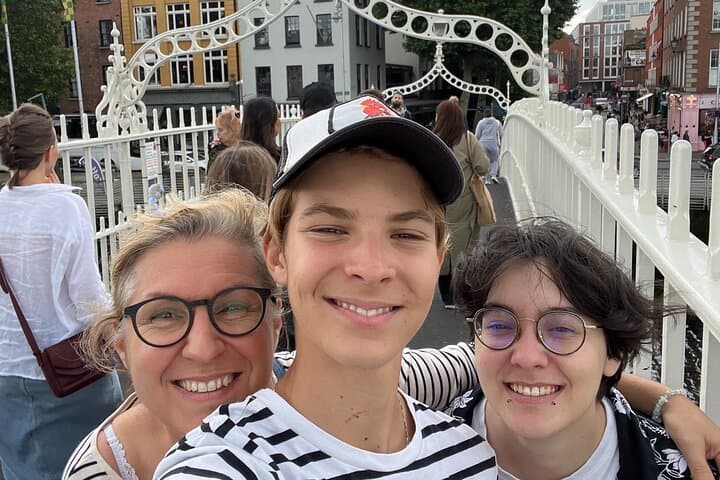

You arrive on the Ha'penny Bridge and the River Liffey seems to dare you across: narrow ironwork underfoot, ferries and gulls tugging at the current. This is Dublin at street level — a living grid of Georgian doors, cathedral spires, and pub doorways that hum with stories. An e-scavenger hunt turns the city into a playable map, sending you between the Spire, St. Patrick’s Cathedral, Trinity College’s Campanile and the green hush of St Stephen’s Green.
You arrive on the Ha'penny Bridge and the River Liffey seems to dare you across: narrow ironwork underfoot, ferries and gulls tugging at the current. This is Dublin at street level — a living grid of Georgian doors, cathedral spires, and pub doorways that hum with stories. An e-scavenger hunt turns the city into a playable map, sending you between the Spire, St. Patrick’s Cathedral, Trinity College’s Campanile and the green hush of St Stephen’s Green.
Dublin wears its history plainly: Viking settlement at the river, medieval walls around Christchurch and later Georgian townhouses with orderly windows. The route passes public art, banking halls that once housed Parliament and narrow lanes where singers and buskers make the stones talk. The game’s clues lean on those layers — folklore, architecture and the city's mercantile past — so you learn by doing.
Practically speaking, expect 2–3 hours of walking across mostly paved streets, with short stops to solve tasks. The activity is flexible: start when you want, pause the game, and finish at your pace. Bring a charged smartphone, a portable battery, and comfortable shoes; Dublin weather can flip from sun to rain without asking. Public transport hubs are close, and most points are wheelchair accessible.
For families or groups (the ticket covers up to six people), this is a low-impact way to see major sights while testing local knowledge and observational skills. Time your start early to avoid peak tourist crowds in Temple Bar and Henry Street, and let the Liffey pull you through the city’s compact, story-rich centre.