THE ADVENTURE COLLECTIVE® · Independent discovery and booking for outdoor travel

Turn Caen’s streets into a playable map with a self-guided e-scavenger hunt that leads you to the château, abbeys and medieval lanes. Flexible, family-friendly and rich in local history, it’s a 3–4 hour way to discover the city on your own schedule.
Turn Caen’s streets into a playable map with a self-guided e-scavenger hunt that leads you to the château, abbeys and medieval lanes. Flexible, family-friendly and rich in local history, it’s a 3–4 hour way to discover the city on your own schedule.
You tap start on your phone at Place Saint-Pierre and the city rearranges itself into a game. Narrow lanes open like puzzle pieces, the Orne River glints and seems to dare you to follow its bends, and the pale blocks of Caen stone point the way to hidden plaques and quiet courtyards.
Verified experiences and guided adventures in the surrounding area.
Operated by Qula · Caen, Normandy
You tap start on your phone at Place Saint-Pierre and the city rearranges itself into a game. Narrow lanes open like puzzle pieces, the Orne River glints and seems to dare you to follow its bends, and the pale blocks of Caen stone point the way to hidden plaques and quiet courtyards.
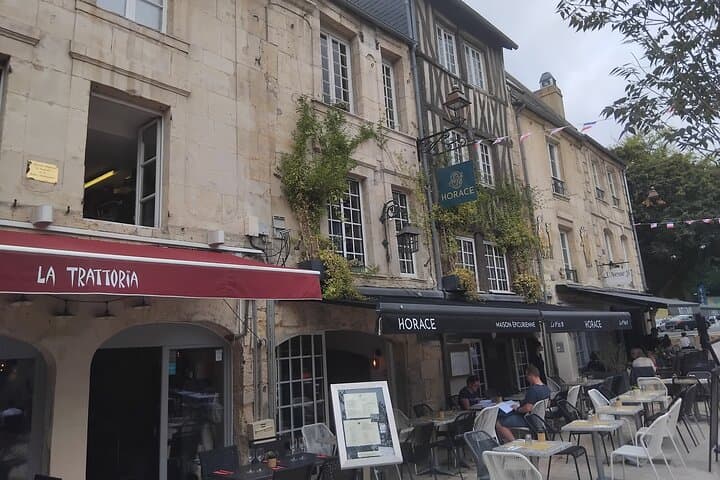
Caen wears its history in broad strokes: William the Conqueror’s château dominates the skyline, abbeys founded in the 11th century still hold the hush of cloisters, and the medieval Vaugueux quarter keeps its artisan rhythm. The city’s architecture is largely built from local Caen stone — a creamy limestone quarried since Roman times — which gives façades a uniform, lived-in glow.
The e-scavenger hunt threads through these places, pairing GPS waypoints with short challenges and historical notes about the Château de Caen, Abbaye aux Dames, Rue Froide and Place Saint-Sauveur. It’s equal parts treasure hunt and self-guided walking tour: suitable for families, small groups (one puzzle set covers up to six people), and visitors with limited mobility where streets allow.
Practical edge: plan on 3–4 hours, wear grippy shoes for cobbles, and bring a fully charged phone plus a small power bank. Start early for soft light on old stone and fewer crowds; the game allows pauses and flexible routing, so you can stop for a café, a market stall, or to sample local calvados. Instructions and multilingual audio are delivered after booking — the experience is as much about seeing Caen as it is about solving it.
easy.
3–4 hours.
Light walking fitness — suitable for most people who can walk moderate distances on uneven pavement.
Instructions and access details are sent after booking; the hunt runs on your phone with provided access—download any recommended app or use the browser link as instructed.
The e-scavenger set covers up to six people on one device, but you can split into multiple groups each with their own booking for larger parties.
Many central streets are accessible and the provider lists wheelchair-accessible surfaces, but some medieval lanes and cobbles may be uneven—check specific waypoints if you require full step-free routes.
Yes — the experience is self-paced with no strict start time; you can pause, resume, and end whenever you choose during the access window.
Caen grew as a ducal seat under William the Conqueror; 11th-century abbeys and the Château de Caen reflect its medieval importance and regional role in Normandy.
Respect historical fabric by staying on public pathways and avoiding climbing on monuments; support local businesses and use refillable water to reduce single-use plastic.
Qula operates guided outdoor trips and adventures with an emphasis on safety, stewardship, and memorable experiences.

You tap start on your phone at Place Saint-Pierre and the city rearranges itself into a game. Narrow lanes open like puzzle pieces, the Orne River glints and seems to dare you to follow its bends, and the pale blocks of Caen stone point the way to hidden plaques and quiet courtyards.
You tap start on your phone at Place Saint-Pierre and the city rearranges itself into a game. Narrow lanes open like puzzle pieces, the Orne River glints and seems to dare you to follow its bends, and the pale blocks of Caen stone point the way to hidden plaques and quiet courtyards.
Caen wears its history in broad strokes: William the Conqueror’s château dominates the skyline, abbeys founded in the 11th century still hold the hush of cloisters, and the medieval Vaugueux quarter keeps its artisan rhythm. The city’s architecture is largely built from local Caen stone — a creamy limestone quarried since Roman times — which gives façades a uniform, lived-in glow.
The e-scavenger hunt threads through these places, pairing GPS waypoints with short challenges and historical notes about the Château de Caen, Abbaye aux Dames, Rue Froide and Place Saint-Sauveur. It’s equal parts treasure hunt and self-guided walking tour: suitable for families, small groups (one puzzle set covers up to six people), and visitors with limited mobility where streets allow.
Practical edge: plan on 3–4 hours, wear grippy shoes for cobbles, and bring a fully charged phone plus a small power bank. Start early for soft light on old stone and fewer crowds; the game allows pauses and flexible routing, so you can stop for a café, a market stall, or to sample local calvados. Instructions and multilingual audio are delivered after booking — the experience is as much about seeing Caen as it is about solving it.