THE ADVENTURE COLLECTIVE® · Independent discovery and booking for outdoor travel

Step onto the shaded road into the Central Balkan Mountains and let an electronic guide lead you through Sokolski Monastery’s compact courtyard, Revival-era details, and nearby viewpoints. This practical guide helps you plan timing, accessibility, and what to expect on a self-paced visit.
Step onto the shaded road into the Central Balkan Mountains and let an electronic guide lead you through Sokolski Monastery’s compact courtyard, Revival-era details, and nearby viewpoints. This practical guide helps you plan timing, accessibility, and what to expect on a self-paced visit.
You arrive along a narrow road where beeches and oak branches lean over the asphalt, the mountain air pushing forward like a slow, cool hand. The white-washed walls of Sokolski Monastery appear around a bend — modest, compact, and guarded by the slope of the Balkan range. Inside the courtyard, bell tones seem carved out of the surrounding rock.
Verified experiences and guided adventures in the surrounding area.
Operated by VisitBulgariaOn Bespoke Experiences · Gabrovo, Gabrovo Province
You arrive along a narrow road where beeches and oak branches lean over the asphalt, the mountain air pushing forward like a slow, cool hand. The white-washed walls of Sokolski Monastery appear around a bend — modest, compact, and guarded by the slope of the Balkan range. Inside the courtyard, bell tones seem carved out of the surrounding rock.
Built during the Bulgarian National Revival in the early 19th century, Sokolski is a cultural waypoint: a pocket of ecclesiastical architecture, carved woodwork and fresco fragments that map the era’s faith and craft. The monastery sits on the northern slopes of the Central Balkan Mountains, where limestone and shale sculpt steep ridges and narrow stream valleys. Local villagers historically tended chestnut groves and grazed sheep here; traces of that rural life linger in stone walls and field terraces.
The e-guide delivers live maps, step-by-step routes and contextual commentary — history, liturgical notes, and where to stand for the best light on a fresco. Expect short walks on compacted dirt and paved courtyard stones; the site is largely accessible but has some uneven thresholds and low steps.
Practical guidance: visit mid-morning to catch soft light on frescoes and fewer groups; carry water, a camera with spare battery, and respectful clothing covering shoulders and knees for church entry. Mind quiet hours if services are underway and stay on marked paths to protect surrounding vegetation. The guide’s live route helps pace your visit to anything from a 60-minute focused stop to a relaxed 3–4 hour exploration that includes nearby viewpoints.
easy.
1–4 hours.
Suitable for most fitness levels; includes short walks on uneven ground and a few low steps.
You receive instant access via the booking link; load the guide to your device before arrival to use offline maps if needed.
Admission is generally free or donation-based for visitors, but special exhibitions or services may request a donation—check the e-guide notes for current details.
Most courtyard areas are accessible and the provider notes wheelchair-friendly surfaces, though a few low thresholds may require assistance.
Plan 60–120 minutes for the monastery itself; extend to 3–4 hours if you include nearby viewpoints and short walking routes described in the e-guide.
Sokolski Monastery dates to the Bulgarian National Revival era (early 19th century) and reflects local ecclesiastical craftsmanship and community life of that period.
Stay on marked paths and avoid touching frescoes; small cultural sites like Sokolski rely on respectful visitor behavior and modest donations to maintain buildings and trails.
VisitBulgariaOn Bespoke Experiences operates guided outdoor trips and adventures with an emphasis on safety, stewardship, and memorable experiences.
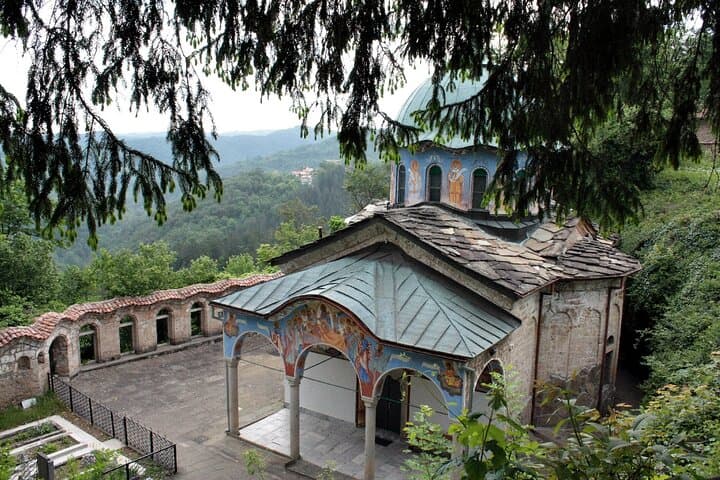
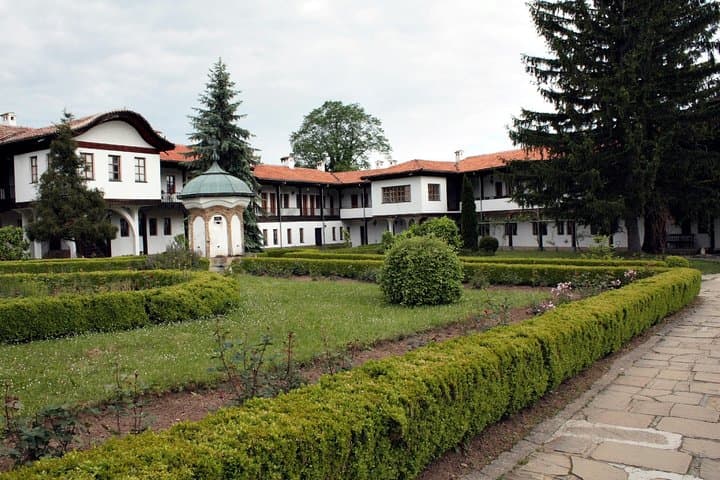
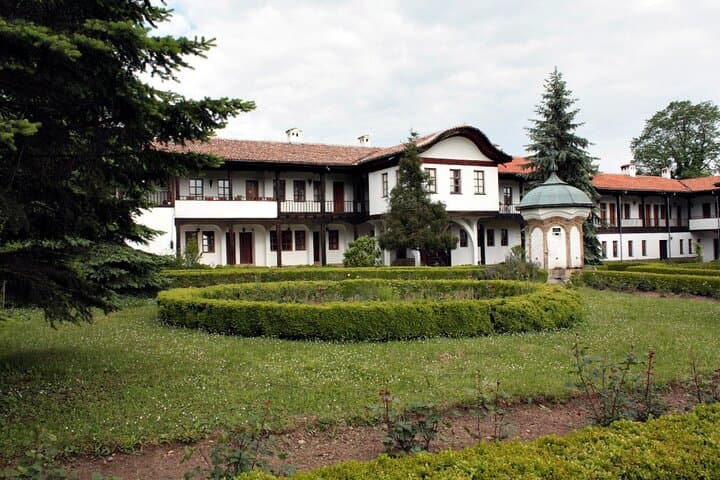
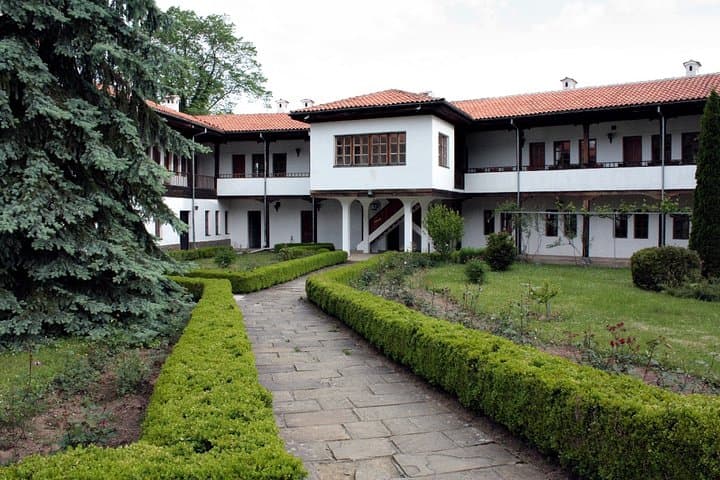
You arrive along a narrow road where beeches and oak branches lean over the asphalt, the mountain air pushing forward like a slow, cool hand. The white-washed walls of Sokolski Monastery appear around a bend — modest, compact, and guarded by the slope of the Balkan range. Inside the courtyard, bell tones seem carved out of the surrounding rock.
You arrive along a narrow road where beeches and oak branches lean over the asphalt, the mountain air pushing forward like a slow, cool hand. The white-washed walls of Sokolski Monastery appear around a bend — modest, compact, and guarded by the slope of the Balkan range. Inside the courtyard, bell tones seem carved out of the surrounding rock.
Built during the Bulgarian National Revival in the early 19th century, Sokolski is a cultural waypoint: a pocket of ecclesiastical architecture, carved woodwork and fresco fragments that map the era’s faith and craft. The monastery sits on the northern slopes of the Central Balkan Mountains, where limestone and shale sculpt steep ridges and narrow stream valleys. Local villagers historically tended chestnut groves and grazed sheep here; traces of that rural life linger in stone walls and field terraces.
The e-guide delivers live maps, step-by-step routes and contextual commentary — history, liturgical notes, and where to stand for the best light on a fresco. Expect short walks on compacted dirt and paved courtyard stones; the site is largely accessible but has some uneven thresholds and low steps.
Practical guidance: visit mid-morning to catch soft light on frescoes and fewer groups; carry water, a camera with spare battery, and respectful clothing covering shoulders and knees for church entry. Mind quiet hours if services are underway and stay on marked paths to protect surrounding vegetation. The guide’s live route helps pace your visit to anything from a 60-minute focused stop to a relaxed 3–4 hour exploration that includes nearby viewpoints.