THE ADVENTURE COLLECTIVE® · Independent discovery and booking for outdoor travel

Cruise the Vecht on an electric chopper from Weesp to Nigtevecht, passing windmills, country estates and historic forts. This self-guided four-hour loop pairs quiet, eco-friendly riding with riverside scenery and easy stops for photos and local culture.
Cruise the Vecht on an electric chopper from Weesp to Nigtevecht, passing windmills, country estates and historic forts. This self-guided four-hour loop pairs quiet, eco-friendly riding with riverside scenery and easy stops for photos and local culture.
You ease the throttle and the countryside answers with a hush — the electric chopper glides along the Vecht, reeds brushing the edge of the road, small brick bridges arching over slow water. The town of Weesp slips behind: red-tiled roofs, a working windmill, and a compact canal network. Ahead, the river curves past country estates and villages that framed Amsterdam’s Golden Age.
Verified experiences and guided adventures in the surrounding area.
Operated by UPEvents · Weesp, North Holland
You ease the throttle and the countryside answers with a hush — the electric chopper glides along the Vecht, reeds brushing the edge of the road, small brick bridges arching over slow water. The town of Weesp slips behind: red-tiled roofs, a working windmill, and a compact canal network. Ahead, the river curves past country estates and villages that framed Amsterdam’s Golden Age.
This corridor between Weesp and Nigtevecht is shaped by water and history. The Vecht was a preferred riverside retreat for merchants in the 17th and 18th centuries; buitenplaatsen (country houses) like Zwaanwijck and the neat lines of tree-lined avenues reflect that era. Geologically the landscape is low and flat — reclaimed marshes, river silt, and clay — which keeps gradients gentle and the ride relaxed. Forts like Fort Uitermeer and Fort Ossenmarkt speak to the military engineering of the Stelling van Amsterdam and Nieuwe Hollandse Waterlinie, where water itself was a line of defense.
Practical guidance: bring a valid driver’s license — local rules require it — and reserve about four hours for a self-paced loop with stops. Helmets, phone holders and audio guides are typically included; still carry a charged phone, waterproof layer, and a small pump or patch kit if you’re switching between two-wheelers. Plan fuel (battery) checks and time your trip for golden-hour light if you want quieter roads and long shadows across the river.
Expect easy roads, brief village stops, and concentrated cultural highlights; the e-chopper removes the physical exertion so the landscape and history do the inviting work.
easy.
4 hours.
Suitable for all fitness levels; minimal physical exertion required beyond basic mounting and balance.
Yes. Providers require a valid driver’s license to operate an electric chopper in the Netherlands.
The self-guided experience is about four hours total, designed as a loop with multiple short stops; riding time depends on how long you linger at sites.
No. E-choppers have automatic throttle and a low center of gravity; basic instruction is provided and roads on this route are mostly flat and quiet.
Yes. Helmets are included in the tour package, but bringing your own fitted helmet is fine if you prefer.
The Vecht corridor became a favored retreat for wealthy Amsterdam families in the 17th–18th centuries, who built buitenplaatsen along the river; nearby forts date to 19th-century defense systems around Amsterdam.
This lowland river landscape is sensitive to disturbance; stick to marked roads and avoid driving onto riverbanks to protect nesting birds and riparian vegetation.
UPEvents operates guided outdoor trips and adventures with an emphasis on safety, stewardship, and memorable experiences.
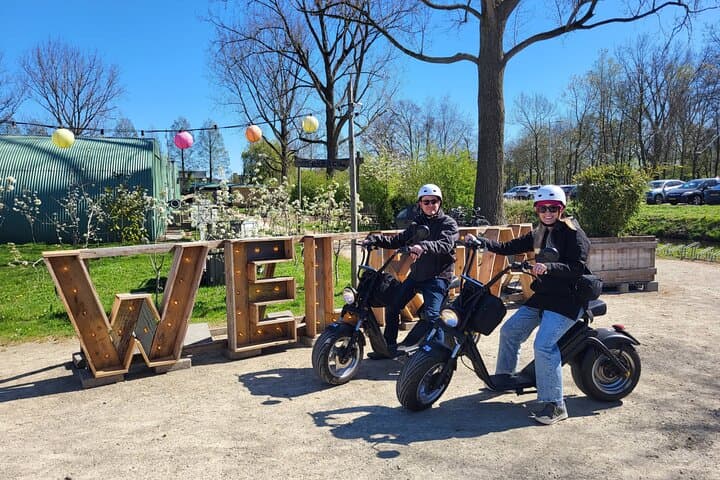
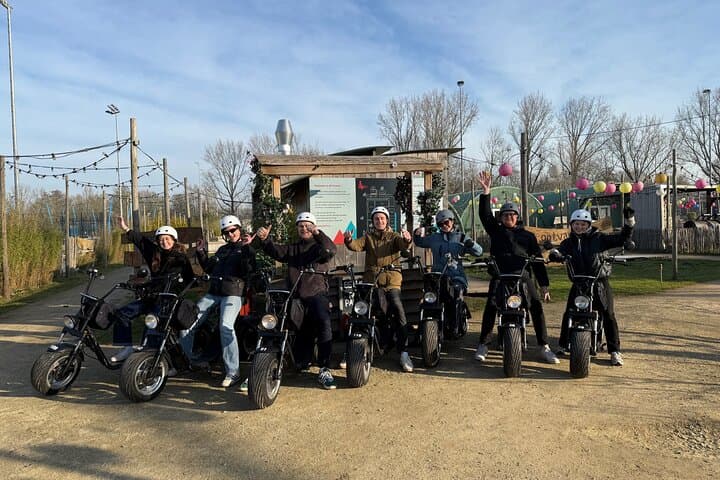

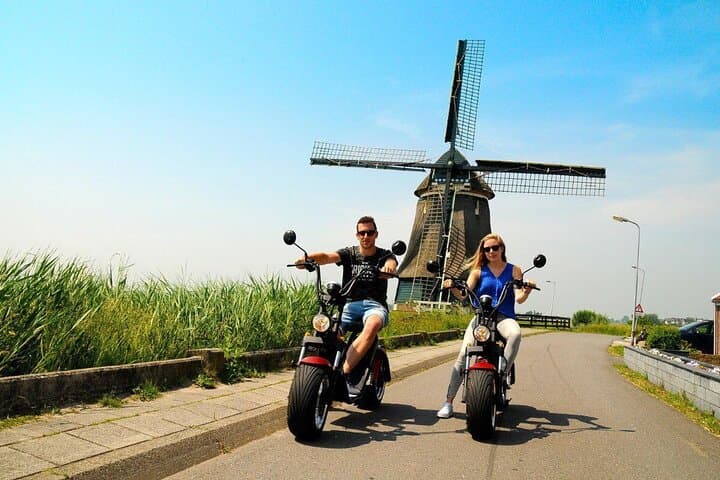
You ease the throttle and the countryside answers with a hush — the electric chopper glides along the Vecht, reeds brushing the edge of the road, small brick bridges arching over slow water. The town of Weesp slips behind: red-tiled roofs, a working windmill, and a compact canal network. Ahead, the river curves past country estates and villages that framed Amsterdam’s Golden Age.
You ease the throttle and the countryside answers with a hush — the electric chopper glides along the Vecht, reeds brushing the edge of the road, small brick bridges arching over slow water. The town of Weesp slips behind: red-tiled roofs, a working windmill, and a compact canal network. Ahead, the river curves past country estates and villages that framed Amsterdam’s Golden Age.
This corridor between Weesp and Nigtevecht is shaped by water and history. The Vecht was a preferred riverside retreat for merchants in the 17th and 18th centuries; buitenplaatsen (country houses) like Zwaanwijck and the neat lines of tree-lined avenues reflect that era. Geologically the landscape is low and flat — reclaimed marshes, river silt, and clay — which keeps gradients gentle and the ride relaxed. Forts like Fort Uitermeer and Fort Ossenmarkt speak to the military engineering of the Stelling van Amsterdam and Nieuwe Hollandse Waterlinie, where water itself was a line of defense.
Practical guidance: bring a valid driver’s license — local rules require it — and reserve about four hours for a self-paced loop with stops. Helmets, phone holders and audio guides are typically included; still carry a charged phone, waterproof layer, and a small pump or patch kit if you’re switching between two-wheelers. Plan fuel (battery) checks and time your trip for golden-hour light if you want quieter roads and long shadows across the river.
Expect easy roads, brief village stops, and concentrated cultural highlights; the e-chopper removes the physical exertion so the landscape and history do the inviting work.