THE ADVENTURE COLLECTIVE® · Independent discovery and booking for outdoor travel

Explore Chicago’s Loop at your own pace with a GPS-triggered self-guided walking tour. Learn the city’s post‑fire architectural innovations while passing iconic landmarks like the Art Institute, Cloud Gate, and the DuSable Bridge.
Explore Chicago’s Loop at your own pace with a GPS-triggered self-guided walking tour. Learn the city’s post‑fire architectural innovations while passing iconic landmarks like the Art Institute, Cloud Gate, and the DuSable Bridge.
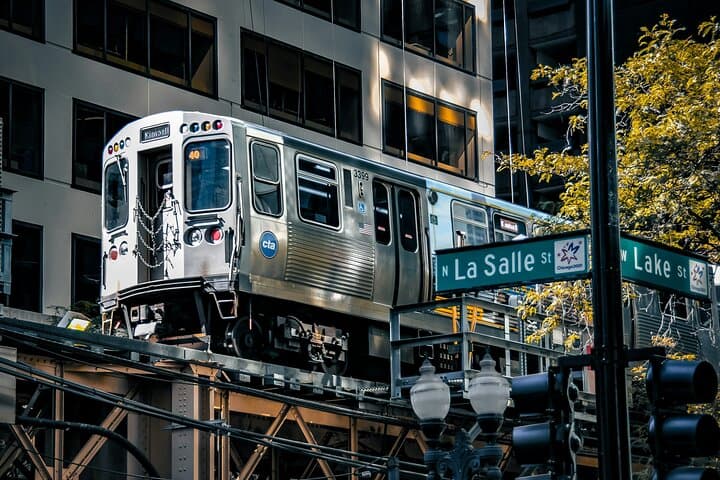
You begin on the DuSable Bridge, the Chicago River glinting between steel towers as the city exhales. Walk east-west and the Loop unfolds — ornate terra cotta facades giving way to glass and steel, plazas where public art and water features puncture the city’s pulse.
Verified experiences and guided adventures in the surrounding area.
Operated by Drives & Detours · Chicago, Illinois
You begin on the DuSable Bridge, the Chicago River glinting between steel towers as the city exhales. Walk east-west and the Loop unfolds — ornate terra cotta facades giving way to glass and steel, plazas where public art and water features puncture the city’s pulse.
Chicago’s Loop is an architectural classroom. After the Great Fire of 1871, engineers and builders rewrote the rules: the Chicago School pushed steel-frame construction and tall, light-filled interiors that let the skyline climb. Geologically the area sits on glacially laid plains, so streets are flat and engineered rather than carved, with the river rerouted and lifted into narrative devices by movable bascule bridges.
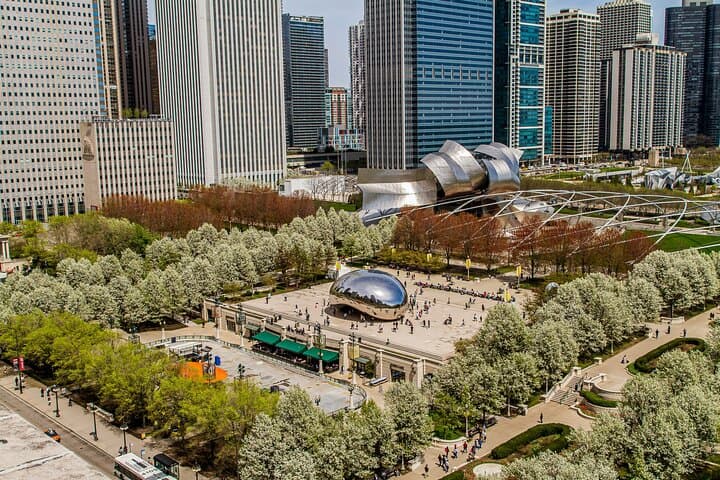
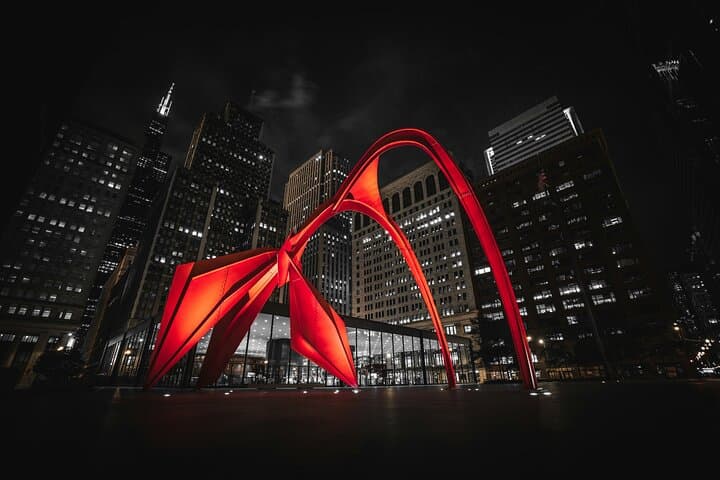
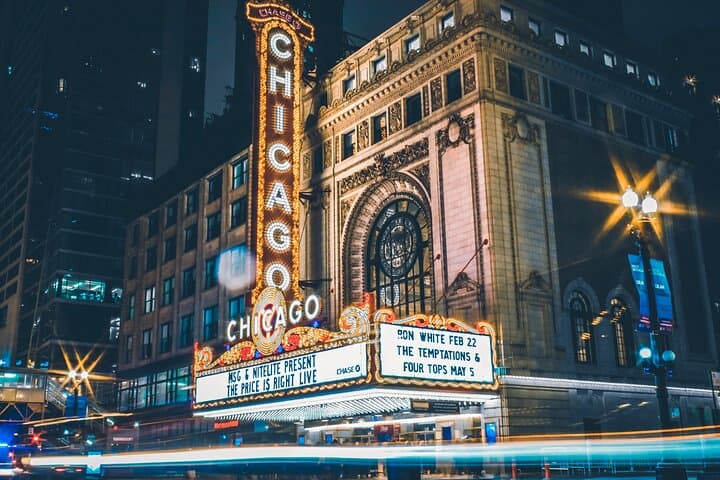
You’ll pass the Art Institute’s Beaux-Arts entry, Cloud Gate’s reflective skin, the Jay Pritzker Pavilion’s steel ribbons, and the historic Rookery’s light court. The tour threads theaters, memorial plazas, and fountains that pulse in summer; it also points to quieter cultural notes — the Winter Garden, a working bridgehouse exhibit, and the often-overlooked mosaic work in early high-rises.
Practically: download the Drives & Detours app and unlock the Chicago Loop tour before you arrive. The route is 2–2.5 hours of mostly flat walking on sidewalks and pedestrian plazas; GPS-triggered audio guides play offline. Bring a charged phone, comfortable shoes, and a light rain layer — downtown weather can flip quickly. Start early on weekends to beat crowds, watch traffic at intersections, and allow extra time if you plan to enter museums. The tour is flexible: move at your pace, linger at artwork, and let the river dare you to look up.
easy.
2–2.5 hours.
Suitable for most fitness levels; ability to walk continuously for a couple of hours is helpful
The Drives & Detours app provides GPS-triggered audio commentary designed for self-guiding; no live guide is required.
The suggested start is DuSable Bridge (Michigan Avenue) and the route winds through Millennium Park, the Art Institute area, and surrounding Loop landmarks; the tour is flexible so you can pause or end earlier.
The route follows city sidewalks and plazas which are largely ADA-accessible, but check individual building entries for accessibility before planning interior visits.
Access does not expire; download the tour to your device and use it at any time within the app’s terms.
The Loop’s rebirth after the 1871 Great Chicago Fire spurred innovations in steel-frame construction and the Chicago School of architecture, shaping modern skyscrapers.
Millennium Park and the riverfront are managed to balance heavy public use with urban green-space restoration; stick to paths, avoid feeding wildlife, and pack out trash.
Drives & Detours operates guided outdoor trips and adventures with an emphasis on safety, stewardship, and memorable experiences.
You begin on the DuSable Bridge, the Chicago River glinting between steel towers as the city exhales. Walk east-west and the Loop unfolds — ornate terra cotta facades giving way to glass and steel, plazas where public art and water features puncture the city’s pulse.
You begin on the DuSable Bridge, the Chicago River glinting between steel towers as the city exhales. Walk east-west and the Loop unfolds — ornate terra cotta facades giving way to glass and steel, plazas where public art and water features puncture the city’s pulse.
Chicago’s Loop is an architectural classroom. After the Great Fire of 1871, engineers and builders rewrote the rules: the Chicago School pushed steel-frame construction and tall, light-filled interiors that let the skyline climb. Geologically the area sits on glacially laid plains, so streets are flat and engineered rather than carved, with the river rerouted and lifted into narrative devices by movable bascule bridges.
You’ll pass the Art Institute’s Beaux-Arts entry, Cloud Gate’s reflective skin, the Jay Pritzker Pavilion’s steel ribbons, and the historic Rookery’s light court. The tour threads theaters, memorial plazas, and fountains that pulse in summer; it also points to quieter cultural notes — the Winter Garden, a working bridgehouse exhibit, and the often-overlooked mosaic work in early high-rises.
Practically: download the Drives & Detours app and unlock the Chicago Loop tour before you arrive. The route is 2–2.5 hours of mostly flat walking on sidewalks and pedestrian plazas; GPS-triggered audio guides play offline. Bring a charged phone, comfortable shoes, and a light rain layer — downtown weather can flip quickly. Start early on weekends to beat crowds, watch traffic at intersections, and allow extra time if you plan to enter museums. The tour is flexible: move at your pace, linger at artwork, and let the river dare you to look up.