THE ADVENTURE COLLECTIVE® · Independent discovery and booking for outdoor travel

Walk Bruges on your schedule with a smartphone audio guide that leads you through the Belfry, Beguinage and Minnewater. One hour, offline maps and 21 audio stops let you explore medieval streets and local traditions at your own pace.
Walk Bruges on your schedule with a smartphone audio guide that leads you through the Belfry, Beguinage and Minnewater. One hour, offline maps and 21 audio stops let you explore medieval streets and local traditions at your own pace.
You step off the tram and the city rearranges itself around you: narrow brick lanes, a bell striking from the Belfry, canals that dare you to follow their slow current. The audio guide begins in your pocket; a calm voice points you toward the Poertoren while the water reflects a mosaic of gabled roofs.
Verified experiences and guided adventures in the surrounding area.
Operated by TouringBee · Bruges, West Flanders
You step off the tram and the city rearranges itself around you: narrow brick lanes, a bell striking from the Belfry, canals that dare you to follow their slow current. The audio guide begins in your pocket; a calm voice points you toward the Poertoren while the water reflects a mosaic of gabled roofs.
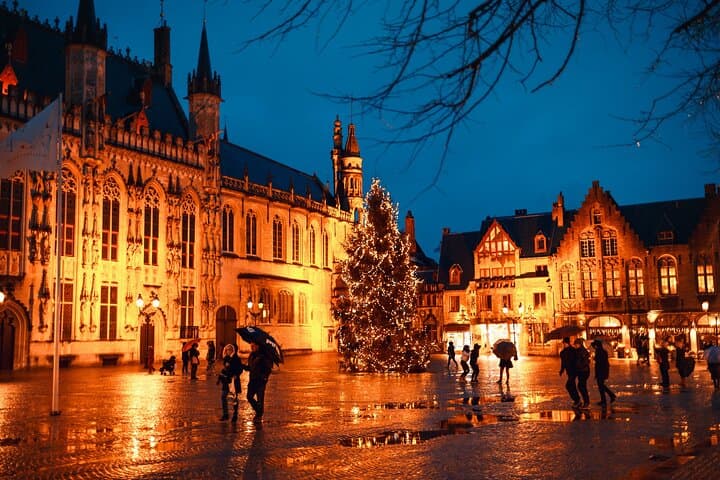
Bruges grew wealthy on wool and trade in the Middle Ages; its ring of canals are engineered drains and trade routes cut into peat and clay. The guide threads history with local color—how the Beguinage sheltered women who lived semi-religious lives, why the Basilica of the Holy Blood attracts pilgrims, and how civic pride built the soaring Belfort. Taste and craft play a role here: chocolate workshops and lace makers occupy laneways as the city kept its medieval plan largely intact.
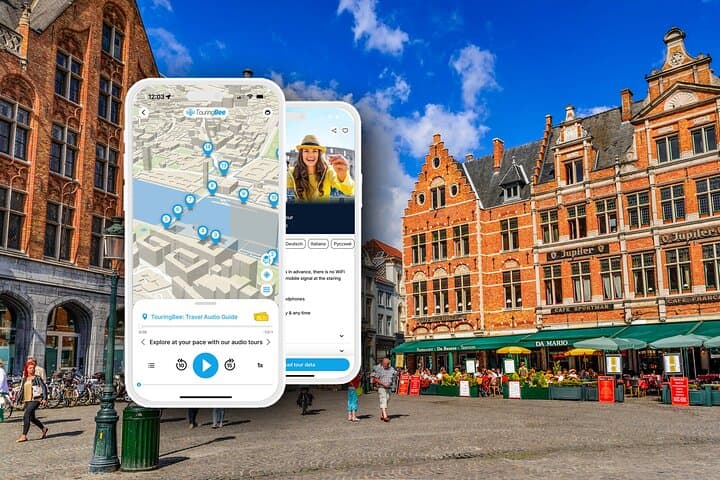
For practical navigation the tour includes an offline map, 21 audio stops, illustrations to help you recognize landmarks, and one-year access so you can return by season. Expect roughly 1 hour of walking over mostly flat cobbles; the route weaves past Markt, Minnewater, St. Boniface Bridge and quieter courtyards. Start early to avoid tour groups, bring headphones and a charged phone, and leave room for a pause on a bridge where swans patrol the canal.
This is a self-paced, low-impact way to cover Bruges’ core: an efficient primer in local history and living culture that lets you linger where you want without a scheduled guide.
easy.
1 hour.
Suitable for most fitness levels — mostly flat walking over cobbles with occasional steps.
No — the tour provides an offline map and downloadable audio, but you should download everything while on Wi‑Fi before starting.
No — the audio guide explains sights and where to go, but admissions to paid attractions are not included.
Generally yes — the path is flat, but some narrow bridges and cobbles can be tricky with a stroller; plan for short detours on wider streets.
Access is valid for one year from purchase, giving you flexibility to revisit the route across seasons.
Bruges rose to prominence in the 12th–15th centuries on trade and the wool industry; many civic buildings and canal layouts date to that medieval boom and several sites are UNESCO-recognized.
Stick to marked paths and avoid feeding waterfowl; local preservation efforts focus on protecting fragile brickwork and canal water quality amid heavy tourism.
TouringBee operates guided outdoor trips and adventures with an emphasis on safety, stewardship, and memorable experiences.
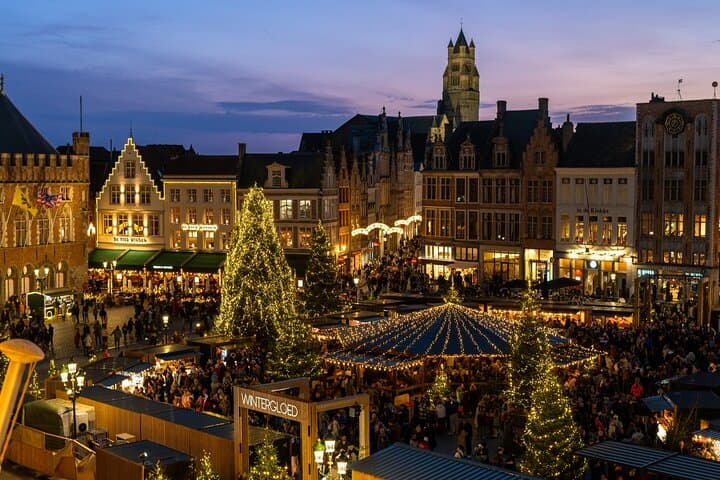
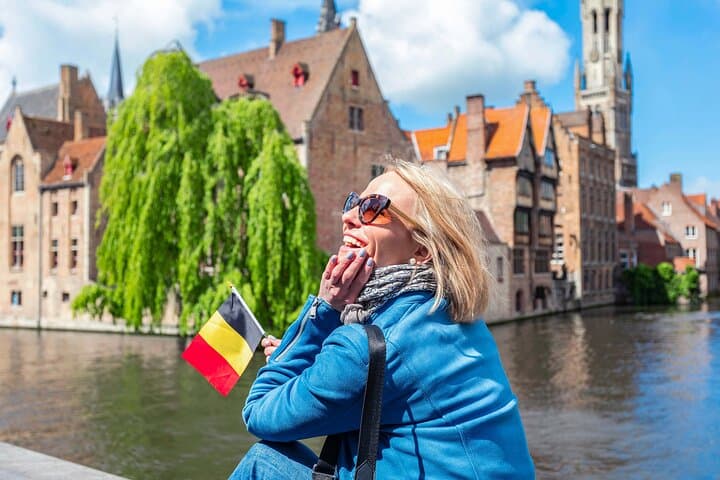
You step off the tram and the city rearranges itself around you: narrow brick lanes, a bell striking from the Belfry, canals that dare you to follow their slow current. The audio guide begins in your pocket; a calm voice points you toward the Poertoren while the water reflects a mosaic of gabled roofs.
You step off the tram and the city rearranges itself around you: narrow brick lanes, a bell striking from the Belfry, canals that dare you to follow their slow current. The audio guide begins in your pocket; a calm voice points you toward the Poertoren while the water reflects a mosaic of gabled roofs.
Bruges grew wealthy on wool and trade in the Middle Ages; its ring of canals are engineered drains and trade routes cut into peat and clay. The guide threads history with local color—how the Beguinage sheltered women who lived semi-religious lives, why the Basilica of the Holy Blood attracts pilgrims, and how civic pride built the soaring Belfort. Taste and craft play a role here: chocolate workshops and lace makers occupy laneways as the city kept its medieval plan largely intact.
For practical navigation the tour includes an offline map, 21 audio stops, illustrations to help you recognize landmarks, and one-year access so you can return by season. Expect roughly 1 hour of walking over mostly flat cobbles; the route weaves past Markt, Minnewater, St. Boniface Bridge and quieter courtyards. Start early to avoid tour groups, bring headphones and a charged phone, and leave room for a pause on a bridge where swans patrol the canal.
This is a self-paced, low-impact way to cover Bruges’ core: an efficient primer in local history and living culture that lets you linger where you want without a scheduled guide.