THE ADVENTURE COLLECTIVE® · Independent discovery and booking for outdoor travel

Trace Portugal’s seafaring legacy on a two-hour self-guided walk through Belém. This audioguide-led route links Jerónimos Monastery, Torre de Belém and MAAT with spoken history, offline maps and local tips to make the most of the riverfront.
Trace Portugal’s seafaring legacy on a two-hour self-guided walk through Belém. This audioguide-led route links Jerónimos Monastery, Torre de Belém and MAAT with spoken history, offline maps and local tips to make the most of the riverfront.
Morning light bounces off the Tagus as you step onto the wide promenade of Belém. The river dares you to look farther—its currents carrying echoes of ships that left these docks centuries ago. Walk clockwise from Praça do Império and the route threads through 21 landmarks, moving from Manueline stonework to a modern glass wave at MAAT.
Verified experiences and guided adventures in the surrounding area.
Operated by TouringBee · Lisbon, Lisbon
Morning light bounces off the Tagus as you step onto the wide promenade of Belém. The river dares you to look farther—its currents carrying echoes of ships that left these docks centuries ago. Walk clockwise from Praça do Império and the route threads through 21 landmarks, moving from Manueline stonework to a modern glass wave at MAAT.
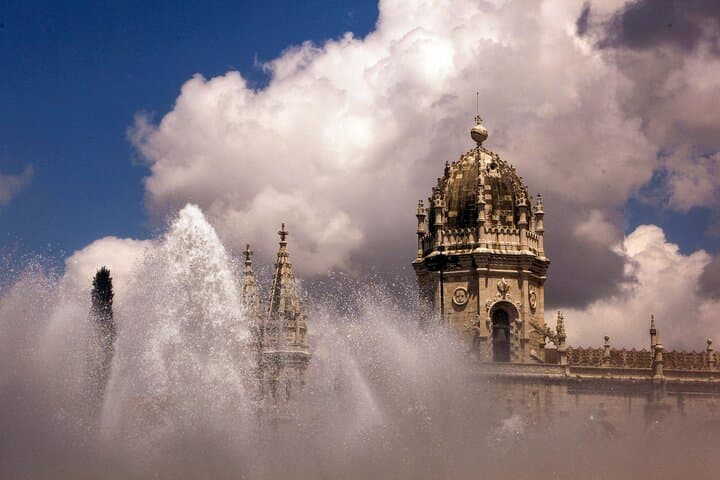
Belém was Portugal’s maritime launchpad during the Age of Discoveries; the jerónimos monastery and the Monument to the Discoveries point to voyages that rewrote global maps. The shoreline itself is an estuary plain—soft sediments shaped by tides—so the terrain is flat but frequently paved with uneven cobbles and ornate mosaic sidewalks. Culture here balances reverence and daily life: monks’ tombs sit near cafés selling pastéis de nata, and presidential palaces watch over fishing boats at the marina.
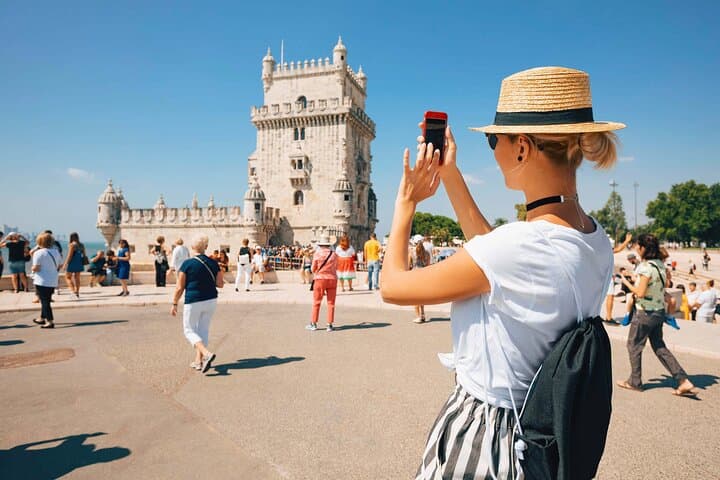
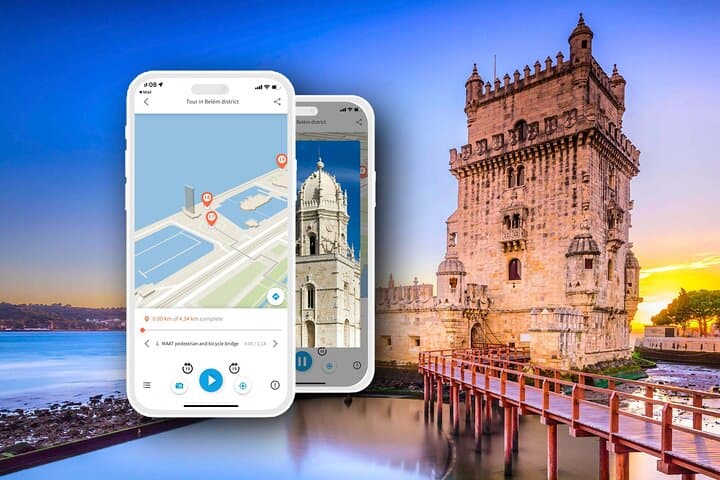
This self-guided audioguide pairs narrated history with an offline map and illustrations, letting you linger at the Tower of Belém or move on to the MAAT rooftop for river panoramas. Plan for roughly two hours to cover highlights; add time if you enter museums or queue for pastéis. Morning and late afternoon offer cooler light and fewer crowds—midday sun can be intense on exposed riverfront stretches.
Practical essentials: download the app and offline map before you leave, bring comfortable shoes for cobbles, a refillable water bottle, and headphones. Be mindful of museum hours, check the first-Sunday free-admission rule, and respect protected monuments and riverside ecology as you explore.
easy.
2 hours.
Suitable for most fitness levels; expect walking on flat but uneven pavement for 2–3 miles total
No—this product provides the audio guide, route map and illustrations; individual museum admissions are paid separately (many are free on the first Sunday of the month).
Plan about two hours to follow the core route without entering museums; add extra time if you visit exhibits or linger at cafés and viewpoints.
Much of the riverfront is flat, but historic cobbles, stairs at some sites and variable access at monuments mean some sections may be difficult—check individual sites for accessibility details.
Yes—the product includes one year of access with downloadable audio files and an offline map; multiple language options are available at purchase.
Belém grew rich in the 15th–16th centuries as the launch point for Portuguese exploration; the Jerónimos Monastery and the Tower of Belém were built to celebrate and defend that maritime era.
High visitor numbers stress historic stonework and riverside vegetation—stay on marked paths, avoid climbing on monuments and carry out any trash to help preserve the shoreline.
TouringBee operates guided outdoor trips and adventures with an emphasis on safety, stewardship, and memorable experiences.
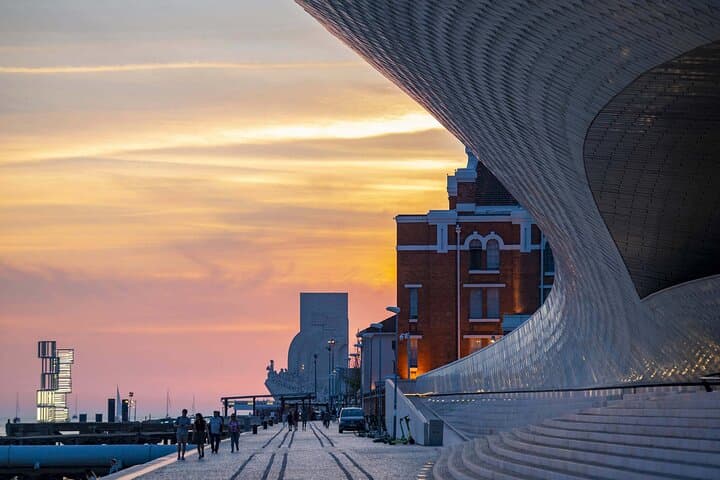
Morning light bounces off the Tagus as you step onto the wide promenade of Belém. The river dares you to look farther—its currents carrying echoes of ships that left these docks centuries ago. Walk clockwise from Praça do Império and the route threads through 21 landmarks, moving from Manueline stonework to a modern glass wave at MAAT.
Morning light bounces off the Tagus as you step onto the wide promenade of Belém. The river dares you to look farther—its currents carrying echoes of ships that left these docks centuries ago. Walk clockwise from Praça do Império and the route threads through 21 landmarks, moving from Manueline stonework to a modern glass wave at MAAT.
Belém was Portugal’s maritime launchpad during the Age of Discoveries; the jerónimos monastery and the Monument to the Discoveries point to voyages that rewrote global maps. The shoreline itself is an estuary plain—soft sediments shaped by tides—so the terrain is flat but frequently paved with uneven cobbles and ornate mosaic sidewalks. Culture here balances reverence and daily life: monks’ tombs sit near cafés selling pastéis de nata, and presidential palaces watch over fishing boats at the marina.
This self-guided audioguide pairs narrated history with an offline map and illustrations, letting you linger at the Tower of Belém or move on to the MAAT rooftop for river panoramas. Plan for roughly two hours to cover highlights; add time if you enter museums or queue for pastéis. Morning and late afternoon offer cooler light and fewer crowds—midday sun can be intense on exposed riverfront stretches.
Practical essentials: download the app and offline map before you leave, bring comfortable shoes for cobbles, a refillable water bottle, and headphones. Be mindful of museum hours, check the first-Sunday free-admission rule, and respect protected monuments and riverside ecology as you explore.