THE ADVENTURE COLLECTIVE® · Independent discovery and booking for outdoor travel

Move through Washington, D.C., on your own terms with a private audio guide that narrates the National Mall’s monuments, museums and civic spaces. Download once, step off when you choose, and let professionally produced commentary deepen what you see.
Move through Washington, D.C., on your own terms with a private audio guide that narrates the National Mall’s monuments, museums and civic spaces. Download once, step off when you choose, and let professionally produced commentary deepen what you see.
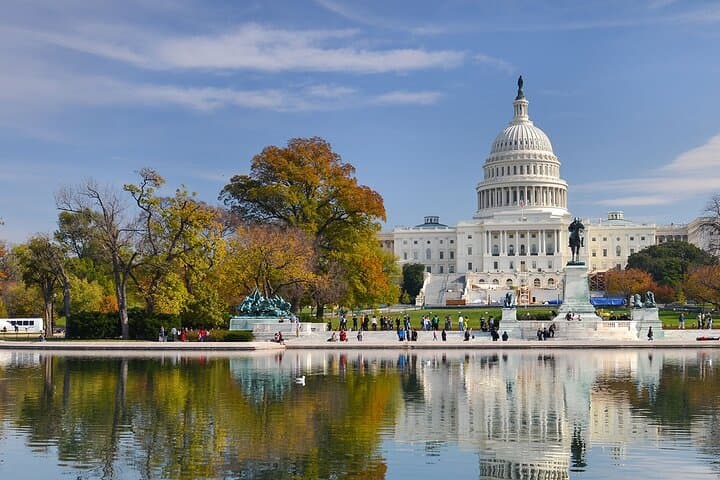
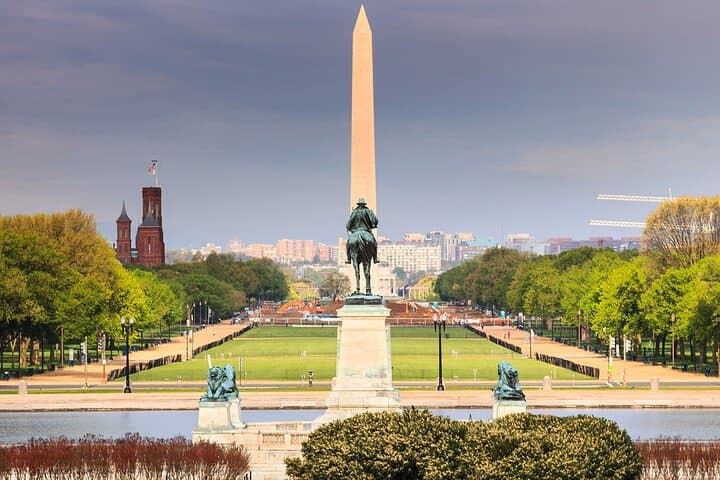
The tour begins where the city opens into open sky: the National Mall spreads out like a public room, flags and stone drawing your eyes along axial lines toward the Capitol and the Washington Monument.
Verified experiences and guided adventures in the surrounding area.
Operated by TravelMate · Washington, District of Columbia
The tour begins where the city opens into open sky: the National Mall spreads out like a public room, flags and stone drawing your eyes along axial lines toward the Capitol and the Washington Monument.
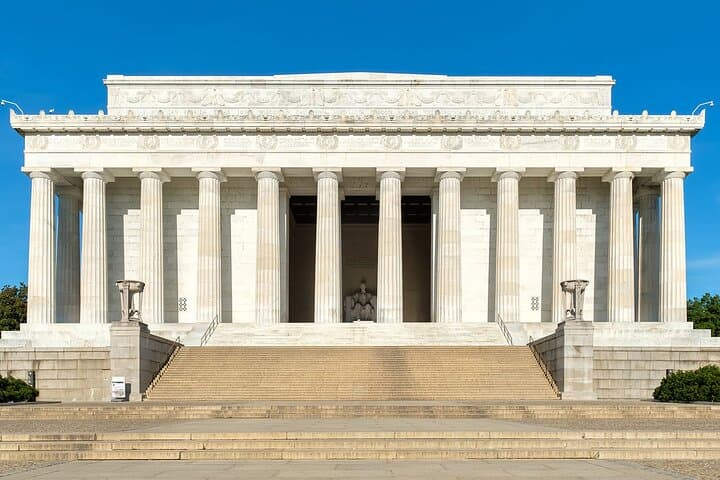
An audio voice steps in as steady company — describing the scale of the obelisk, pointing out the lines of the Capitol dome and pausing at the Lincoln Memorial where marble steps hold decades of public memory. The route moves at the user’s pace: slow to study inscriptions, quick to cross plazas, or lingering on benches that face the Potomac.
Washington’s plan traces back to Pierre L’Enfant and nineteenth-century civic ambition; the Mall itself sits on reclaimed tidal flats shaped by the Potomac and centuries of dredging. The area layers politics, public ritual and museum collections: classical facades, Beaux-Arts museums, and modern memorials all in sight of one another.
Listen for contextual anecdotes about architecture, wartime histories and the sculptors and planners who composed the city’s public script. Local tips note where to catch shade, when security checkpoints are busiest and which museum entrances skip lines.
Practical guidance: download the TravelMate app and the audio files before you arrive, carry a charged phone and comfortable shoes for paved walking, and plan for at least 90 minutes to absorb the highlights. Bring water, pause often to read plaques, and respect memorial boundaries—this is public history that asks for quiet attention as much as curiosity.
easy.
1.5 hours.
Suitable for most fitness levels; requires ability to walk on paved routes for up to 90 minutes with intermittent stops.
No; the audio guide is self-paced and can be started whenever you like after download.
Yes; the National Mall’s primary paths are paved and generally accessible, though some memorial steps may not be.
Yes; the TravelMate app allows offline playback after you download the tour files.
No; the audio provides commentary and directions but does not include admission to museums or restricted buildings.
The Mall follows Pierre L’Enfant’s late-18th-century plan and later 19th–20th century interventions that positioned national monuments and Smithsonian museums along a formal axis.
Stick to paved paths, pack out trash and avoid trampling grassy memorial lawns; many areas are maintained as cultural landscapes that require respectful use.
TravelMate operates guided outdoor trips and adventures with an emphasis on safety, stewardship, and memorable experiences.

The tour begins where the city opens into open sky: the National Mall spreads out like a public room, flags and stone drawing your eyes along axial lines toward the Capitol and the Washington Monument.
The tour begins where the city opens into open sky: the National Mall spreads out like a public room, flags and stone drawing your eyes along axial lines toward the Capitol and the Washington Monument.
An audio voice steps in as steady company — describing the scale of the obelisk, pointing out the lines of the Capitol dome and pausing at the Lincoln Memorial where marble steps hold decades of public memory. The route moves at the user’s pace: slow to study inscriptions, quick to cross plazas, or lingering on benches that face the Potomac.
Washington’s plan traces back to Pierre L’Enfant and nineteenth-century civic ambition; the Mall itself sits on reclaimed tidal flats shaped by the Potomac and centuries of dredging. The area layers politics, public ritual and museum collections: classical facades, Beaux-Arts museums, and modern memorials all in sight of one another.
Listen for contextual anecdotes about architecture, wartime histories and the sculptors and planners who composed the city’s public script. Local tips note where to catch shade, when security checkpoints are busiest and which museum entrances skip lines.
Practical guidance: download the TravelMate app and the audio files before you arrive, carry a charged phone and comfortable shoes for paved walking, and plan for at least 90 minutes to absorb the highlights. Bring water, pause often to read plaques, and respect memorial boundaries—this is public history that asks for quiet attention as much as curiosity.