THE ADVENTURE COLLECTIVE® · Independent discovery and booking for outdoor travel

Walk Wawel Hill your way with an expert-narrated audio guide that traces royal courts, Renaissance façades and the Vistula-facing dragon. This two-hour self-guided route is an efficient, accessible primer before you explore castle interiors.
Walk Wawel Hill your way with an expert-narrated audio guide that traces royal courts, Renaissance façades and the Vistula-facing dragon. This two-hour self-guided route is an efficient, accessible primer before you explore castle interiors.
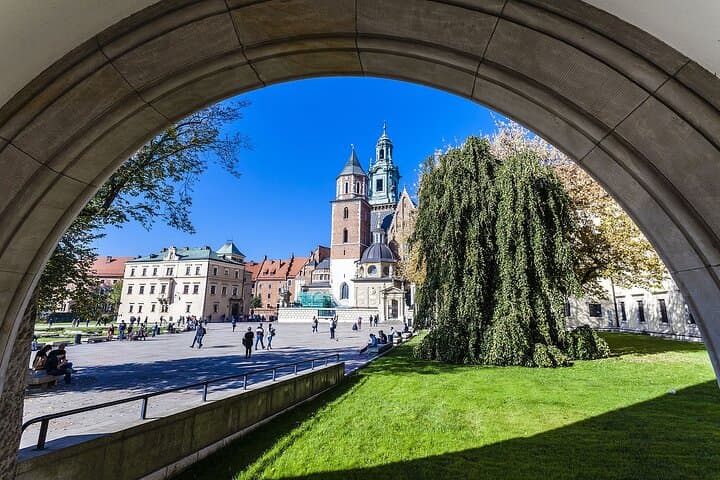
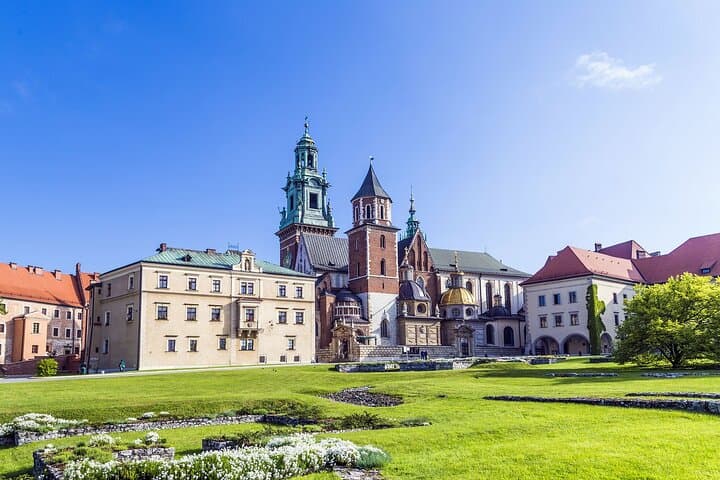
A morning on Wawel Hill begins at St. Magdalena Square with the city still rubbing sleep from its eyes. The audio guide leads you under the shadow of crenellated walls, across sun-streaked courtyards and along Kanonicza Street where stone facades bear graffiti of centuries — names of patrons, coats of arms and carved dates. The narration places you beside kings and builders: Casimir III the Great’s 14th-century expansions and Sigismund III Vasa’s later Renaissance touches, each stop timed so you can pause, look up and listen.
Verified experiences and guided adventures in the surrounding area.
Operated by ExcitingKrakow · Kraków, Lesser Poland Voivodeship
A morning on Wawel Hill begins at St. Magdalena Square with the city still rubbing sleep from its eyes. The audio guide leads you under the shadow of crenellated walls, across sun-streaked courtyards and along Kanonicza Street where stone facades bear graffiti of centuries — names of patrons, coats of arms and carved dates. The narration places you beside kings and builders: Casimir III the Great’s 14th-century expansions and Sigismund III Vasa’s later Renaissance touches, each stop timed so you can pause, look up and listen.
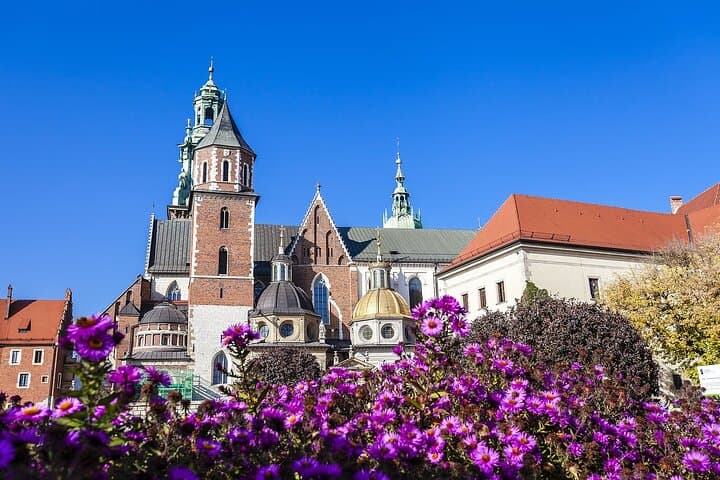
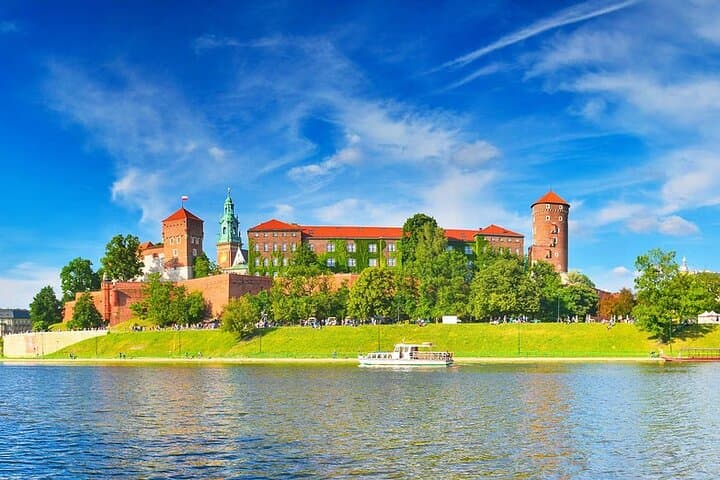
Geologically, the hill is a limestone spur above the Vistula; its slopes have dictated fortifications and pathways for a millennium. Culturally, Wawel served as Poland’s royal seat and remains central to national identity — the Cathedral and royal tombs are a short detour if you have time. The route ends at the Wawel Dragon statue watching the river below, a fitting, playful signoff to a factual, localized history lesson.
Practicalities: the tour runs about two hours, uses a downloadable audio file and map, and is available in multiple languages. Surfaces are mainly cobblestone and flagstone with short rises; the hill is wheelchair accessible in major areas, but some courtyards and side alleys can be uneven. Start early to avoid guide groups and lunch-hour crowds, and keep interior castle visits separate — this tour covers exteriors and context rather than admission to all museums. Bring comfortable shoes, a charged phone for the audio, and plan extra time if you intend to enter the Cathedral or castle museums.
easy.
2 hours.
Suitable for most fitness levels—requires walking on uneven urban terrain and short inclines.
The self-guided audio route runs about two hours from St. Magdalena Square through the Wawel courtyards to the dragon on the Vistula.
Yes—the audio guide is offered in several languages; select your preferred language when you download or access the file.
No—this product covers exteriors and historical commentary; entrance to specific museums or the cathedral requires separate tickets.
Major parts of the hill and primary routes are wheelchair accessible, but some alleys and courtyards have uneven surfaces; check local access maps if mobility is a concern.
Wawel was Poland’s royal seat for centuries and contains coronation sites, royal tombs and a cathedral central to Polish statehood.
Wawel sits within Kraków’s Historic Centre UNESCO buffer—follow signage, avoid touching delicate stonework and support preservation by staying on walkways.
ExcitingKrakow operates guided outdoor trips and adventures with an emphasis on safety, stewardship, and memorable experiences.
A morning on Wawel Hill begins at St. Magdalena Square with the city still rubbing sleep from its eyes. The audio guide leads you under the shadow of crenellated walls, across sun-streaked courtyards and along Kanonicza Street where stone facades bear graffiti of centuries — names of patrons, coats of arms and carved dates. The narration places you beside kings and builders: Casimir III the Great’s 14th-century expansions and Sigismund III Vasa’s later Renaissance touches, each stop timed so you can pause, look up and listen.
A morning on Wawel Hill begins at St. Magdalena Square with the city still rubbing sleep from its eyes. The audio guide leads you under the shadow of crenellated walls, across sun-streaked courtyards and along Kanonicza Street where stone facades bear graffiti of centuries — names of patrons, coats of arms and carved dates. The narration places you beside kings and builders: Casimir III the Great’s 14th-century expansions and Sigismund III Vasa’s later Renaissance touches, each stop timed so you can pause, look up and listen.
Geologically, the hill is a limestone spur above the Vistula; its slopes have dictated fortifications and pathways for a millennium. Culturally, Wawel served as Poland’s royal seat and remains central to national identity — the Cathedral and royal tombs are a short detour if you have time. The route ends at the Wawel Dragon statue watching the river below, a fitting, playful signoff to a factual, localized history lesson.
Practicalities: the tour runs about two hours, uses a downloadable audio file and map, and is available in multiple languages. Surfaces are mainly cobblestone and flagstone with short rises; the hill is wheelchair accessible in major areas, but some courtyards and side alleys can be uneven. Start early to avoid guide groups and lunch-hour crowds, and keep interior castle visits separate — this tour covers exteriors and context rather than admission to all museums. Bring comfortable shoes, a charged phone for the audio, and plan extra time if you intend to enter the Cathedral or castle museums.