THE ADVENTURE COLLECTIVE® · Independent discovery and booking for outdoor travel

Walk through Asakusa from Kaminarimon to the Sumida riverside with an offline audioguide that unpacks 1,300 years of history. This 90-minute self-guided route hits Nakamise, Senso-ji, hidden halls and riverside views—perfect for independent travelers who want context without a group.
Walk through Asakusa from Kaminarimon to the Sumida riverside with an offline audioguide that unpacks 1,300 years of history. This 90-minute self-guided route hits Nakamise, Senso-ji, hidden halls and riverside views—perfect for independent travelers who want context without a group.
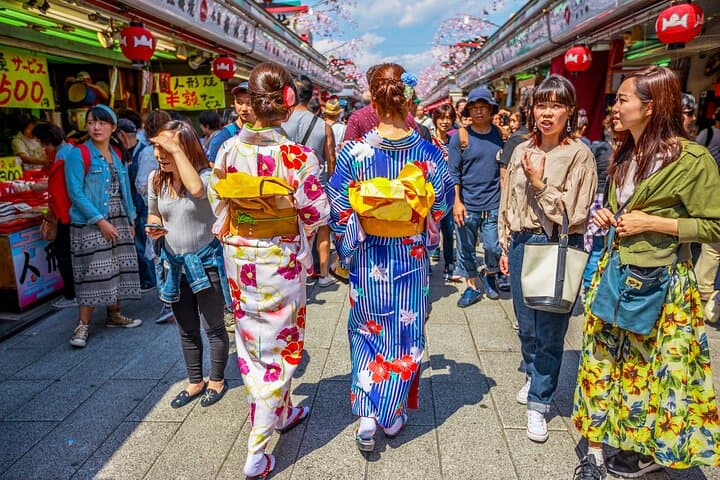
You step beneath the Kaminarimon and the world narrows to a single, enormous red lantern that seems to watch the crowd. The noise of vendors, the sweet waft of ningyoyaki, and the steady thump of footsteps along Nakamise Street create a human soundtrack as the audioguide cues the next slice of history.
Verified experiences and guided adventures in the surrounding area.
Operated by TouringBee · Tokyo, Tokyo
You step beneath the Kaminarimon and the world narrows to a single, enormous red lantern that seems to watch the crowd. The noise of vendors, the sweet waft of ningyoyaki, and the steady thump of footsteps along Nakamise Street create a human soundtrack as the audioguide cues the next slice of history.
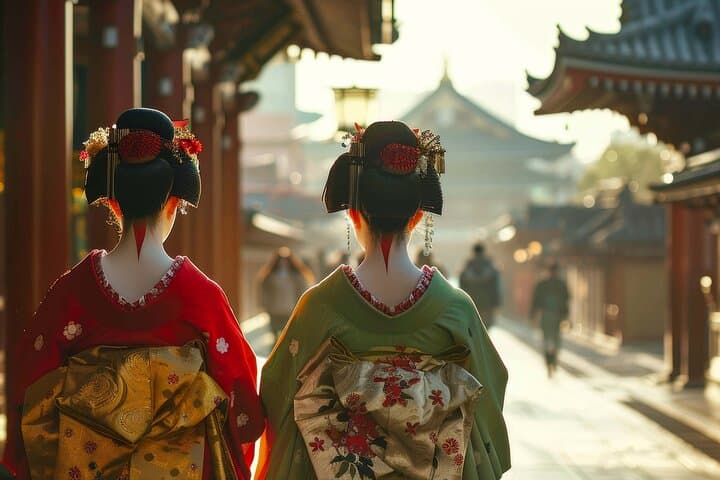
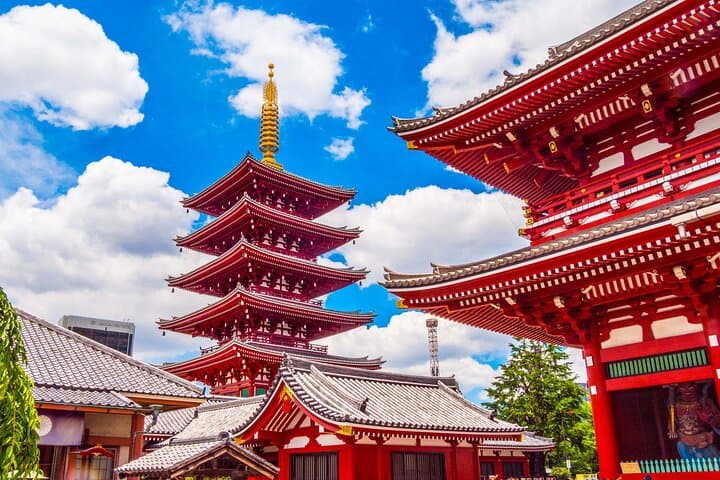
Senso-ji dates back to 645 AD and remains the spiritual core of Asakusa. The neighborhood grew along the Sumida River, whose flat floodplain shaped Asakusa’s low-rise streets and riverside views that still frame Tokyo Skytree on clear days. Culture here is public and ritualized: incense at the Hondo, shrine festivals like Sanja Matsuri, and evening conviviality on Hoppy Street. Small temples and Edo-era facades mix with modern amusements at Hanayashiki, giving the walk a layered, lived-in character.
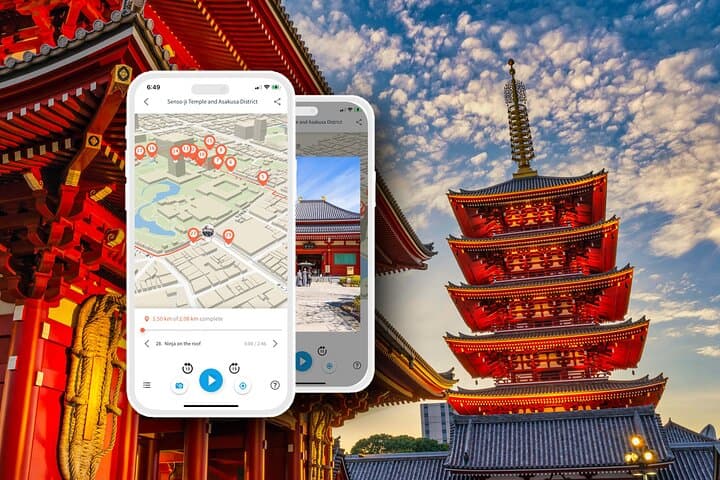
The audio tour covers 32 stops over roughly 2–3 km and about 90 minutes on mostly flat, paved routes with occasional steps at temple precincts. The app provides offline maps and historical commentary, so you can move at your own pace without cellular service. Practical tips: start early to avoid tour groups, carry small change for street snacks or shrine offerings, and wear comfortable shoes for mixed pavement and cobbles. Respect temple etiquette—speak softly, bow at shrines, and avoid obstructing rituals. Bring headphones and a power bank, and plan a short riverside detour at Sumida Park if you want skyline views.
This self-guided format suits first-time visitors who want context and control: it’s a compact urban walk that pairs sensory street life with concise, historian-narrated insight.
easy.
1.5 hours.
Minimal fitness required — able to walk 2–3 km on flat, paved surfaces with short standing periods
No — the tour includes offline maps and 32 downloadable audio files so you can follow the route without a network connection once activated.
The product provides multiple language options via the app; select your preferred language when activating your purchase.
Most streets are flat and paved, but some temple approaches have steps or uneven stone; accessibility is partial—bring a compact stroller and check specific gate access on-site.
Access is granted for one year from activation, allowing repeat use and flexible timing.
Senso-ji was founded in 645 AD and remains Tokyo’s oldest temple; Asakusa Shrine (1649) anchors local festival culture, highlighted each year by the Sanja Matsuri.
Temples and neighborhood shops rely on respectful tourism—avoid litter, follow signage in sacred areas, and use designated trash and recycling points.
TouringBee operates guided outdoor trips and adventures with an emphasis on safety, stewardship, and memorable experiences.
You step beneath the Kaminarimon and the world narrows to a single, enormous red lantern that seems to watch the crowd. The noise of vendors, the sweet waft of ningyoyaki, and the steady thump of footsteps along Nakamise Street create a human soundtrack as the audioguide cues the next slice of history.
You step beneath the Kaminarimon and the world narrows to a single, enormous red lantern that seems to watch the crowd. The noise of vendors, the sweet waft of ningyoyaki, and the steady thump of footsteps along Nakamise Street create a human soundtrack as the audioguide cues the next slice of history.
Senso-ji dates back to 645 AD and remains the spiritual core of Asakusa. The neighborhood grew along the Sumida River, whose flat floodplain shaped Asakusa’s low-rise streets and riverside views that still frame Tokyo Skytree on clear days. Culture here is public and ritualized: incense at the Hondo, shrine festivals like Sanja Matsuri, and evening conviviality on Hoppy Street. Small temples and Edo-era facades mix with modern amusements at Hanayashiki, giving the walk a layered, lived-in character.
The audio tour covers 32 stops over roughly 2–3 km and about 90 minutes on mostly flat, paved routes with occasional steps at temple precincts. The app provides offline maps and historical commentary, so you can move at your own pace without cellular service. Practical tips: start early to avoid tour groups, carry small change for street snacks or shrine offerings, and wear comfortable shoes for mixed pavement and cobbles. Respect temple etiquette—speak softly, bow at shrines, and avoid obstructing rituals. Bring headphones and a power bank, and plan a short riverside detour at Sumida Park if you want skyline views.
This self-guided format suits first-time visitors who want context and control: it’s a compact urban walk that pairs sensory street life with concise, historian-narrated insight.