THE ADVENTURE COLLECTIVE® · Independent discovery and booking for outdoor travel

Walk the cooled lava fields of Arenal Park at your own pace — three marked loops lead past regenerating forest, lagoons with Rainbow Guapote, and viewpoints over Arenal Volcano and Lake Los Patos. Ideal for families and travelers who prefer independent exploration.
Walk the cooled lava fields of Arenal Park at your own pace — three marked loops lead past regenerating forest, lagoons with Rainbow Guapote, and viewpoints over Arenal Volcano and Lake Los Patos. Ideal for families and travelers who prefer independent exploration.
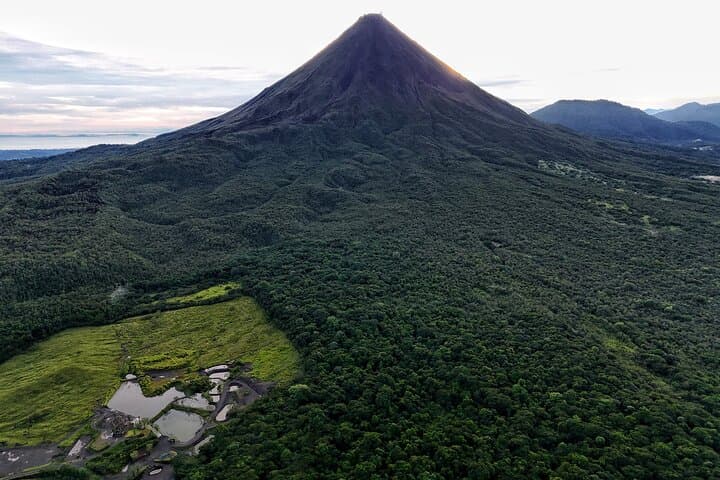
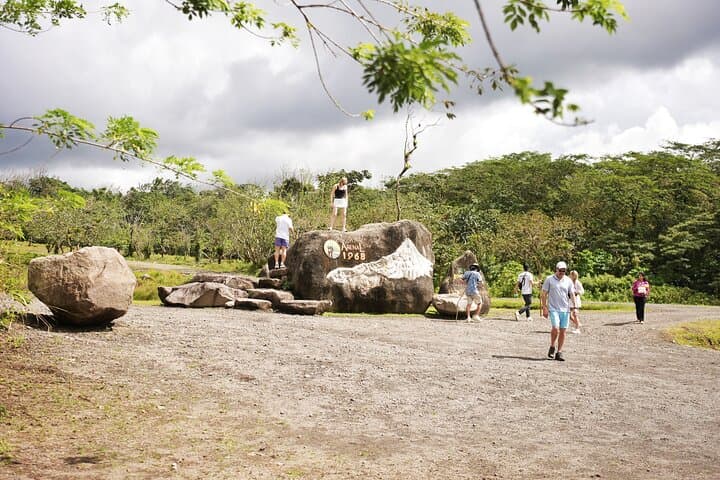
Morning mist lifts off Arenal Lake as you step onto blackened rock and crumbly volcanic soil — the ground still remembers the 1968 eruption. Trails slice across old lava fields and into regenerating secondary forest, where shrubby pitahaya and pineapple plots edge the path and birds call from the canopy.
Verified experiences and guided adventures in the surrounding area.
Operated by Arenal 1968 Volcano View & Trails · La Fortuna, Alajuela
Morning mist lifts off Arenal Lake as you step onto blackened rock and crumbly volcanic soil — the ground still remembers the 1968 eruption. Trails slice across old lava fields and into regenerating secondary forest, where shrubby pitahaya and pineapple plots edge the path and birds call from the canopy.
The park occupies a raw geological page: basaltic lava flows from Arenal’s 1968 event sculpted ridges, ponds and channels that redirected water and life. Local farmers have long worked the fertile soils at the volcano’s base; you’ll pass sugarcane clearings and smallholdings that reflect the region’s agricultural culture. Wildlife is conspicuous if you move quietly — howler and white-faced capuchin monkeys, coati, and the Rainbow Guapote in quieter lagoons; Lake Los Patos is noted for its spectacled caimans.
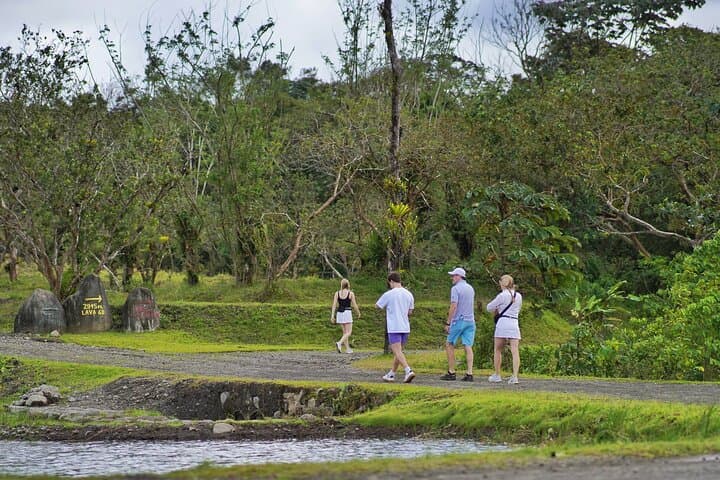
Three clearly marked loops let you tailor the day: a short 1.7 km stroll, a 3 km middle circuit or a 5.6 km full loop. Expect compacted volcanic sand, exposed rock, and some uneven boardwalks near wetlands. Views toward Arenal Volcano and the sweeping blue of the lake reward modest climbs and lookout points.
Practical tips: arrive early to beat heat and wildlife crowds, carry at least 1–2 liters of water, and wear closed shoes with good grip — volcanic rock can be slick when damp. Respect posted signs near lagoons (alligators are present) and pack out trash; trails are self-guided and well signed, so bring a map or download the route before you lose signal. This is an accessible, family-friendly way to feel how a landscape recovers and reinvents itself after fire and flow.
moderate.
1–3 hours.
Suitable for most fitness levels; the long route (5.6 km) includes uneven footing and short climbs so basic endurance and balance are helpful.
Yes — Arenal Park offers three clearly marked loops (1.7 km, 3 km, 5.6 km) with signage at junctions; bring a downloaded map if you expect limited cell service.
Generally yes — routes are family-friendly, but supervise children near lagoons and avoid shoreline areas where caimans may occur.
This experience is self-guided and designed for independent visitors; guided tours are available separately if you prefer an interpreter or wildlife-focused walk.
Yes — Several viewpoints along the loops offer panoramic sights of Arenal Volcano and Arenal Lake, weather permitting.
The park sits on the deposits of Arenal’s 1968 eruption; the cooled lava fields visibly record flows that reshaped drainage and farmland around La Fortuna.
Trails focus on low-impact access; visitors are asked to stay on marked paths to allow regenerating forest to recover and to avoid disturbing nesting or shoreline wildlife.
Arenal 1968 Volcano View & Trails operates guided outdoor trips and adventures with an emphasis on safety, stewardship, and memorable experiences.

Morning mist lifts off Arenal Lake as you step onto blackened rock and crumbly volcanic soil — the ground still remembers the 1968 eruption. Trails slice across old lava fields and into regenerating secondary forest, where shrubby pitahaya and pineapple plots edge the path and birds call from the canopy.
Morning mist lifts off Arenal Lake as you step onto blackened rock and crumbly volcanic soil — the ground still remembers the 1968 eruption. Trails slice across old lava fields and into regenerating secondary forest, where shrubby pitahaya and pineapple plots edge the path and birds call from the canopy.
The park occupies a raw geological page: basaltic lava flows from Arenal’s 1968 event sculpted ridges, ponds and channels that redirected water and life. Local farmers have long worked the fertile soils at the volcano’s base; you’ll pass sugarcane clearings and smallholdings that reflect the region’s agricultural culture. Wildlife is conspicuous if you move quietly — howler and white-faced capuchin monkeys, coati, and the Rainbow Guapote in quieter lagoons; Lake Los Patos is noted for its spectacled caimans.
Three clearly marked loops let you tailor the day: a short 1.7 km stroll, a 3 km middle circuit or a 5.6 km full loop. Expect compacted volcanic sand, exposed rock, and some uneven boardwalks near wetlands. Views toward Arenal Volcano and the sweeping blue of the lake reward modest climbs and lookout points.
Practical tips: arrive early to beat heat and wildlife crowds, carry at least 1–2 liters of water, and wear closed shoes with good grip — volcanic rock can be slick when damp. Respect posted signs near lagoons (alligators are present) and pack out trash; trails are self-guided and well signed, so bring a map or download the route before you lose signal. This is an accessible, family-friendly way to feel how a landscape recovers and reinvents itself after fire and flow.