THE ADVENTURE COLLECTIVE® · Independent discovery and booking for outdoor travel

Slide into a vintage automatic and drive quiet Provençal lanes to the Pont du Gard. This 3–4 hour self-drive tour pairs Roman history with tasting local snacks and short walks at medieval Uzès.
Slide into a vintage automatic and drive quiet Provençal lanes to the Pont du Gard. This 3–4 hour self-drive tour pairs Roman history with tasting local snacks and short walks at medieval Uzès.
The tour opens on a sun-warmed lane outside a Provençal village; you slide into the seat of an automatic vintage car, engine purring like an old friend, and the road ahead unspools through olive groves and limestone ridges. The Gardon River curves below, daring you to slow down for the aqueduct’s first glimpse: the Pont du Gard, its arches standing 49 meters high against a bright Provençal sky.
Verified experiences and guided adventures in the surrounding area.
Operated by Rallye en méharis électriques · Vers-Pont-du-Gard, Occitanie
The tour opens on a sun-warmed lane outside a Provençal village; you slide into the seat of an automatic vintage car, engine purring like an old friend, and the road ahead unspools through olive groves and limestone ridges. The Gardon River curves below, daring you to slow down for the aqueduct’s first glimpse: the Pont du Gard, its arches standing 49 meters high against a bright Provençal sky.
Built in the 1st century to bring water to Nîmes, the aqueduct is UNESCO-listed and central to the region’s Roman legacy. Geologically, the route crosses the Causses limestone and low karst plateaus that shaped local farming patterns for centuries. Cultural touches — market stalls in Uzès, stone hamlets with shuttered windows — speak to a rural life centered on markets, sheep, and olive oil.
Practically, the experience is a relaxed, scenic loop: around 3–4 hours of driving with short stops to walk, photograph and taste local snacks. The included Pont du Gard admission saves time but expect cobbled paths and modest uphill sections at viewpoints. Midday sun can be strong; carry water and sun protection, and allow extra time for the Uzès market if it’s market day. Drive at a measured pace—these vintage cars are charming but require attention on narrow country roads.
For planners: bring a valid driver’s license, check fuel policy, and book mornings or late afternoons for softer light and lighter traffic. The route rewards slow travel: riverside shade, birds fishing the shallows, and terraces of vineyards rolling into the distance.
easy.
3–4 hours.
Suitable for most fitness levels; involves minimal walking (20–30 minute strolls at stops) and getting in/out of the car.
No special license is required beyond a valid standard driver’s license for automatic vehicles; the provider will confirm age and ID at booking.
Fuel policies vary—check the tour terms before booking; many self-drive arrangements require you to refill before returning the car.
Yes, this tour includes free entrance to the Pont du Gard as stated in the itinerary.
Infants and small children can travel; service animals are allowed but check space and safety for young passengers in a vintage vehicle.
The Pont du Gard was built in the 1st century as part of a Roman aqueduct that supplied water to Nîmes; nearby Uzès grew as a medieval market town anchored by its castle.
The site is UNESCO-protected; visitors should stick to marked trails, avoid climbing on the structure, and follow local waste and parking rules to limit visitor impact.
Rallye en méharis électriques operates guided outdoor trips and adventures with an emphasis on safety, stewardship, and memorable experiences.

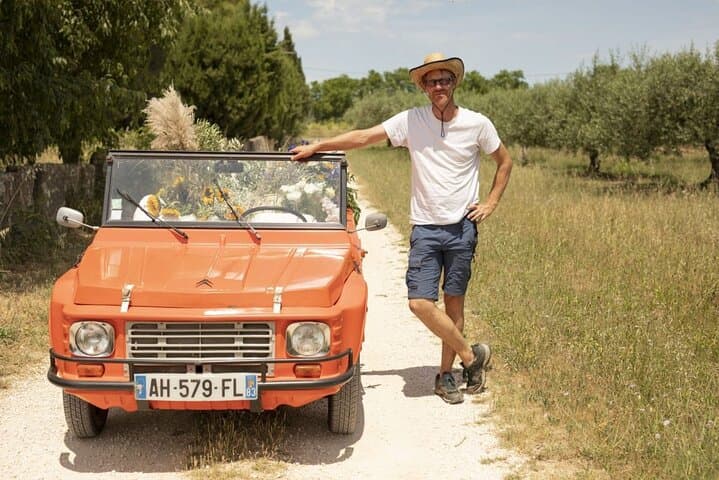


The tour opens on a sun-warmed lane outside a Provençal village; you slide into the seat of an automatic vintage car, engine purring like an old friend, and the road ahead unspools through olive groves and limestone ridges. The Gardon River curves below, daring you to slow down for the aqueduct’s first glimpse: the Pont du Gard, its arches standing 49 meters high against a bright Provençal sky.
The tour opens on a sun-warmed lane outside a Provençal village; you slide into the seat of an automatic vintage car, engine purring like an old friend, and the road ahead unspools through olive groves and limestone ridges. The Gardon River curves below, daring you to slow down for the aqueduct’s first glimpse: the Pont du Gard, its arches standing 49 meters high against a bright Provençal sky.
Built in the 1st century to bring water to Nîmes, the aqueduct is UNESCO-listed and central to the region’s Roman legacy. Geologically, the route crosses the Causses limestone and low karst plateaus that shaped local farming patterns for centuries. Cultural touches — market stalls in Uzès, stone hamlets with shuttered windows — speak to a rural life centered on markets, sheep, and olive oil.
Practically, the experience is a relaxed, scenic loop: around 3–4 hours of driving with short stops to walk, photograph and taste local snacks. The included Pont du Gard admission saves time but expect cobbled paths and modest uphill sections at viewpoints. Midday sun can be strong; carry water and sun protection, and allow extra time for the Uzès market if it’s market day. Drive at a measured pace—these vintage cars are charming but require attention on narrow country roads.
For planners: bring a valid driver’s license, check fuel policy, and book mornings or late afternoons for softer light and lighter traffic. The route rewards slow travel: riverside shade, birds fishing the shallows, and terraces of vineyards rolling into the distance.