THE ADVENTURE COLLECTIVE® · Independent discovery and booking for outdoor travel

Pilot a quiet electric boat through Amsterdam’s 17th-century canal ring. This self-drive rental requires no license and gives groups flexible, up-close access to the city’s museums, houseboats, and hidden waterways.
Pilot a quiet electric boat through Amsterdam’s 17th-century canal ring. This self-drive rental requires no license and gives groups flexible, up-close access to the city’s museums, houseboats, and hidden waterways.
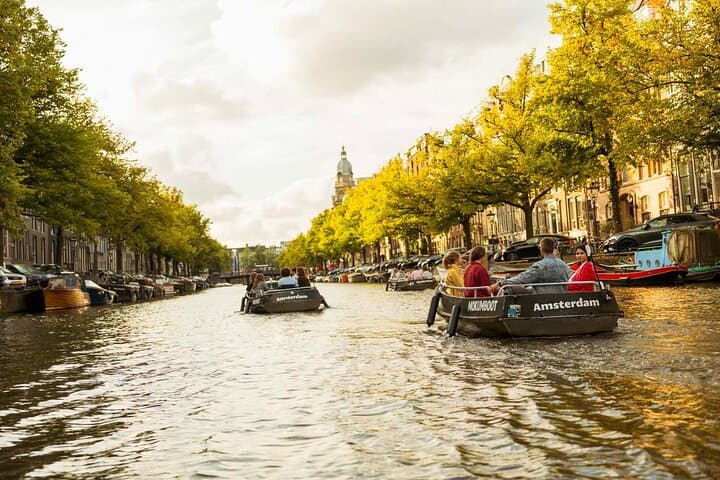
You push off from a low quay and the city rearranges itself around you: brick facades glide past, houseboats bob like quiet conversations, and church spires slice the winter light. The electric motor hums; the boat moves with a slow, deliberate patience that invites you to look up from the map and into the scene.
Verified experiences and guided adventures in the surrounding area.
Operated by Mokumboot · Amsterdam, North Holland
You push off from a low quay and the city rearranges itself around you: brick facades glide past, houseboats bob like quiet conversations, and church spires slice the winter light. The electric motor hums; the boat moves with a slow, deliberate patience that invites you to look up from the map and into the scene.
The canals of Amsterdam were dug in the 17th century to expand trade and plan the city with concentric canals known as the Grachtengordel. Today those same waterways thread past the Rijksmuseum, Anne Frank House, and narrow merchant houses, offering a perspective steeped in mercantile history and practical engineering — levees, sluices, and adaptive houseboats shaped by centuries of water management.
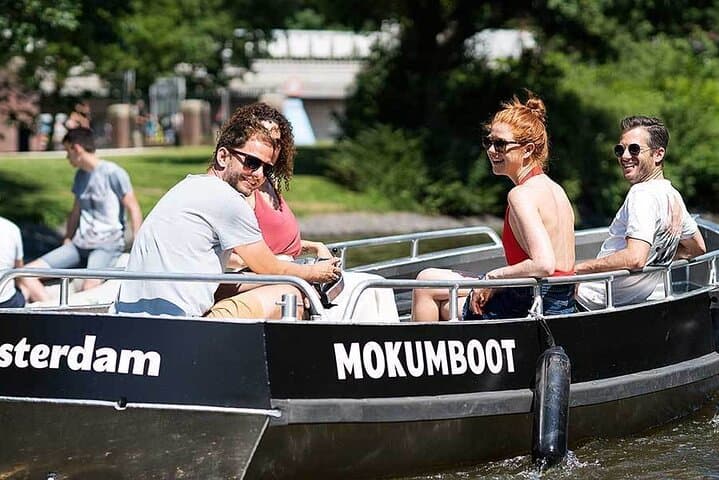
On a self-drive electric rental, you get a brief safety and navigation orientation, a printed or digital route map, and a stable, quiet craft built for groups of up to six adults. Routes range from the tourist heart around the major sights to quieter canals where graffiti and bike racks tell a different neighborhood story. Staff point out local customs — keep speeds low in narrow stretches, yield to larger vessels, and watch for low bridges.
Practical tips: aim for early morning or evening to avoid tour-boat traffic, bring layered outerwear for spray and canal breeze, and pack a small cooler for drinks and snacks since stopping is flexible. Lifejackets are provided and no boating license is required, making this an accessible way to explore Amsterdam’s history, architecture, and everyday life from the water.
easy.
2 hours (typical).
Suitable for most fitness levels; mostly seated with short stretches for boarding and handling the helm.
No license is required; staff give a short safety and steering briefing before departure.
Boats are rated for up to six adults (plus two small children as noted), making them ideal for groups and families.
Yes — you can moor briefly where allowed, but at least one person must stay with the boat and you should follow local mooring rules.
Lifejackets are included and service animals are allowed; check the operator’s specifics for other pets.
Amsterdam’s concentric canal ring was developed in the 17th century as part of a deliberate urban expansion tied to trade and water management.
Electric boats cut local emissions and noise, but visitors should avoid littering and respect low-speed and no-wake zones to protect canal banks and wildlife.
Mokumboot operates guided outdoor trips and adventures with an emphasis on safety, stewardship, and memorable experiences.
You push off from a low quay and the city rearranges itself around you: brick facades glide past, houseboats bob like quiet conversations, and church spires slice the winter light. The electric motor hums; the boat moves with a slow, deliberate patience that invites you to look up from the map and into the scene.
You push off from a low quay and the city rearranges itself around you: brick facades glide past, houseboats bob like quiet conversations, and church spires slice the winter light. The electric motor hums; the boat moves with a slow, deliberate patience that invites you to look up from the map and into the scene.
The canals of Amsterdam were dug in the 17th century to expand trade and plan the city with concentric canals known as the Grachtengordel. Today those same waterways thread past the Rijksmuseum, Anne Frank House, and narrow merchant houses, offering a perspective steeped in mercantile history and practical engineering — levees, sluices, and adaptive houseboats shaped by centuries of water management.
On a self-drive electric rental, you get a brief safety and navigation orientation, a printed or digital route map, and a stable, quiet craft built for groups of up to six adults. Routes range from the tourist heart around the major sights to quieter canals where graffiti and bike racks tell a different neighborhood story. Staff point out local customs — keep speeds low in narrow stretches, yield to larger vessels, and watch for low bridges.
Practical tips: aim for early morning or evening to avoid tour-boat traffic, bring layered outerwear for spray and canal breeze, and pack a small cooler for drinks and snacks since stopping is flexible. Lifejackets are provided and no boating license is required, making this an accessible way to explore Amsterdam’s history, architecture, and everyday life from the water.