THE ADVENTURE COLLECTIVE® · Independent discovery and booking for outdoor travel

Take control of your Oman adventure with a self-drive 4WD from Muscat. From rocky Hajar passes to dune camping in the Sharqiya Sands, this rental plus rooftop tent option gives freedom and capability for off-road exploration.
Take control of your Oman adventure with a self-drive 4WD from Muscat. From rocky Hajar passes to dune camping in the Sharqiya Sands, this rental plus rooftop tent option gives freedom and capability for off-road exploration.
The engine hums as you roll out of Muscat at dawn, the city’s whitewashed buildings shrinking behind you while the Hajar Mountains rise like a gray wall to the west and the desert opens to the south.
Verified experiences and guided adventures in the surrounding area.
Operated by Oman Compass Tours · Muscat, Muscat Governorate
The engine hums as you roll out of Muscat at dawn, the city’s whitewashed buildings shrinking behind you while the Hajar Mountains rise like a gray wall to the west and the desert opens to the south.
This is Oman on four wheels: jagged limestone ridgelines, wadis carved by seasonal floods, and the broad, wind-sculpted dunes of the Sharqiya (Wahiba) Sands. Historically these routes connected frankincense traders and coastal fishermen; today they reward drivers who respect local terrain and Bedouin land. Geologically the Hajar range is the result of tectonic collision and uplift—expect steep switchbacks and rocky tracks—while the sands are young, shifting from wind and tidal forces along the Gulf.
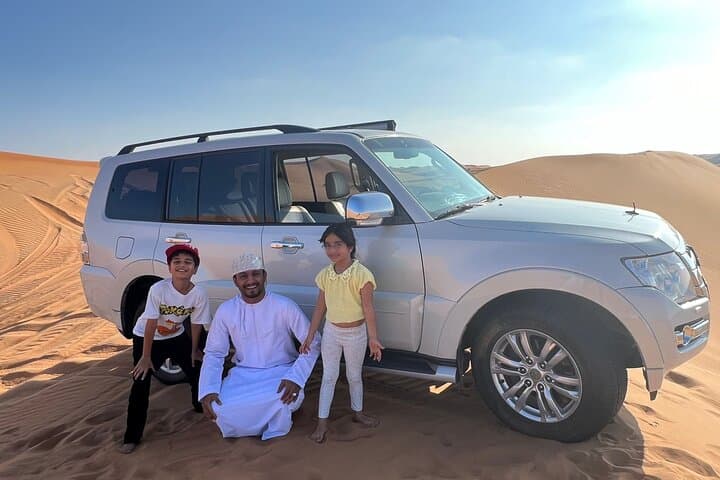
Culturally, stops in village markets or a roadside tea with Bedouin hosts offer quiet windows into Omani hospitality. Practically, self-drive 4WD rentals like the Mitsubishi Pajero give clearance, low-range gearing and traction modes needed for dunes, gravel tracks and mountain passes.
Plan for early starts, strong sun, and long stretches without services: carry extra fuel, large water reserves and a recovery kit. Use offline maps and a reliable GPS; check tire pressures before dune runs and lower them on sand. If you add a rooftop tent, practice setting it up on flat ground and choose camp spots away from dune crests and protected archaeological sites.
This trip suits independent travelers who want the freedom to route their own itinerary—Muscat to mountain terraces, wadis, or a night under stars on a rooftop tent. Respect local rules, conserve water, and leave no trace to keep these landscapes open for the next traveller.
moderate.
1–100 days.
No special fitness required for driving, but be prepared for short hikes, campsite setup and handling heat.
Visitors with a valid national driving license from many countries can drive in Oman; an International Driving Permit is recommended—check rental rules before booking.
You can camp in many areas but avoid private property and protected sites; choose durable surfaces and follow local guidance on permitted campsites.
Rooftop tents and camping equipment are available as add-ons—confirm availability and setup instructions when booking.
Rental terms often specify allowed terrain and mileage—ask the provider about insurance coverage for off-road use and any geographic exclusions.
Routes around Muscat link centuries of maritime trade and inland frankincense trails; many village settlements retain traditional mud-brick and stone architecture.
Drive only on established tracks, pack out all waste and conserve water; dune ecosystems recover slowly from vehicle disturbance.
Oman Compass Tours operates guided outdoor trips and adventures with an emphasis on safety, stewardship, and memorable experiences.

The engine hums as you roll out of Muscat at dawn, the city’s whitewashed buildings shrinking behind you while the Hajar Mountains rise like a gray wall to the west and the desert opens to the south.
The engine hums as you roll out of Muscat at dawn, the city’s whitewashed buildings shrinking behind you while the Hajar Mountains rise like a gray wall to the west and the desert opens to the south.
This is Oman on four wheels: jagged limestone ridgelines, wadis carved by seasonal floods, and the broad, wind-sculpted dunes of the Sharqiya (Wahiba) Sands. Historically these routes connected frankincense traders and coastal fishermen; today they reward drivers who respect local terrain and Bedouin land. Geologically the Hajar range is the result of tectonic collision and uplift—expect steep switchbacks and rocky tracks—while the sands are young, shifting from wind and tidal forces along the Gulf.
Culturally, stops in village markets or a roadside tea with Bedouin hosts offer quiet windows into Omani hospitality. Practically, self-drive 4WD rentals like the Mitsubishi Pajero give clearance, low-range gearing and traction modes needed for dunes, gravel tracks and mountain passes.
Plan for early starts, strong sun, and long stretches without services: carry extra fuel, large water reserves and a recovery kit. Use offline maps and a reliable GPS; check tire pressures before dune runs and lower them on sand. If you add a rooftop tent, practice setting it up on flat ground and choose camp spots away from dune crests and protected archaeological sites.
This trip suits independent travelers who want the freedom to route their own itinerary—Muscat to mountain terraces, wadis, or a night under stars on a rooftop tent. Respect local rules, conserve water, and leave no trace to keep these landscapes open for the next traveller.