THE ADVENTURE COLLECTIVE® · Independent discovery and booking for outdoor travel

Glide beneath Paris’s bridges on a 1‑hour Bateaux Mouches cruise. Live commentary and panoramic views put the Eiffel Tower, Notre‑Dame and the Louvre in context—ideal for first‑time visitors who want a compact, scenic orientation of the city.
Glide beneath Paris’s bridges on a 1‑hour Bateaux Mouches cruise. Live commentary and panoramic views put the Eiffel Tower, Notre‑Dame and the Louvre in context—ideal for first‑time visitors who want a compact, scenic orientation of the city.
You step onto the gangway as the Seine pulls at the hull, the river daring you to slow down and look. The boat slips away from the quay beneath the Eiffel Tower and the city opens sideways—stone embankments, iron bridges, and façades that change like pages in a history book.
Verified experiences and guided adventures in the surrounding area.
Operated by My Travelons Ltd · Paris, Île-de-France
You step onto the gangway as the Seine pulls at the hull, the river daring you to slow down and look. The boat slips away from the quay beneath the Eiffel Tower and the city opens sideways—stone embankments, iron bridges, and façades that change like pages in a history book.
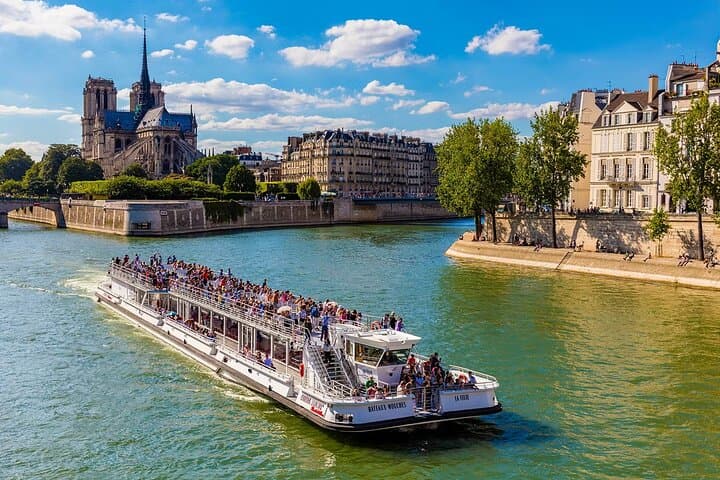
The Seine has been Paris’s working spine for centuries, carrying goods, ideas, and people. Geologically it carved its valley through softer Parisian sediments, creating wide, navigable turns where islands like Île de la Cité became civic centers. From the water you see layers of Parisian culture: medieval walls around Notre-Dame’s island, Haussmann’s ordered boulevards, and 19th‑century glass-roofed museums like the Louvre lining the banks.
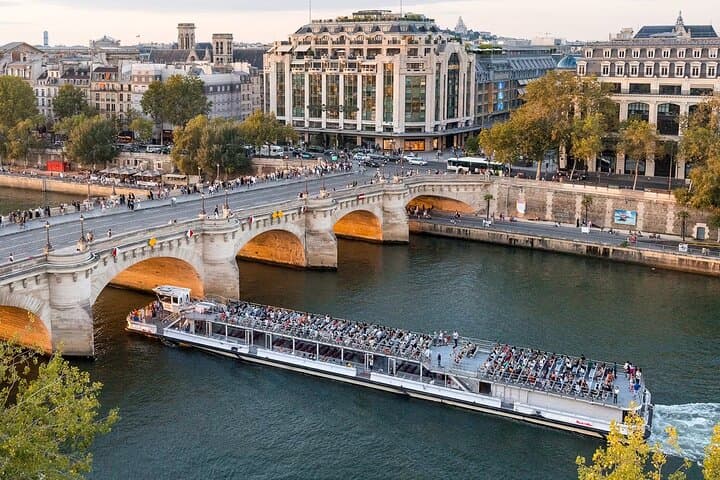
Live commentary on board flags architectural details and anecdotes—who built which bridge, why a quayside became a bookstall row, where the city’s trading routes ran. The cruise is a practical way to get orientation: photographers pick the upper deck at golden hour; families find shade downstairs; history buffs listen close as the guide marks each landmark.
Plan to arrive 15–20 minutes early at the boarding point near the Eiffel Tower, bring a windproof layer for the open deck, and charge your camera—the light on the Seine is famously fickle. Cruises run throughout the day and are accessible for most travelers; they also make an easy first-orientation outing before you explore Paris on foot.
In short: it’s low-effort, high-return sightseeing—an efficient dip into Parisian history and cityscape, with the river itself doing much of the storytelling.
easy.
1–1.5 hours.
Suitable for all fitness levels; minimal mobility required for boarding and short walk to the dock
Most departures for this Bateaux Mouches route are from the quay close to the Eiffel Tower; check your ticket for the precise boarding point and arrive early.
Yes—infants must sit on an adult’s lap; the cruise is family-friendly and accessible to most ages.
Live onboard commentary is provided and audio guides are offered in multiple languages; free onboard Wi‑Fi can be used to access audio in specific languages.
Standard policy allows refunds if you cancel at least 24 hours before departure; operators typically run in light rain but may alter services for severe conditions.
The Seine has been Paris’s commercial and cultural artery for centuries; river traffic and riverside activity shaped the city’s medieval and modern neighborhoods.
River operators follow municipal rules to limit wake and control waste; staying on marked boarding points and disposing of litter helps protect riverbanks and wildlife.
My Travelons Ltd operates guided outdoor trips and adventures with an emphasis on safety, stewardship, and memorable experiences.

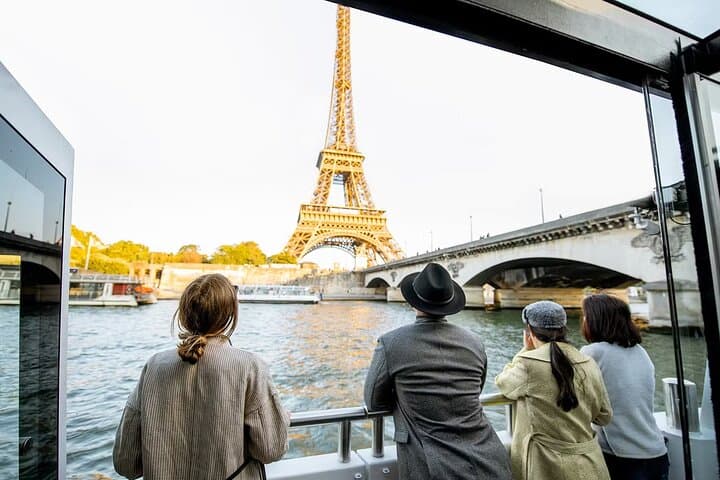
You step onto the gangway as the Seine pulls at the hull, the river daring you to slow down and look. The boat slips away from the quay beneath the Eiffel Tower and the city opens sideways—stone embankments, iron bridges, and façades that change like pages in a history book.
You step onto the gangway as the Seine pulls at the hull, the river daring you to slow down and look. The boat slips away from the quay beneath the Eiffel Tower and the city opens sideways—stone embankments, iron bridges, and façades that change like pages in a history book.
The Seine has been Paris’s working spine for centuries, carrying goods, ideas, and people. Geologically it carved its valley through softer Parisian sediments, creating wide, navigable turns where islands like Île de la Cité became civic centers. From the water you see layers of Parisian culture: medieval walls around Notre-Dame’s island, Haussmann’s ordered boulevards, and 19th‑century glass-roofed museums like the Louvre lining the banks.
Live commentary on board flags architectural details and anecdotes—who built which bridge, why a quayside became a bookstall row, where the city’s trading routes ran. The cruise is a practical way to get orientation: photographers pick the upper deck at golden hour; families find shade downstairs; history buffs listen close as the guide marks each landmark.
Plan to arrive 15–20 minutes early at the boarding point near the Eiffel Tower, bring a windproof layer for the open deck, and charge your camera—the light on the Seine is famously fickle. Cruises run throughout the day and are accessible for most travelers; they also make an easy first-orientation outing before you explore Paris on foot.
In short: it’s low-effort, high-return sightseeing—an efficient dip into Parisian history and cityscape, with the river itself doing much of the storytelling.