THE ADVENTURE COLLECTIVE® · Independent discovery and booking for outdoor travel

Cover Paris’ greatest monuments in two effortless hours on a Segway. This guided urban ride glides along the Champs-Élysées, past the Eiffel Tower and Grand Palais, blending quick history with easy mobility.
Cover Paris’ greatest monuments in two effortless hours on a Segway. This guided urban ride glides along the Champs-Élysées, past the Eiffel Tower and Grand Palais, blending quick history with easy mobility.
You start on two slim wheels at a small business center near the Right Bank, city sounds folding around you. The Segway hums low beneath your feet and the wide avenues of Paris open up — the Eiffel Tower lifts like a quiet promise, the Arc de Triomphe watches traffic like a rotating clock, and the Seine dares you closer with every turn.
Verified experiences and guided adventures in the surrounding area.
Operated by SeeWay Tour · Paris, Île-de-France
You start on two slim wheels at a small business center near the Right Bank, city sounds folding around you. The Segway hums low beneath your feet and the wide avenues of Paris open up — the Eiffel Tower lifts like a quiet promise, the Arc de Triomphe watches traffic like a rotating clock, and the Seine dares you closer with every turn.
This guided two-hour route threads through the modern and the historical. Riders pass the Hôtel des Invalides, built in the 17th century as military lodgings and now home to Napoleon’s tomb; the Grand Palais, a 1900 exposition hall of glass and iron; the Alexandre III bridge with its gilded sculptures; and the avenue of the Champs-Élysées, the city’s long, ceremonial boulevard. Geology here is subtle — Paris sits on ancient river terraces of the Seine, its stone façades quarried and set over centuries; culture is public and immediate, performed on sidewalks, cafés, and plazas.
Practically, expect flat, paved streets mixed with smooth cobbles and short stretches of pedestrian zones. Guides provide helmets and raincoats; tours are private and suitable for a wide range of travelers, though not recommended for pregnant guests. Photography stops are frequent but brief — plan shots at the Eiffel and the Arc.
For planning: wear closed-toe shoes, bring a charged phone for photos and contact, and arrive 15 minutes early for a quick safety briefing. Midday traffic can be busy; morning or late-afternoon departures feel calmer and light is better for photos. This is a fast, urban way to cover Paris’ signature monuments without the wear on your feet.
easy.
2 hours.
Suitable for most travelers with basic mobility; requires short standing periods and balance.
No — guides give a short hands-on training session and the route is designed for beginners.
Yes, helmets are provided as part of the tour and their use is encouraged for safety.
The operator may cancel in heavy rain; raincoats are supplied but tours can be rescheduled or refunded if cancelled at least 24 hours prior.
Age restrictions vary; check booking requirements, but many operators allow older children who meet minimum height and balance guidelines.
The route highlights monuments from different eras: Napoleonic-era military sites, Belle Époque exhibition halls, and 19th-century urban boulevards reshaped under Haussmann.
Urban tours should stick to designated paths and avoid blocking pedestrian traffic; follow your guide to minimize wear on historic pavements and reduce noise impact.
SeeWay Tour operates guided outdoor trips and adventures with an emphasis on safety, stewardship, and memorable experiences.
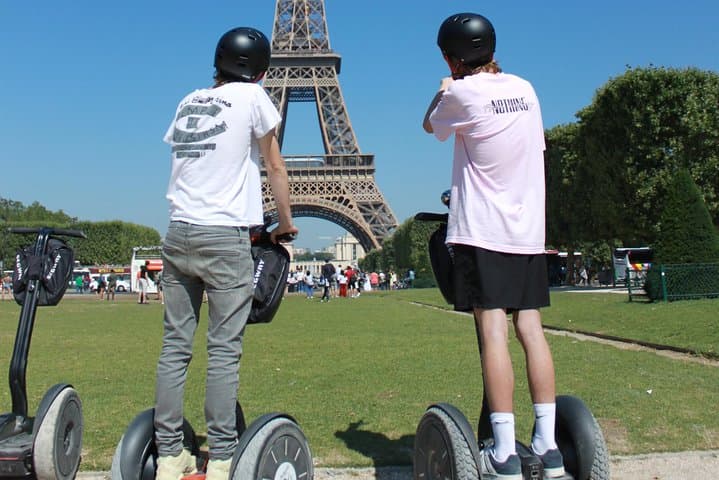
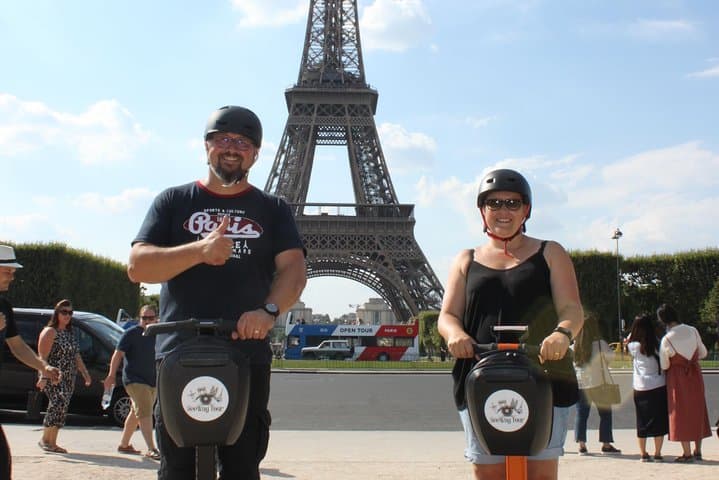
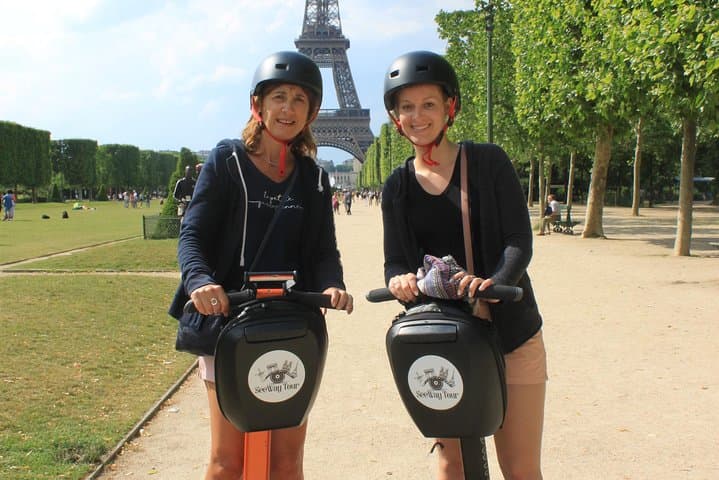
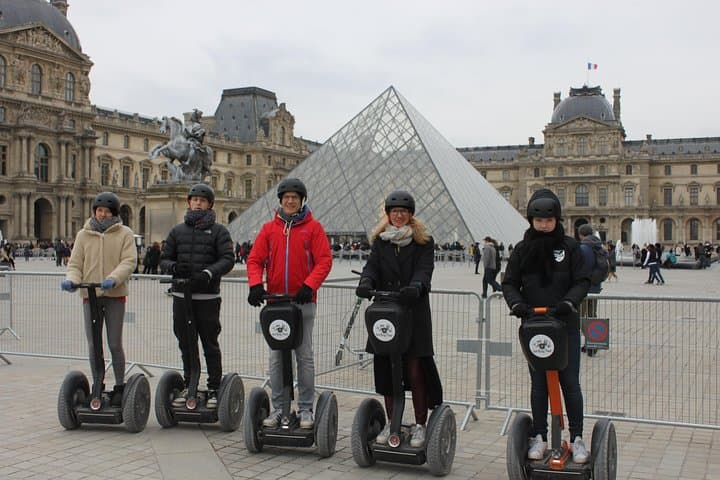
You start on two slim wheels at a small business center near the Right Bank, city sounds folding around you. The Segway hums low beneath your feet and the wide avenues of Paris open up — the Eiffel Tower lifts like a quiet promise, the Arc de Triomphe watches traffic like a rotating clock, and the Seine dares you closer with every turn.
You start on two slim wheels at a small business center near the Right Bank, city sounds folding around you. The Segway hums low beneath your feet and the wide avenues of Paris open up — the Eiffel Tower lifts like a quiet promise, the Arc de Triomphe watches traffic like a rotating clock, and the Seine dares you closer with every turn.
This guided two-hour route threads through the modern and the historical. Riders pass the Hôtel des Invalides, built in the 17th century as military lodgings and now home to Napoleon’s tomb; the Grand Palais, a 1900 exposition hall of glass and iron; the Alexandre III bridge with its gilded sculptures; and the avenue of the Champs-Élysées, the city’s long, ceremonial boulevard. Geology here is subtle — Paris sits on ancient river terraces of the Seine, its stone façades quarried and set over centuries; culture is public and immediate, performed on sidewalks, cafés, and plazas.
Practically, expect flat, paved streets mixed with smooth cobbles and short stretches of pedestrian zones. Guides provide helmets and raincoats; tours are private and suitable for a wide range of travelers, though not recommended for pregnant guests. Photography stops are frequent but brief — plan shots at the Eiffel and the Arc.
For planning: wear closed-toe shoes, bring a charged phone for photos and contact, and arrive 15 minutes early for a quick safety briefing. Midday traffic can be busy; morning or late-afternoon departures feel calmer and light is better for photos. This is a fast, urban way to cover Paris’ signature monuments without the wear on your feet.