THE ADVENTURE COLLECTIVE® · Independent discovery and booking for outdoor travel

Glide through Richmond’s streets on a two-hour Segway tour that traces the lives of Elizabeth Van Lew, Ellen Glasgow, Maggie L. Walker and other influential women. Covering historic neighborhoods and the riverfront, this tour combines civic history with practical urban exploration.
Glide through Richmond’s streets on a two-hour Segway tour that traces the lives of Elizabeth Van Lew, Ellen Glasgow, Maggie L. Walker and other influential women. Covering historic neighborhoods and the riverfront, this tour combines civic history with practical urban exploration.
You roll down a broad Richmond avenue on a Segway, the James River visible through a gap in market-front buildings, while the city’s brick and iron facades keep pace like deliberate companions.
Verified experiences and guided adventures in the surrounding area.
You roll down a broad Richmond avenue on a Segway, the James River visible through a gap in market-front buildings, while the city’s brick and iron facades keep pace like deliberate companions.
The two-hour route threads past addresses and neighborhoods where Elizabeth Van Lew organized Union intelligence during the Civil War, where Ellen Glasgow observed turn-of-the-century Richmond as a novelist, and where Maggie L. Walker built institutions in Jackson Ward after Reconstruction. The city sits on the Atlantic fall line — where Piedmont ridges yield to the Coastal Plain — and that geology shaped Richmond as a crossing point and commercial hub, which in turn shaped the public lives of the women you’ll learn about.
Expect stops in Shockoe Slip, Jackson Ward, and near the riverfront, with guides pausing to read letters, point out architectural details, and explain how race, class, and gender influenced city planning and commerce.
Practically: the course is largely flat but includes cobbled streets and occasional curbs, so stable footing and short practice on a Segway are sensible. Tours move at walking pace and cover roughly 3–4 miles of city streets in neighborhoods dense with cafes and public art. Bring hydration, sun protection, and a light layer for breezy river conditions; tours run rain or shine with provider-supplied helmets. Morning and late-afternoon slots avoid midsummer heat and give the best light for photos.
This is a civic-education ride as much as a small-adventure—good for curious travelers who want context, cadence, and a practical way to cover more ground than a walking tour.
easy.
2 hours.
Basic mobility and balance for standing two hours; light stamina for 3–4 miles of urban travel.
No—most operators provide a short practice session before the tour and the rides move at walking pace; basic balance and mobility are required.
Yes, guides typically supply helmets and safety briefings; you can bring your own if you prefer.
Operators usually set age minimums (often 12–16) and weight limits for safety—check the provider’s booking page for exact numbers.
Tours often run in light rain; heavy storms may cause cancellations or rescheduling—confirm the provider’s weather policy when booking.
Richmond’s position at the fall line made it a strategic trade and transport hub; that economy created the neighborhoods where many influential women lived and worked.
Historic preservation groups actively maintain facades and interpretive markers; respect private property, and stick to public sidewalks and designated park paths to limit wear.
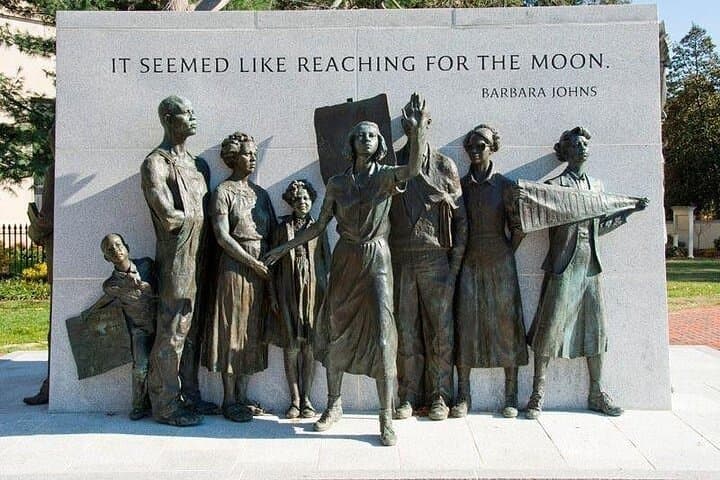
You roll down a broad Richmond avenue on a Segway, the James River visible through a gap in market-front buildings, while the city’s brick and iron facades keep pace like deliberate companions.
You roll down a broad Richmond avenue on a Segway, the James River visible through a gap in market-front buildings, while the city’s brick and iron facades keep pace like deliberate companions.
The two-hour route threads past addresses and neighborhoods where Elizabeth Van Lew organized Union intelligence during the Civil War, where Ellen Glasgow observed turn-of-the-century Richmond as a novelist, and where Maggie L. Walker built institutions in Jackson Ward after Reconstruction. The city sits on the Atlantic fall line — where Piedmont ridges yield to the Coastal Plain — and that geology shaped Richmond as a crossing point and commercial hub, which in turn shaped the public lives of the women you’ll learn about.
Expect stops in Shockoe Slip, Jackson Ward, and near the riverfront, with guides pausing to read letters, point out architectural details, and explain how race, class, and gender influenced city planning and commerce.
Practically: the course is largely flat but includes cobbled streets and occasional curbs, so stable footing and short practice on a Segway are sensible. Tours move at walking pace and cover roughly 3–4 miles of city streets in neighborhoods dense with cafes and public art. Bring hydration, sun protection, and a light layer for breezy river conditions; tours run rain or shine with provider-supplied helmets. Morning and late-afternoon slots avoid midsummer heat and give the best light for photos.
This is a civic-education ride as much as a small-adventure—good for curious travelers who want context, cadence, and a practical way to cover more ground than a walking tour.