THE ADVENTURE COLLECTIVE® · Independent discovery and booking for outdoor travel

Glide through Galveston on a 90-minute Segway loop that visits carved tree sculptures created from storm-damaged trunks. Learn about the island’s recovery after the 1900 hurricane, local conservation efforts, and the stories each sculpture preserves.
Glide through Galveston on a 90-minute Segway loop that visits carved tree sculptures created from storm-damaged trunks. Learn about the island’s recovery after the 1900 hurricane, local conservation efforts, and the stories each sculpture preserves.
On a bright morning along Galveston's Strand, a small group lines up at 25th and Church for a brief safety talk. The Segway hum beneath you as the guide leads the pack down flat, salt-scented sidewalks toward a row of carved trunks—trees that once fell victim to storms now wearing faces, wildlife and wave motifs cut into weathered wood.
Verified experiences and guided adventures in the surrounding area.
Operated by Seg City Galveston · Galveston, Texas
On a bright morning along Galveston's Strand, a small group lines up at 25th and Church for a brief safety talk. The Segway hum beneath you as the guide leads the pack down flat, salt-scented sidewalks toward a row of carved trunks—trees that once fell victim to storms now wearing faces, wildlife and wave motifs cut into weathered wood.
The carvings are a modern chapter in Galveston's long recovery story. After the catastrophic 1900 hurricane the island rebuilt its seawall and neighborhoods; decades of storms and disease later left many mature trees dead. Local artists, with support from the Galveston Island Tree Conservancy and civic volunteers, repurposed those trunks into public sculpture—practical reuse that preserves memory and material. Geologically, Galveston is a low-lying barrier island shaped by Gulf currents and storm surge, which explains both the vulnerability of its trees and the wide, rideable streets that make a Segway route practical.
Culturally the tour threads past Victorian storefronts, municipal parks and plaques that mark donors and restoration efforts; guides often point out how community values are carved into the landscape. Practical guidance: arrive 30 minutes early for training; the tour runs 90 minutes over mostly paved, flat terrain with occasional curb cuts. Wear closed-toe shoes, sun protection and bring a refillable water bottle. The experience is family-friendly and easy-paced, with regular stops for photos and short interpretive talks on conservation.
This ride is less about speed and more about reading the island’s resilience in wood—an accessible, educational loop that pairs light motion with local history and visible stewardship.
easy.
1.5 hours.
Suitable for most fitness levels; requires standing balance for the Segway and brief periods of walking on uneven sidewalks.
Children are allowed but must be accompanied by an adult; operators typically set age and weight limits for safe handling.
This tour is not recommended for pregnant travelers or people with serious back or heart conditions—disclose health issues when booking.
Walking is minimal—most of the tour is on the Segway with short dismounts for photos and to view sculptures.
Tours may be canceled for heavy rain or high winds; check cancellation policy and plan to reschedule or receive a refund if canceled 24+ hours before the start time.
Following the 1900 hurricane, Galveston rebuilt with a seawall and regraded neighborhoods; decades later community-led efforts turned dead trees into public art as part of urban restoration.
The tree carving program is an example of adaptive reuse—artists and conservancy groups repurpose dead wood to reduce removal waste and raise awareness about urban tree health and coastal resilience.
Seg City Galveston operates guided outdoor trips and adventures with an emphasis on safety, stewardship, and memorable experiences.
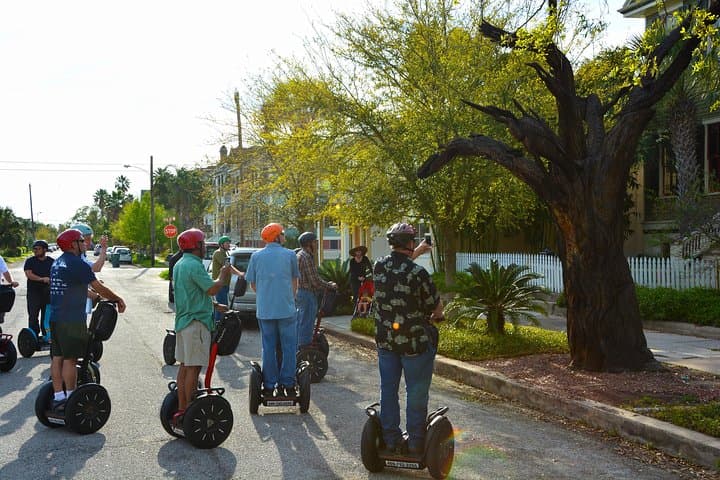
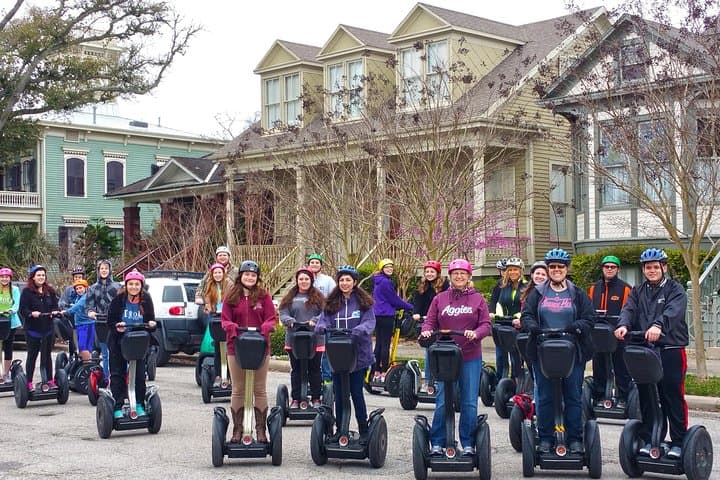
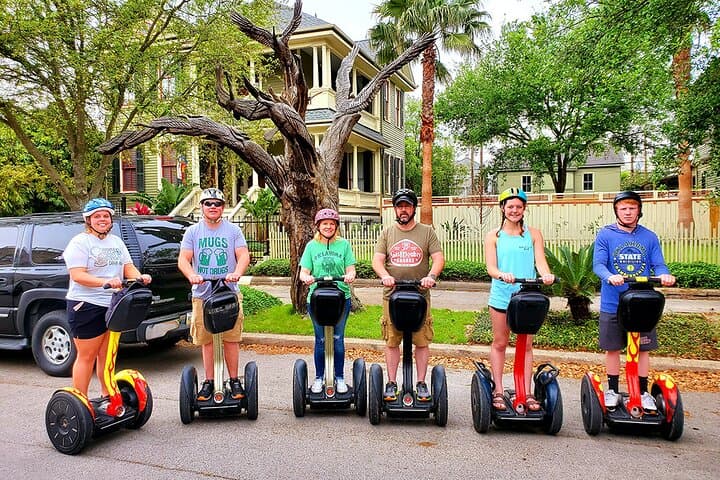
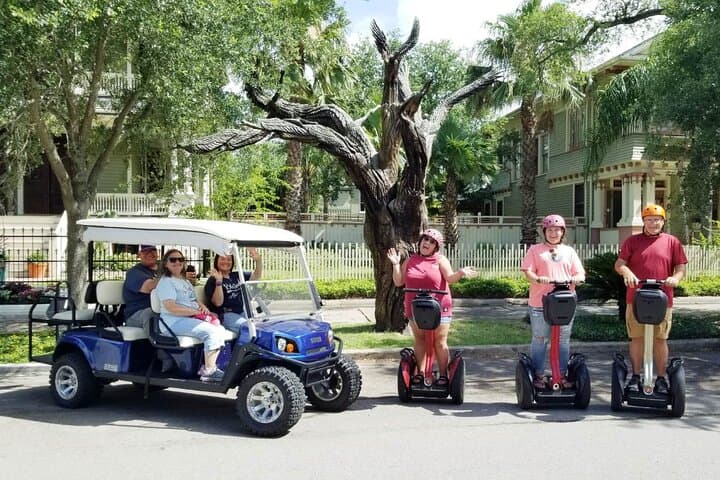
On a bright morning along Galveston's Strand, a small group lines up at 25th and Church for a brief safety talk. The Segway hum beneath you as the guide leads the pack down flat, salt-scented sidewalks toward a row of carved trunks—trees that once fell victim to storms now wearing faces, wildlife and wave motifs cut into weathered wood.
On a bright morning along Galveston's Strand, a small group lines up at 25th and Church for a brief safety talk. The Segway hum beneath you as the guide leads the pack down flat, salt-scented sidewalks toward a row of carved trunks—trees that once fell victim to storms now wearing faces, wildlife and wave motifs cut into weathered wood.
The carvings are a modern chapter in Galveston's long recovery story. After the catastrophic 1900 hurricane the island rebuilt its seawall and neighborhoods; decades of storms and disease later left many mature trees dead. Local artists, with support from the Galveston Island Tree Conservancy and civic volunteers, repurposed those trunks into public sculpture—practical reuse that preserves memory and material. Geologically, Galveston is a low-lying barrier island shaped by Gulf currents and storm surge, which explains both the vulnerability of its trees and the wide, rideable streets that make a Segway route practical.
Culturally the tour threads past Victorian storefronts, municipal parks and plaques that mark donors and restoration efforts; guides often point out how community values are carved into the landscape. Practical guidance: arrive 30 minutes early for training; the tour runs 90 minutes over mostly paved, flat terrain with occasional curb cuts. Wear closed-toe shoes, sun protection and bring a refillable water bottle. The experience is family-friendly and easy-paced, with regular stops for photos and short interpretive talks on conservation.
This ride is less about speed and more about reading the island’s resilience in wood—an accessible, educational loop that pairs light motion with local history and visible stewardship.