THE ADVENTURE COLLECTIVE® · Independent discovery and booking for outdoor travel

Walk Segovia’s compressed history in 1–2 hours: the Roman aqueduct, a towering Gothic cathedral and the hilltop Alcázar. This private tour focuses on exterior explanations and practical local insights for a concise, meaningful visit.
Walk Segovia’s compressed history in 1–2 hours: the Roman aqueduct, a towering Gothic cathedral and the hilltop Alcázar. This private tour focuses on exterior explanations and practical local insights for a concise, meaningful visit.
You arrive at the Plaza del Azoguejo with the Roman aqueduct towering above—granite arches stacked like an urban cliff that has kept the city’s heartbeat steady for nearly two millennia.
Verified experiences and guided adventures in the surrounding area.
Operated by Ignacio García-Revillo del Hoyo · Segovia, Castile and León
You arrive at the Plaza del Azoguejo with the Roman aqueduct towering above—granite arches stacked like an urban cliff that has kept the city’s heartbeat steady for nearly two millennia.
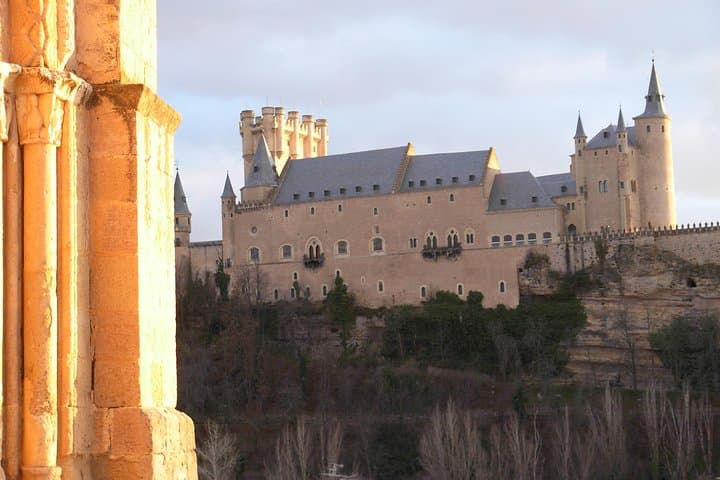
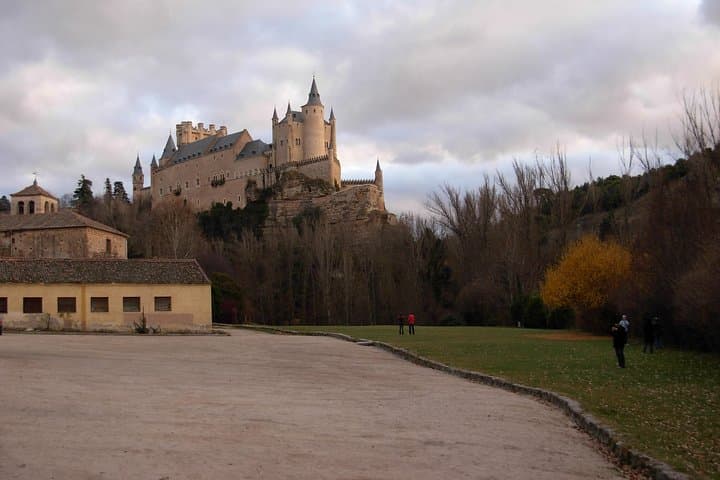
The walk moves from that commanding first sight through narrow medieval lanes toward the Gothic cathedral, one of Spain’s last great late-medieval builds, and then climbs to the Alcázar, a fortress-turned-palace that frames the skyline. The stones feel lived-in: Roman engineering, medieval defense walls and Renaissance touches layered within a compact historic core.
Segovia’s geology is simple and hard—granite outcrops shaped by millennia of freeze-thaw that supplied the massive blocks for the aqueduct. Culturally, the city has been a crossroads of Romans, Visigoths, Moors and Castilian rulers; the Jewish quarter and tapas bars reflect that palimpsest.
Practical guidance: this is an easy, mostly on-foot, 60–120 minute private tour focused on exterior explanations; interior admissions are optional and not included. Start early to avoid midday crowds at the aqueduct and cathedral, and leave time if you plan to visit the Alcázar interior separately.
Wear sturdy shoes for cobbles and a light layer—wind can sweep the high plazas. Bring a small bottle of water and a camera; much of the route is open air with sudden viewpoints over the Eresma valley. Public transit reaches the historic center; meeting point is in front of the tourist office at the Aqueduct. Respect barriers around the monuments—these fragile structures depend on minimal impact.
easy.
1–2 hours.
Suitable for most fitness levels; involves walking on uneven cobbles and a moderate climb to the Alcázar.
No—this walking tour emphasizes exterior explanations; interior admissions are optional and must be purchased separately.
The meeting point is in front of the tourist office at the Aqueduct (Plaza del Azoguejo). Look for the guide there.
The tour is described as stroller-accessible and service animals are allowed, but cobbled streets and steps may limit full wheelchair access; check with the operator for specifics.
Full refunds are available if you cancel at least 24 hours before the scheduled departure; check booking details for any updates.
Segovia’s aqueduct dates to the late 1st / early 2nd century AD and is a standout of Roman engineering; the Alcázar evolved from a medieval fortress into a Renaissance palace.
High foot traffic stresses historic stonework—follow barriers, avoid climbing on monuments and support local conservation by using marked paths and local guides.
Ignacio García-Revillo del Hoyo operates guided outdoor trips and adventures with an emphasis on safety, stewardship, and memorable experiences.

You arrive at the Plaza del Azoguejo with the Roman aqueduct towering above—granite arches stacked like an urban cliff that has kept the city’s heartbeat steady for nearly two millennia.
You arrive at the Plaza del Azoguejo with the Roman aqueduct towering above—granite arches stacked like an urban cliff that has kept the city’s heartbeat steady for nearly two millennia.
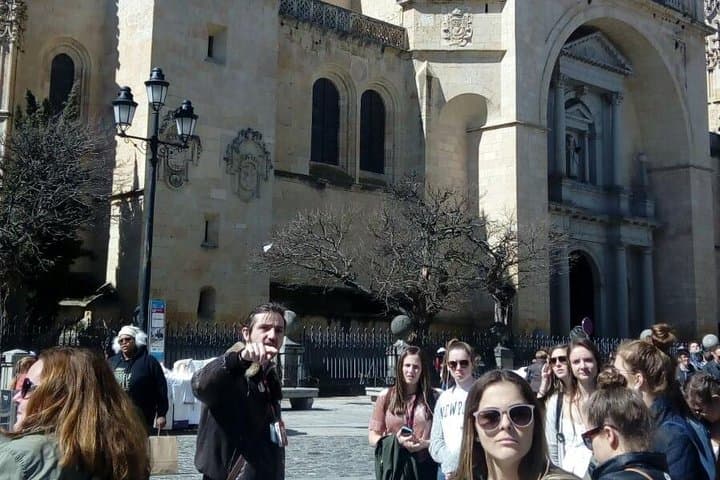
The walk moves from that commanding first sight through narrow medieval lanes toward the Gothic cathedral, one of Spain’s last great late-medieval builds, and then climbs to the Alcázar, a fortress-turned-palace that frames the skyline. The stones feel lived-in: Roman engineering, medieval defense walls and Renaissance touches layered within a compact historic core.
Segovia’s geology is simple and hard—granite outcrops shaped by millennia of freeze-thaw that supplied the massive blocks for the aqueduct. Culturally, the city has been a crossroads of Romans, Visigoths, Moors and Castilian rulers; the Jewish quarter and tapas bars reflect that palimpsest.
Practical guidance: this is an easy, mostly on-foot, 60–120 minute private tour focused on exterior explanations; interior admissions are optional and not included. Start early to avoid midday crowds at the aqueduct and cathedral, and leave time if you plan to visit the Alcázar interior separately.
Wear sturdy shoes for cobbles and a light layer—wind can sweep the high plazas. Bring a small bottle of water and a camera; much of the route is open air with sudden viewpoints over the Eresma valley. Public transit reaches the historic center; meeting point is in front of the tourist office at the Aqueduct. Respect barriers around the monuments—these fragile structures depend on minimal impact.