THE ADVENTURE COLLECTIVE® · Independent discovery and booking for outdoor travel

Walk Segovia’s stone streets after dusk on a 105-minute guided tour that stitches Roman aqueducts, the Alcázar and Plaza Mayor into legends of Templars, miracles and lost princes. End beneath the aqueduct for a memorable night-time finish and local tastings.
Walk Segovia’s stone streets after dusk on a 105-minute guided tour that stitches Roman aqueducts, the Alcázar and Plaza Mayor into legends of Templars, miracles and lost princes. End beneath the aqueduct for a memorable night-time finish and local tastings.
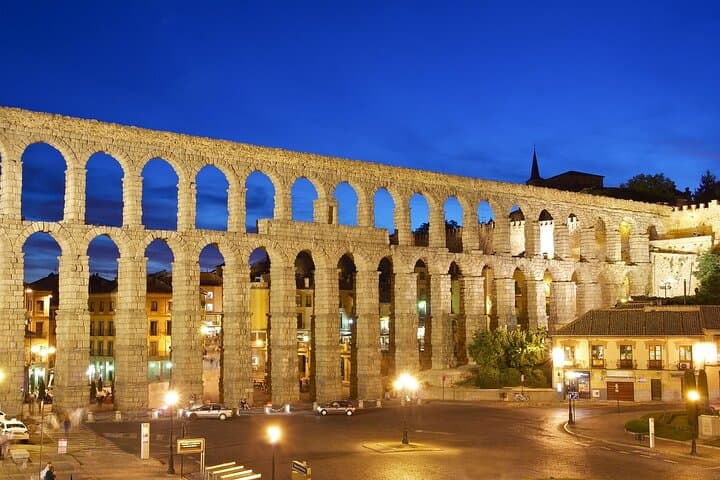
The lamp-lit stones of Segovia take on a different voice as night falls: the aqueduct looms like an ancient spine and narrow lanes funnel stories until they sound inevitable.
Verified experiences and guided adventures in the surrounding area.
Operated by Paseando por Europa · Segovia, Castile and León
The lamp-lit stones of Segovia take on a different voice as night falls: the aqueduct looms like an ancient spine and narrow lanes funnel stories until they sound inevitable.
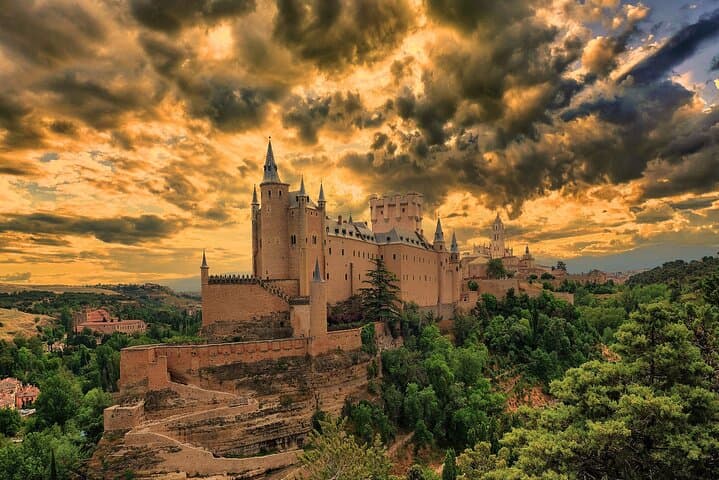
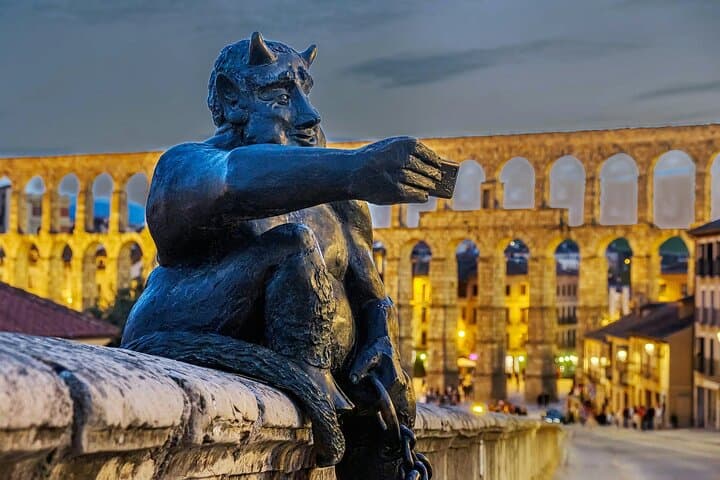
This 105-minute walking tour moves from the Alcázar’s battlements to the Plaza Mayor and finishes beneath the Aqueduct, threading architecture and rumor. Guides narrate Templar rumors, a prince’s tragic end, the Virgen del Socorro miracle, and legends that left marks on churches, squares and even the silhouette of Mujer Muerta across the skyline.
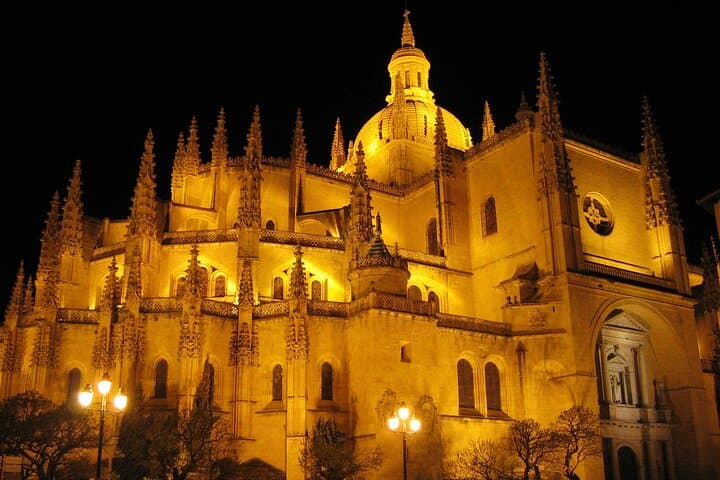
Geology here is literal history — Roman granite blocks stacked without mortar at the aqueduct, medieval masonry at the cathedral and Alcázar sitting on a rocky outcrop that shaped defensive lines and legends. Culturally, Segovia is Castile’s compact archive: Jewish and Christian quarters, monastic institutions and imperial connections to Philip II give context to the ghost stories and conspiracies you’ll hear.
Practicalities are straightforward. The route is mostly paved city streets and cobblestones; expect uneven surfaces and short flights of stairs around the Alcázar. The pace is relaxed, with multiple stops for storytelling and views. Wheelchair and stroller access is noted for many meeting areas, but ask about specific POIs.
Bring a warm layer for the aqueduct finish, sturdy shoes for cobbles, and a small flashlight if you prefer clearer footing. Plan to arrive 10 minutes early to find the meeting point and show your booking to the guide. The tour doubles as an orientation to Segovia’s compact center—perfect for first-time visitors wanting atmosphere and context before deeper exploration.
easy.
1.5–2 hours.
Suitable for most fitness levels; requires walking on uneven pavements and short stair sections.
The tour lasts about 105 minutes and finishes beneath Segovia’s Roman Aqueduct for a final storytelling stop.
The tour is labeled physically easy and many meeting points are wheelchair accessible, but cobblestones and some stairs may be challenging—check with the operator for specific accessibility needs.
No—this walking tour focuses on storytelling and exterior viewpoints; any optional admissions (e.g., Alcázar interior) are not included.
No—show either a mobile or printed reservation to the guide at the meeting point; arrive a few minutes early to locate the group.
Segovia’s Roman aqueduct dates to the 1st–2nd century CE; the Alcázar has medieval roots and later connections to the Catholic Monarchs and Philip II, providing backdrop to many local legends.
Segovia’s historic fabric is vulnerable to foot traffic and weathering—follow paths, avoid climbing conserved structures and support local shops that fund preservation.
Paseando por Europa operates guided outdoor trips and adventures with an emphasis on safety, stewardship, and memorable experiences.
The lamp-lit stones of Segovia take on a different voice as night falls: the aqueduct looms like an ancient spine and narrow lanes funnel stories until they sound inevitable.
The lamp-lit stones of Segovia take on a different voice as night falls: the aqueduct looms like an ancient spine and narrow lanes funnel stories until they sound inevitable.
This 105-minute walking tour moves from the Alcázar’s battlements to the Plaza Mayor and finishes beneath the Aqueduct, threading architecture and rumor. Guides narrate Templar rumors, a prince’s tragic end, the Virgen del Socorro miracle, and legends that left marks on churches, squares and even the silhouette of Mujer Muerta across the skyline.
Geology here is literal history — Roman granite blocks stacked without mortar at the aqueduct, medieval masonry at the cathedral and Alcázar sitting on a rocky outcrop that shaped defensive lines and legends. Culturally, Segovia is Castile’s compact archive: Jewish and Christian quarters, monastic institutions and imperial connections to Philip II give context to the ghost stories and conspiracies you’ll hear.
Practicalities are straightforward. The route is mostly paved city streets and cobblestones; expect uneven surfaces and short flights of stairs around the Alcázar. The pace is relaxed, with multiple stops for storytelling and views. Wheelchair and stroller access is noted for many meeting areas, but ask about specific POIs.
Bring a warm layer for the aqueduct finish, sturdy shoes for cobbles, and a small flashlight if you prefer clearer footing. Plan to arrive 10 minutes early to find the meeting point and show your booking to the guide. The tour doubles as an orientation to Segovia’s compact center—perfect for first-time visitors wanting atmosphere and context before deeper exploration.