THE ADVENTURE COLLECTIVE® · Independent discovery and booking for outdoor travel

Explore Segovia’s major landmarks in three hours with a private local guide — from the Roman aqueduct to the Gothic cathedral and the Alcázar. Perfect for travelers wanting concentrated history, architecture, and skyline views with minimal walking strain.
Explore Segovia’s major landmarks in three hours with a private local guide — from the Roman aqueduct to the Gothic cathedral and the Alcázar. Perfect for travelers wanting concentrated history, architecture, and skyline views with minimal walking strain.
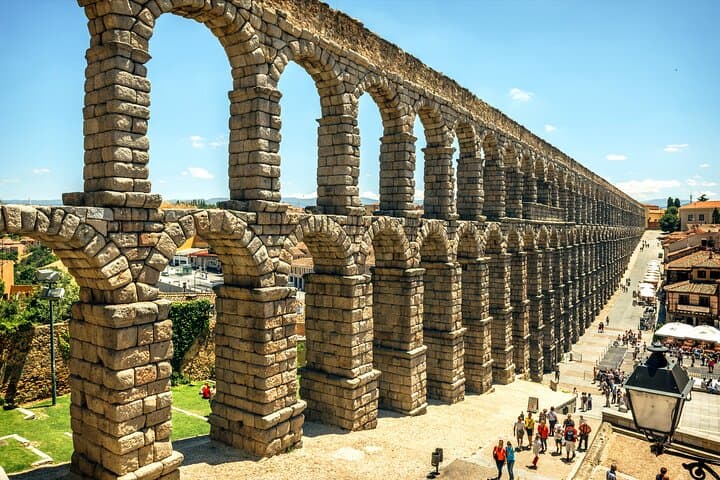
Stone meets sky over Segovia as the tour begins in front of the ancient aqueduct, its granite arches cutting a clear silhouette against the morning. A local guide leads the group through cobbled streets where the city’s layers—Roman engineering, medieval fortifications, and lively plazas—are visible at each turn.
Verified experiences and guided adventures in the surrounding area.
Operated by Orange Umbrella Tours · Segovia, Castile and León
Stone meets sky over Segovia as the tour begins in front of the ancient aqueduct, its granite arches cutting a clear silhouette against the morning. A local guide leads the group through cobbled streets where the city’s layers—Roman engineering, medieval fortifications, and lively plazas—are visible at each turn.
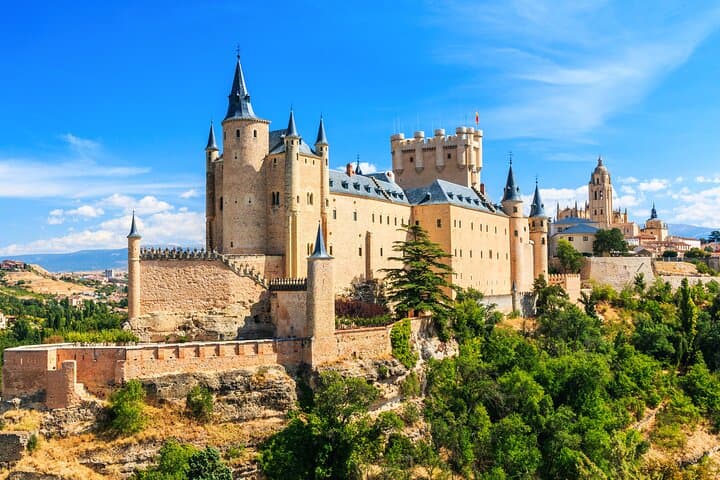
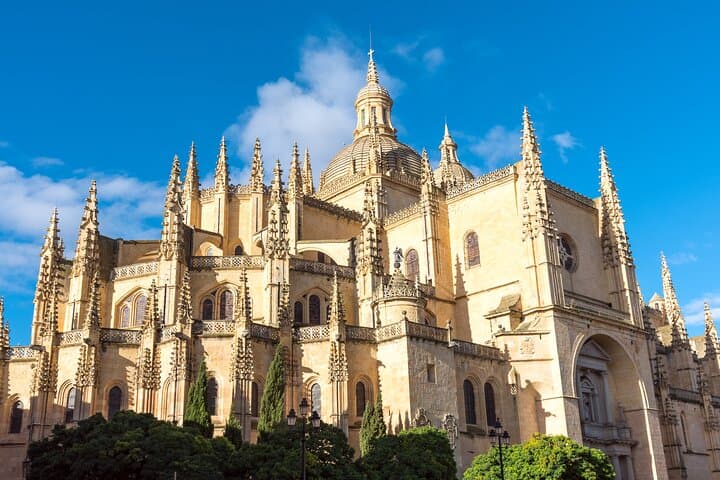
The route threads past the 1st‑century Roman aqueduct, an enduring example of imperial engineering, then slips into the Barrio Judío where narrow lanes speak to a complex cultural past. The Gothic cathedral rises on the Plaza Mayor; while the tour views the façade rather than the interior, the guide traces its 16th‑century construction and civic role. The final hour is spent inside the Alcázar, the fortress‑palace perched on granite outcrop with sweeping views of the Eresma valley and the Sierra de Guadarrama beyond.
Geology is evident everywhere: the city’s granite foundations shape stairways and towers, and the Alcázar’s defensive siting takes advantage of natural rock. Expect paved and uneven cobblestones, short uphill stretches, and frequent stops for explanation and photos.
Practical notes: the private format makes timing flexible but the meeting point is the Tourist Office by the aqueduct. Tickets to the Alcázar are included; bring photo ID. Aim for an early slot in summer to avoid heat, and wear grippy walking shoes for cobbles. Hydrate and pack a light layer—the wind on the Alcázar’s terraces can bite even on sunny days.
This is a compact, accessible urban walk that blends history, architecture, and local color into a single three‑hour experience.
easy.
3 hours.
Suitable for people with basic mobility; involves standing and walking on uneven cobbles.
Yes — Alcázar admission is included in the booking; other sites are viewed from outside unless noted.
Yes — the tour is rated easy and private, but participants should be able to walk short distances on uneven surfaces.
Meet in front of the Tourist Office near the aqueduct; the confirmation will list the exact meeting point and time.
Tours are generally confirmed; check the operator’s policy—rain may affect outdoor sections but the private format allows some flexibility.
Segovia’s aqueduct dates to the Roman era and is among Spain’s best‑preserved Roman structures; the Alcázar evolved through medieval royal use into the castle known today.
Heavy visitation concentrates on a few monuments; stick to marked routes, use local guides, and support ticketed entrances that fund upkeep and restoration.
Orange Umbrella Tours operates guided outdoor trips and adventures with an emphasis on safety, stewardship, and memorable experiences.
Stone meets sky over Segovia as the tour begins in front of the ancient aqueduct, its granite arches cutting a clear silhouette against the morning. A local guide leads the group through cobbled streets where the city’s layers—Roman engineering, medieval fortifications, and lively plazas—are visible at each turn.
Stone meets sky over Segovia as the tour begins in front of the ancient aqueduct, its granite arches cutting a clear silhouette against the morning. A local guide leads the group through cobbled streets where the city’s layers—Roman engineering, medieval fortifications, and lively plazas—are visible at each turn.
The route threads past the 1st‑century Roman aqueduct, an enduring example of imperial engineering, then slips into the Barrio Judío where narrow lanes speak to a complex cultural past. The Gothic cathedral rises on the Plaza Mayor; while the tour views the façade rather than the interior, the guide traces its 16th‑century construction and civic role. The final hour is spent inside the Alcázar, the fortress‑palace perched on granite outcrop with sweeping views of the Eresma valley and the Sierra de Guadarrama beyond.
Geology is evident everywhere: the city’s granite foundations shape stairways and towers, and the Alcázar’s defensive siting takes advantage of natural rock. Expect paved and uneven cobblestones, short uphill stretches, and frequent stops for explanation and photos.
Practical notes: the private format makes timing flexible but the meeting point is the Tourist Office by the aqueduct. Tickets to the Alcázar are included; bring photo ID. Aim for an early slot in summer to avoid heat, and wear grippy walking shoes for cobbles. Hydrate and pack a light layer—the wind on the Alcázar’s terraces can bite even on sunny days.
This is a compact, accessible urban walk that blends history, architecture, and local color into a single three‑hour experience.