THE ADVENTURE COLLECTIVE® · Independent discovery and booking for outdoor travel

Compare old Dubai to its skyline-dominated present from the Dubai Frame, then follow with a cultural sprint through Global Village’s country pavilions and live shows. This evening combo packs panoramic views, interactive exhibits, and world cuisine into about four hours.
Compare old Dubai to its skyline-dominated present from the Dubai Frame, then follow with a cultural sprint through Global Village’s country pavilions and live shows. This evening combo packs panoramic views, interactive exhibits, and world cuisine into about four hours.
Standing on the Dubai Frame's glass bridge, the city unfolds like two chapters split by a single frame — the low-rise texture of Deira and Al Fahidi on one side, the glittering towers of Sheikh Zayed Road on the other. The structure itself rises roughly 150 meters above Zabeel Park, a golden rectangle that frames history and ambition in steel and glass.
Verified experiences and guided adventures in the surrounding area.
Operated by STAR ROYAL FALCON · Dubai, Dubai
Standing on the Dubai Frame's glass bridge, the city unfolds like two chapters split by a single frame — the low-rise texture of Deira and Al Fahidi on one side, the glittering towers of Sheikh Zayed Road on the other. The structure itself rises roughly 150 meters above Zabeel Park, a golden rectangle that frames history and ambition in steel and glass.
The Dubai Frame opened in 2018 as a deliberate vantage point: a modern arch that invites visitors to compare the emirate’s pearl-diving and trading past with its skyscraper-driven present. Geologically, Dubai sits on coastal sabkha and reclaimed land where the Persian Gulf nudges the shoreline; the Frame’s views include that flat, mercurial coastline and the city’s rapid vertical growth.
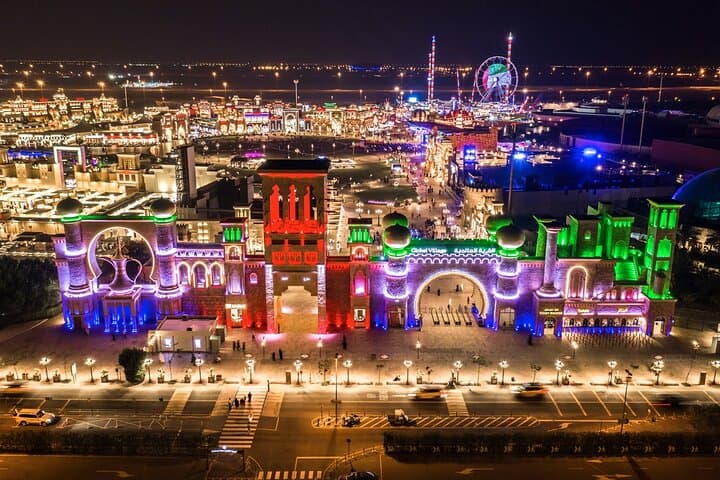
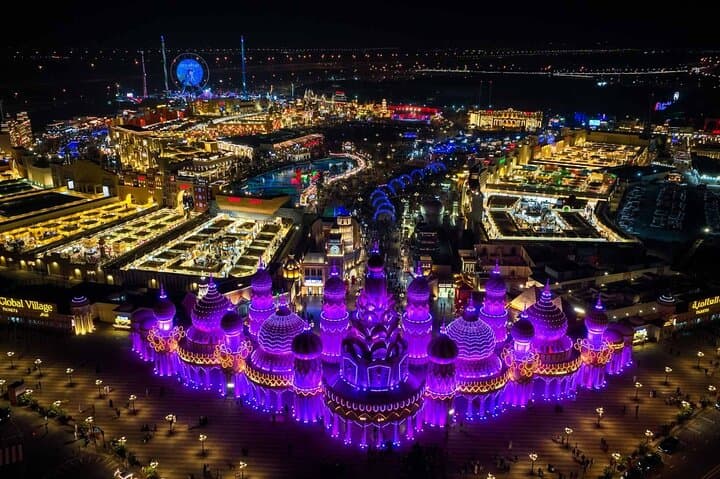
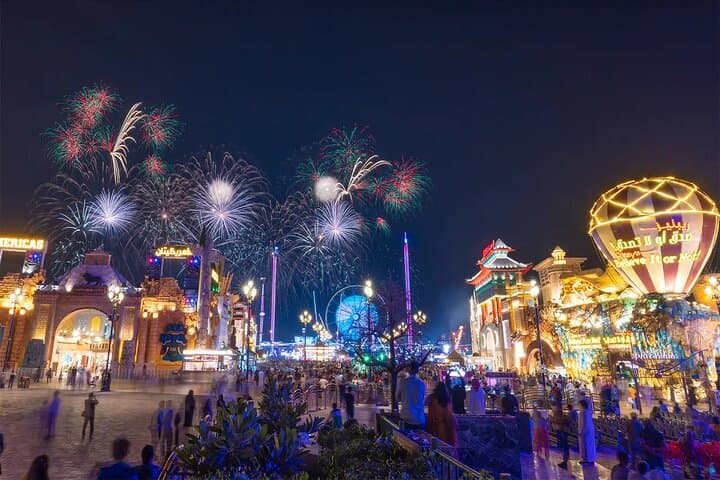
By night, a shuttle east to Global Village drops you into a different kind of landscape — hundreds of country pavilions, live cultural performances, and a street food map that crosses continents in a few blocks. Global Village began in the mid-1990s as a seasonal cultural fair and has grown into a curated marketplace for crafts and cuisine from more than 75 nations.
Practical guidance: allow about four hours total — two at the Frame (including exhibits and the glass walkway) and roughly two at Global Village if you focus on a few pavilions and a show. Weeknights and early evenings are best to avoid daytime heat; bring sun protection, comfortable shoes for walking on varied surfaces, and a refillable water bottle. Public transport and ride-hailing serve both sites; expect queueing during peak season and cultural events. This combo suits travelers seeking a compact, sensory survey of Dubai's contrast between heritage and global spectacle.
easy.
4 hours.
Low exertion; suitable for most ages and fitness levels but involves walking and standing for exhibits and shows.
Yes—mobile or paper tickets are accepted; save the confirmation and ID used at booking for entry.
Yes—the frame and main exhibits have lifts and accessible routes; check specific assistance needs ahead of time.
Yes—this combo is designed for an afternoon-to-evening flow: the Frame first, then Global Village in the cooler evening hours.
Yes—expect a wide range of food stalls and formal dining in pavilions; bring cash or cards as some vendors vary payment options.
The Dubai Frame opened in 2018 as a modern monument intended to contrast the emirate’s historic neighborhoods with its futuristic skyline, and Global Village began as a seasonal cultural pavilions fair in the 1990s that has expanded into a permanent seasonal attraction.
Both sites encourage waste sorting and limited single-use plastics during events; visitors are asked to respect exhibit spaces and local customs to minimize impact.
STAR ROYAL FALCON operates guided outdoor trips and adventures with an emphasis on safety, stewardship, and memorable experiences.

Standing on the Dubai Frame's glass bridge, the city unfolds like two chapters split by a single frame — the low-rise texture of Deira and Al Fahidi on one side, the glittering towers of Sheikh Zayed Road on the other. The structure itself rises roughly 150 meters above Zabeel Park, a golden rectangle that frames history and ambition in steel and glass.
Standing on the Dubai Frame's glass bridge, the city unfolds like two chapters split by a single frame — the low-rise texture of Deira and Al Fahidi on one side, the glittering towers of Sheikh Zayed Road on the other. The structure itself rises roughly 150 meters above Zabeel Park, a golden rectangle that frames history and ambition in steel and glass.
The Dubai Frame opened in 2018 as a deliberate vantage point: a modern arch that invites visitors to compare the emirate’s pearl-diving and trading past with its skyscraper-driven present. Geologically, Dubai sits on coastal sabkha and reclaimed land where the Persian Gulf nudges the shoreline; the Frame’s views include that flat, mercurial coastline and the city’s rapid vertical growth.
By night, a shuttle east to Global Village drops you into a different kind of landscape — hundreds of country pavilions, live cultural performances, and a street food map that crosses continents in a few blocks. Global Village began in the mid-1990s as a seasonal cultural fair and has grown into a curated marketplace for crafts and cuisine from more than 75 nations.
Practical guidance: allow about four hours total — two at the Frame (including exhibits and the glass walkway) and roughly two at Global Village if you focus on a few pavilions and a show. Weeknights and early evenings are best to avoid daytime heat; bring sun protection, comfortable shoes for walking on varied surfaces, and a refillable water bottle. Public transport and ride-hailing serve both sites; expect queueing during peak season and cultural events. This combo suits travelers seeking a compact, sensory survey of Dubai's contrast between heritage and global spectacle.