THE ADVENTURE COLLECTIVE® · Independent discovery and booking for outdoor travel

Spend a full day from Ulaanbaatar tracking Mongolia’s last wild horses—Przewalski’s takhi—through open steppe, riverine edges and archaeological sites. This guided roundtrip combines early-morning wildlife viewing with a nomadic family lunch and local cultural context.
Spend a full day from Ulaanbaatar tracking Mongolia’s last wild horses—Przewalski’s takhi—through open steppe, riverine edges and archaeological sites. This guided roundtrip combines early-morning wildlife viewing with a nomadic family lunch and local cultural context.
You arrive before twilight: scrub grass hums under a cool wind that seems to dare you closer to the ridge. The first dark shapes appear in a low basin—stocky, dun coats and erect manes—Przewalski's horses moving with a casual, prehistoric confidence. The park spreads out like steppe theatre, a mix of grass plains, river bends and low hills that shape sightlines and hideaways for wildlife.
Verified experiences and guided adventures in the surrounding area.
Operated by Mongolian Vision Tours · Ulaanbaatar, Töv Province
You arrive before twilight: scrub grass hums under a cool wind that seems to dare you closer to the ridge. The first dark shapes appear in a low basin—stocky, dun coats and erect manes—Przewalski's horses moving with a casual, prehistoric confidence. The park spreads out like steppe theatre, a mix of grass plains, river bends and low hills that shape sightlines and hideaways for wildlife.
Khustai (Khustain Nuruu) was established to protect takhi after their numbers plummeted in the 20th century; reintroduction and breeding programs have helped the population rebound. Geologically the reserve sits on rolling loess and volcanic terraces formed during Mongolia’s complex uplifts, and archaeologists have found Hunnic-era stone monuments across the park that speak to long human presence and seasonal pastoral use.
A typical day trip from Ulaanbaatar combines a monastery visit, a guided drive into Khustai to look for takhi at watering holes, a walk to riversides where horses drink, and a lunch with a nomadic family—fresh dairy, salty tea and conversation about grazing cycles. Local guides teach simple etiquette: observe quietly, avoid sudden movement, and let animals choose the distance.
Practicalities: expect an 8–9 hour outing with several short walks on uneven grassland; wildlife viewing is best at dawn or dusk. Bring binoculars, warm layers for early morning winds, sun protection, and waterproof footwear for river edges. Park fees and transfers are usually arranged by the tour; carry cash for small purchases in villages. With steady weather and respect for grazing rotations, the day offers an accessible, memorable window into Mongolia’s wild horse recovery.
easy.
8–9 hours.
Suitable for most fitness levels; requires short walks on uneven grassland and the ability to get in/out of a vehicle several times.
The reserve is roughly a 1–1.5 hour drive from central Ulaanbaatar depending on traffic and the tour route.
Sightings are common, especially at dawn or dusk, but wildlife is never guaranteed; guides choose locations with recent activity to maximize chances.
Yes—this tour is categorized as easy with minimal walking, but long transfers and bumpy roads may be uncomfortable for some; notify the operator of mobility concerns.
Most day tours include park entrance fees and a local lunch; confirm inclusions with the operator at booking time.
Khustai was created in the 1990s as part of international conservation efforts to reintroduce Przewalski’s horse after local extinction in the wild earlier in the 20th century.
Tourism supports on-the-ground monitoring and local herder partnerships; visitors should avoid feeding wildlife and follow guide instructions to minimize disturbance.
Mongolian Vision Tours operates guided outdoor trips and adventures with an emphasis on safety, stewardship, and memorable experiences.
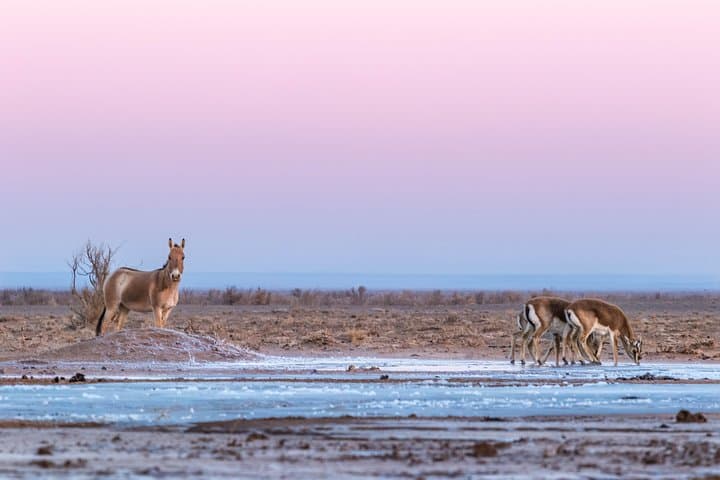
You arrive before twilight: scrub grass hums under a cool wind that seems to dare you closer to the ridge. The first dark shapes appear in a low basin—stocky, dun coats and erect manes—Przewalski's horses moving with a casual, prehistoric confidence. The park spreads out like steppe theatre, a mix of grass plains, river bends and low hills that shape sightlines and hideaways for wildlife.
You arrive before twilight: scrub grass hums under a cool wind that seems to dare you closer to the ridge. The first dark shapes appear in a low basin—stocky, dun coats and erect manes—Przewalski's horses moving with a casual, prehistoric confidence. The park spreads out like steppe theatre, a mix of grass plains, river bends and low hills that shape sightlines and hideaways for wildlife.
Khustai (Khustain Nuruu) was established to protect takhi after their numbers plummeted in the 20th century; reintroduction and breeding programs have helped the population rebound. Geologically the reserve sits on rolling loess and volcanic terraces formed during Mongolia’s complex uplifts, and archaeologists have found Hunnic-era stone monuments across the park that speak to long human presence and seasonal pastoral use.
A typical day trip from Ulaanbaatar combines a monastery visit, a guided drive into Khustai to look for takhi at watering holes, a walk to riversides where horses drink, and a lunch with a nomadic family—fresh dairy, salty tea and conversation about grazing cycles. Local guides teach simple etiquette: observe quietly, avoid sudden movement, and let animals choose the distance.
Practicalities: expect an 8–9 hour outing with several short walks on uneven grassland; wildlife viewing is best at dawn or dusk. Bring binoculars, warm layers for early morning winds, sun protection, and waterproof footwear for river edges. Park fees and transfers are usually arranged by the tour; carry cash for small purchases in villages. With steady weather and respect for grazing rotations, the day offers an accessible, memorable window into Mongolia’s wild horse recovery.