THE ADVENTURE COLLECTIVE® · Independent discovery and booking for outdoor travel

Two observation experiences in one day: stand 240m above Palm Jumeirah and walk a glass bridge through the Dubai Frame to compare the city’s future-facing skyline with its historic quarters. This combo saves 22% and suits families and solo travelers alike.
Two observation experiences in one day: stand 240m above Palm Jumeirah and walk a glass bridge through the Dubai Frame to compare the city’s future-facing skyline with its historic quarters. This combo saves 22% and suits families and solo travelers alike.
At 240 meters above Palm Jumeirah, the city loosens its edges: the sea flashes, the crescent of the Palm reads like a human-made coastline, and the Burj Al Arab punctuates the horizon. From The View at The Palm's Level 52 you watch the Arabian Gulf push light across decking and glass; later, the golden rectangle of the Dubai Frame frames the city’s split personality—modern towers on one side, historic neighborhoods on the other.
Verified experiences and guided adventures in the surrounding area.
Operated by Trip Knox Ltd · Dubai, Dubai
At 240 meters above Palm Jumeirah, the city loosens its edges: the sea flashes, the crescent of the Palm reads like a human-made coastline, and the Burj Al Arab punctuates the horizon. From The View at The Palm's Level 52 you watch the Arabian Gulf push light across decking and glass; later, the golden rectangle of the Dubai Frame frames the city’s split personality—modern towers on one side, historic neighborhoods on the other.
The Palm is a recent chapter in Dubai’s rapid coastal engineering—reclaimed land transformed into a luxury spine of hotels and residences—while the Dubai Frame, built in 2018 in Zabeel Park, was conceived as a literal bridge between old and new Dubai. Together these attractions read like a short primer in the emirate’s ambitions: geology erased and remade, culture sped forward by trade and oil wealth, and public spaces staged for views.
Expect glass walkways, immersive exhibits that trace urban growth, and a practical mix of indoor galleries and outdoor observation. Plan 4–5 hours to use the combo without rushing: morning light at The View avoids heat, and sunset at the Frame delivers city-light contrast. Public transit plus short taxis connect both sites; both attractions are suitable for most mobility levels but the glass sections can unsettle those with a fear of heights.
Bring a charged phone, time your visit to avoid peak crowds, and leave room in your itinerary to explore Zabeel Park and Palm boardwalks after the viewpoints.
easy.
4–5 hours.
Suitable for all fitness levels; involves walking, stairs and some standing at heights.
Allow roughly 4–5 hours to visit both sites comfortably, including transit time between Palm Jumeirah and Zabeel Park.
Yes—both are family-friendly; infants should sit on laps where advised and be supervised on glass walkways.
Yes—The View is accessible via the Palm Monorail and local taxis, while Dubai Frame is near public transit and taxi routes from central Dubai.
Yes—the glass bridge is engineered for safety, though visitors with a fear of heights should prepare for the visual effect.
Palm Jumeirah is a late-20th/early-21st-century land-reclamation project that reshaped Dubai’s coastline; the Dubai Frame, opened in 2018, was designed to symbolically frame the city’s transformation.
Rapid coastal development has altered marine and shoreline habitats; visitors can help by avoiding single-use plastics, sticking to walkways, and respecting protected zones.
Trip Knox Ltd operates guided outdoor trips and adventures with an emphasis on safety, stewardship, and memorable experiences.
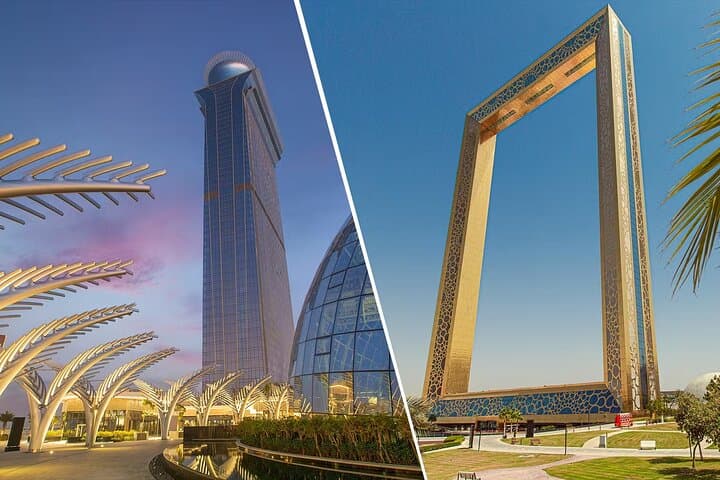
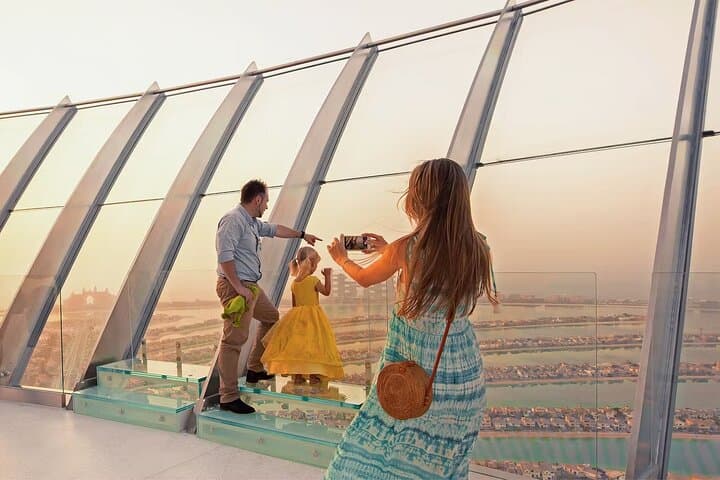
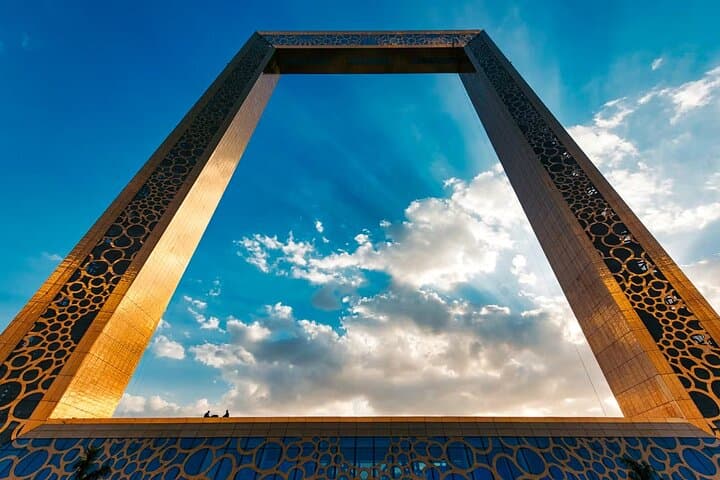
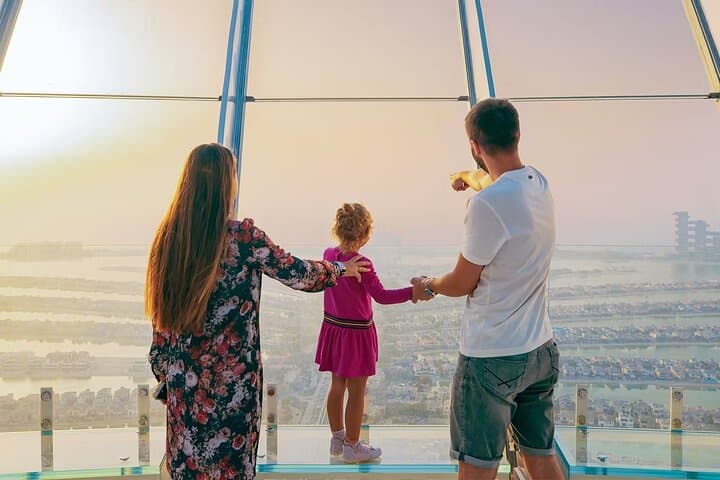
At 240 meters above Palm Jumeirah, the city loosens its edges: the sea flashes, the crescent of the Palm reads like a human-made coastline, and the Burj Al Arab punctuates the horizon. From The View at The Palm's Level 52 you watch the Arabian Gulf push light across decking and glass; later, the golden rectangle of the Dubai Frame frames the city’s split personality—modern towers on one side, historic neighborhoods on the other.
At 240 meters above Palm Jumeirah, the city loosens its edges: the sea flashes, the crescent of the Palm reads like a human-made coastline, and the Burj Al Arab punctuates the horizon. From The View at The Palm's Level 52 you watch the Arabian Gulf push light across decking and glass; later, the golden rectangle of the Dubai Frame frames the city’s split personality—modern towers on one side, historic neighborhoods on the other.
The Palm is a recent chapter in Dubai’s rapid coastal engineering—reclaimed land transformed into a luxury spine of hotels and residences—while the Dubai Frame, built in 2018 in Zabeel Park, was conceived as a literal bridge between old and new Dubai. Together these attractions read like a short primer in the emirate’s ambitions: geology erased and remade, culture sped forward by trade and oil wealth, and public spaces staged for views.
Expect glass walkways, immersive exhibits that trace urban growth, and a practical mix of indoor galleries and outdoor observation. Plan 4–5 hours to use the combo without rushing: morning light at The View avoids heat, and sunset at the Frame delivers city-light contrast. Public transit plus short taxis connect both sites; both attractions are suitable for most mobility levels but the glass sections can unsettle those with a fear of heights.
Bring a charged phone, time your visit to avoid peak crowds, and leave room in your itinerary to explore Zabeel Park and Palm boardwalks after the viewpoints.