THE ADVENTURE COLLECTIVE® · Independent discovery and booking for outdoor travel

A three-hour private journey through Sedona's red rock reveals the geology, Indigenous history and modern theories behind the famed vortex sites. Combining close-up views with quieter secret spots, this tour is part science briefing, part cultural walk—and part invitation to feel the landscape for yourself.
A three-hour private journey through Sedona's red rock reveals the geology, Indigenous history and modern theories behind the famed vortex sites. Combining close-up views with quieter secret spots, this tour is part science briefing, part cultural walk—and part invitation to feel the landscape for yourself.
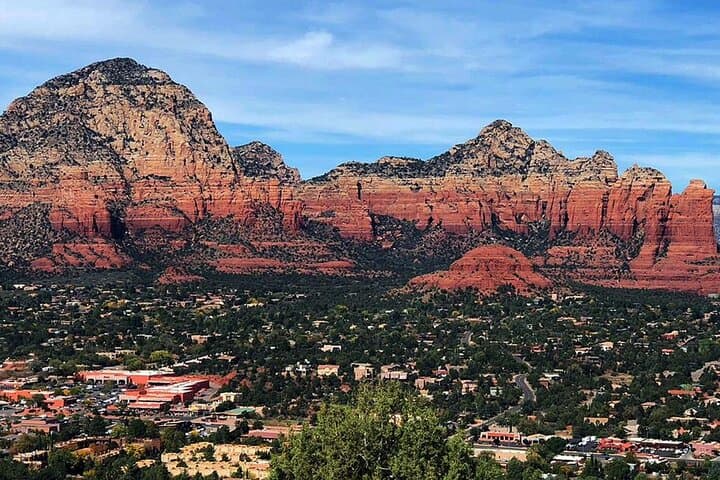
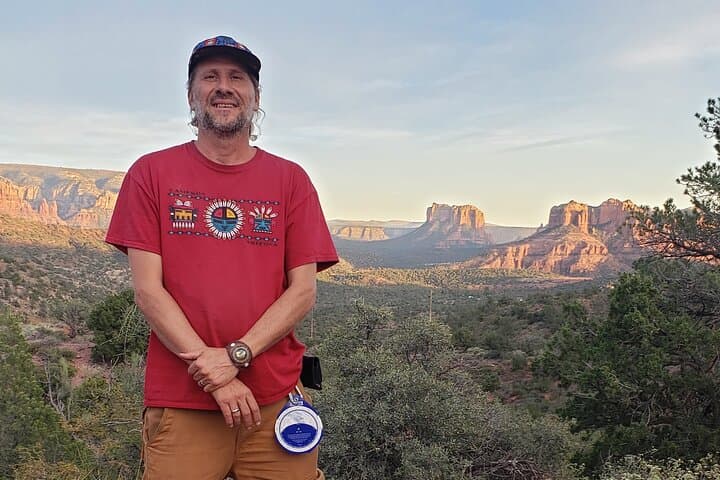
You step out of a grey Toyota Sienna and the horizon seems to tilt—red rock fins cut into a sky that goes on forever. Wind tugs at your jacket as the guide gestures toward a plateau and calls it Airport Mesa: a high point where town, river and stone converge. For three hours you're not just sightseeing; you're following a narrative that threads geology, Indigenous history and the modern mythology of Sedona's so-called vortexes.
Verified experiences and guided adventures in the surrounding area.
Operated by Adventure Explore and Soar · Sedona, Arizona
You step out of a grey Toyota Sienna and the horizon seems to tilt—red rock fins cut into a sky that goes on forever. Wind tugs at your jacket as the guide gestures toward a plateau and calls it Airport Mesa: a high point where town, river and stone converge. For three hours you're not just sightseeing; you're following a narrative that threads geology, Indigenous history and the modern mythology of Sedona's so-called vortexes.
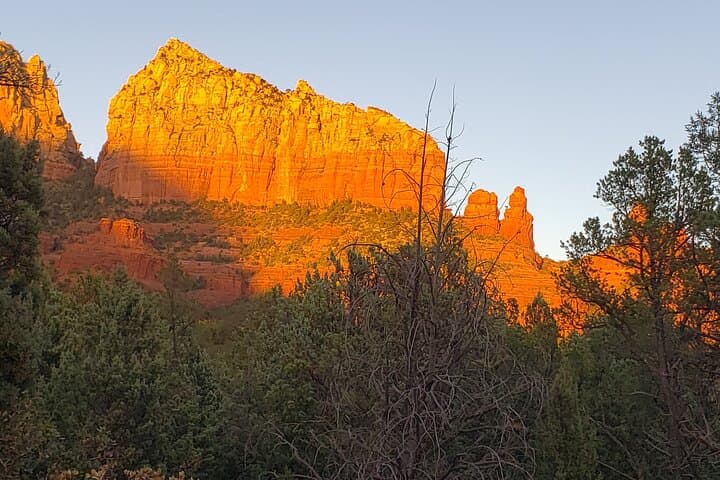
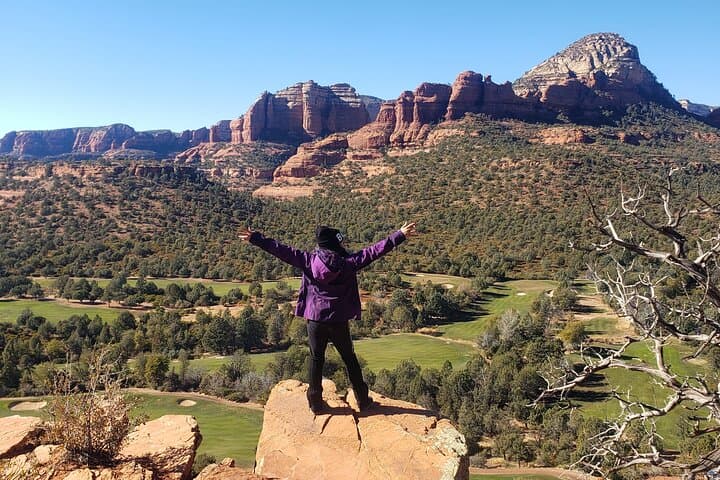
The tour moves from broad viewscapes into quieter, less-traveled pockets. Airport Mesa gives you the lay of the land—layered sandstone, dark dikes of volcanic rock, the shallow scar of fault lines—and the guide explains why scientists point to quartz concentrations and intersecting fractures as a plausible source for localized electromagnetic anomalies. From there you visit two sites the operator keeps off public lists: one a quiet ridge with a near-empty panorama, the other a ceremonial spot with an indigenous medicine wheel and a constructed labyrinth.
Sedona's human story is older than its tourist lore. The canyonlands here were used seasonally by ancestors of the Yavapai, Apache and the pre-contact Sinagua people; stone tools and pottery shards still surface after desert rains. The tour recognizes that those histories, and their living descendants, give the landscape a cultural gravity that can't be reduced to energy readings or Instagram frames.
Practically, the tour balances interpretation with downtime. Your guide will point out geologic features—cross-bedded sandstone, caliche layers, and volcanic necks that puncture the red strata—and outline theories about why people have long made pilgrimages here: for vision quests, creativity, or simply perspective.
If you go, expect a small-group, private rhythm. Pickups are available from many West Sedona hotels or the famous "Teal Arch" McDonald's for others. The vehicle varies—extended-cab Chevy for pairs, a step-on approach for larger groups—and you're welcome to bring snacks and water; you'll likely want them. Bring sturdy shoes for short walks and a light layer for exposed ridgelines where afternoon winds can bite.
This is not a scientific instrument sweep or a spiritual prescription; it's an experiential tour that frames Sedona's attractions—geologic oddities, sacred sites and wide-sky viewpoints—through both skeptical and reverent lenses. You leave with a clearer map of the landscape and a few concrete takeaways: where the best views sit, which formations are driven by uplift and erosion, and why certain spots have become magnets for seekers. Whether you're curious about rock chemistry or simply want to stand in a place that feels different, the tour delivers context, access and time to feel the place for yourself.
moderate.
3 hours.
Light to moderate fitness; comfortable walking on uneven terrain and short stair-like sections
The private tour is approximately three hours and typically includes Airport Mesa plus two additional, smaller vortex sites including one with a medicine wheel and labyrinth.
Infants and small children are allowed in strollers; service animals are permitted—check with the operator about non-service pets on a case-by-case basis.
No; the guide keeps the names of some local sites private to protect their solitude and cultural features, but will describe access and significance on the tour.
Wear sturdy shoes, sun protection, and bring water and snacks—you may be invited to eat briefly at certain stops.
Guests staying in West Sedona can be picked up from their hotel; other guests are asked to meet at the Teal Arch McDonald's unless a custom pickup is arranged.
The tour operator cancels in bad weather for safety; full refunds are available if you cancel at least 24 hours before departure according to the cancellation policy.
The area around Sedona contains remnants of ancestral Sinagua and historic Yavapai-Apache use; ceremonial sites and travel corridors have long tied people to these red-rock ridges.
Guides encourage Leave No Trace and protect sensitive cultural sites by keeping exact locations private; avoid trampling cryptobiotic soils and disturbing rock art.
Adventure Explore and Soar operates guided outdoor trips and adventures with an emphasis on safety, stewardship, and memorable experiences.
You step out of a grey Toyota Sienna and the horizon seems to tilt—red rock fins cut into a sky that goes on forever. Wind tugs at your jacket as the guide gestures toward a plateau and calls it Airport Mesa: a high point where town, river and stone converge. For three hours you're not just sightseeing; you're following a narrative that threads geology, Indigenous history and the modern mythology of Sedona's so-called vortexes.
You step out of a grey Toyota Sienna and the horizon seems to tilt—red rock fins cut into a sky that goes on forever. Wind tugs at your jacket as the guide gestures toward a plateau and calls it Airport Mesa: a high point where town, river and stone converge. For three hours you're not just sightseeing; you're following a narrative that threads geology, Indigenous history and the modern mythology of Sedona's so-called vortexes.
The tour moves from broad viewscapes into quieter, less-traveled pockets. Airport Mesa gives you the lay of the land—layered sandstone, dark dikes of volcanic rock, the shallow scar of fault lines—and the guide explains why scientists point to quartz concentrations and intersecting fractures as a plausible source for localized electromagnetic anomalies. From there you visit two sites the operator keeps off public lists: one a quiet ridge with a near-empty panorama, the other a ceremonial spot with an indigenous medicine wheel and a constructed labyrinth.
Sedona's human story is older than its tourist lore. The canyonlands here were used seasonally by ancestors of the Yavapai, Apache and the pre-contact Sinagua people; stone tools and pottery shards still surface after desert rains. The tour recognizes that those histories, and their living descendants, give the landscape a cultural gravity that can't be reduced to energy readings or Instagram frames.
Practically, the tour balances interpretation with downtime. Your guide will point out geologic features—cross-bedded sandstone, caliche layers, and volcanic necks that puncture the red strata—and outline theories about why people have long made pilgrimages here: for vision quests, creativity, or simply perspective.
If you go, expect a small-group, private rhythm. Pickups are available from many West Sedona hotels or the famous "Teal Arch" McDonald's for others. The vehicle varies—extended-cab Chevy for pairs, a step-on approach for larger groups—and you're welcome to bring snacks and water; you'll likely want them. Bring sturdy shoes for short walks and a light layer for exposed ridgelines where afternoon winds can bite.
This is not a scientific instrument sweep or a spiritual prescription; it's an experiential tour that frames Sedona's attractions—geologic oddities, sacred sites and wide-sky viewpoints—through both skeptical and reverent lenses. You leave with a clearer map of the landscape and a few concrete takeaways: where the best views sit, which formations are driven by uplift and erosion, and why certain spots have become magnets for seekers. Whether you're curious about rock chemistry or simply want to stand in a place that feels different, the tour delivers context, access and time to feel the place for yourself.