THE ADVENTURE COLLECTIVE® · Independent discovery and booking for outdoor travel

In three to four hours this private tour threads Sedona’s most resonant sites: a meditative Buddhist stupa, a quiet vortex knoll, the artisan courtyards of Tlaquepaque and the sweeping finale at Airport Mesa. It’s a compact, accessible primer on Sedona’s landscape and culture.
In three to four hours this private tour threads Sedona’s most resonant sites: a meditative Buddhist stupa, a quiet vortex knoll, the artisan courtyards of Tlaquepaque and the sweeping finale at Airport Mesa. It’s a compact, accessible primer on Sedona’s landscape and culture.
Morning light spills across the red rocks and the air has that dry, clear quality only the high desert can produce. A private vehicle eases out of Sedona’s center and climbs past juniper-dotted berms; the first stop is the Amitabha Stupa & Peace Park, where a white, sculpted stupa and fluttering prayer flags puncture the skyline and invite a quiet moment. The guide leads a short walk among basalt outcrops while explaining the site’s Buddhist roots and why so many visitors find it calming.
Verified experiences and guided adventures in the surrounding area.
Operated by ARRA · Sedona, Arizona
Morning light spills across the red rocks and the air has that dry, clear quality only the high desert can produce. A private vehicle eases out of Sedona’s center and climbs past juniper-dotted berms; the first stop is the Amitabha Stupa & Peace Park, where a white, sculpted stupa and fluttering prayer flags puncture the skyline and invite a quiet moment. The guide leads a short walk among basalt outcrops while explaining the site’s Buddhist roots and why so many visitors find it calming.
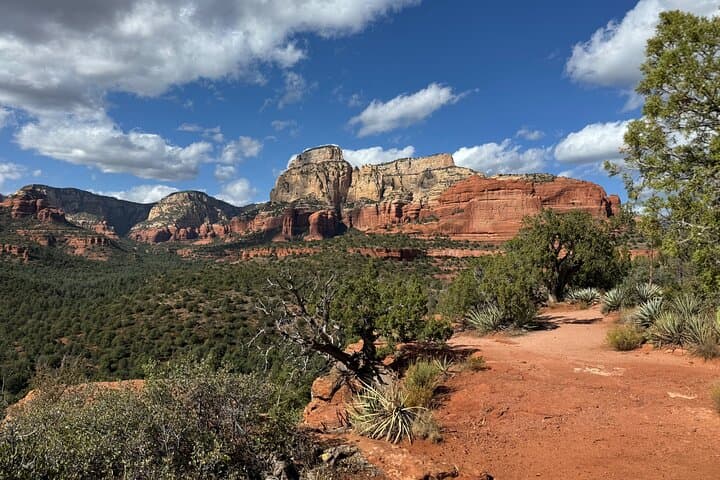
From this spiritual pause the tour threads to Rachel’s Knoll in Seven Canyons, a low-key vantage point known to many for its vortex energy. The knoll’s red sandstone faces push up like pages of geological history, tilted and scoured by ancient rivers. Visitors often stand still and feel the place in pulses — whether one calls it energy or simply the power of landscape immersion, the effect is unmistakable.
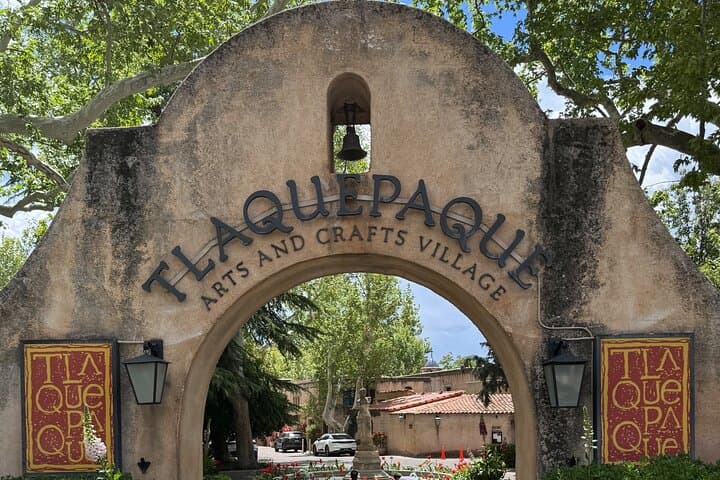
Next comes Tlaquepaque Arts & Shopping Village, a Spanish-style plaza where cobblestone courtyards, galleries and potters’ kilns offer the human side of Sedona’s creative culture. It’s an ideal counterpoint: after wide-open viewpoints, the village rewards slow browsing, espresso, and conversation with local makers.
The Sedona Heritage Museum follows, set on a preserved homestead that charts the region’s transition from ranchlands to film backdrop and artist colony. Exhibits on early settlers and Western movie shoots help place Sedona’s modern tourism in context — this was a working landscape long before it became a destination.
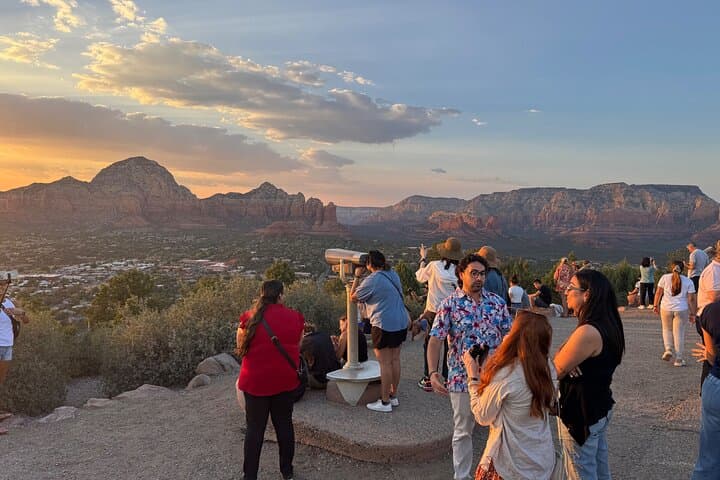
The finale is Airport Mesa Overlook. At 30 minutes here, the panorama unfolds in 360 degrees: cathedral-like fins of rock, a scattering of homes clinging to terraces, and the valley floor stretching away. The viewpoint is popular for sunset and for the anecdotal vortex experiences that keep curious travelers returning.
Practically speaking, the private tour is three to four hours, runs in an air-conditioned vehicle, and is accessible to most fitness levels — no hiking required. Guides typically include bottled water, snacks and insider commentary; many are Wilderness First Responder certified. Best times are early morning or late afternoon for cooler temperatures and cleaner light. Transportation is door-to-door in Sedona, and the tour is stroller-accessible with service animals allowed.
Beyond the stops, the tour acts as a primer: geology students of the road will notice sandstone layers tilted by ancient uplift; cultural observers will appreciate how artists, spiritual communities and film crews shaped Sedona’s identity. For travelers who want a concentrated, low-effort introduction to red-rock country — with meaningful context and a few secret viewpoints — this private circuit delivers.
easy.
3–4 hours.
Suitable for travelers of most fitness levels; minimal walking required but some standing and short uneven paths.
The private tour runs about 3–4 hours and includes five main stops: Amitabha Stupa & Peace Park, Rachel’s Knoll, Tlaquepaque Arts Village, Sedona Heritage Museum and Airport Mesa Overlook.
No technical hiking — expect short walks and standing at viewpoints. Paths can be uneven; closed-toe shoes are recommended.
Yes, the tour notes that entrance fees for listed attractions are included in the booking price.
The tour is stroller-accessible and suitable for most ages; travelers with limited mobility should notify the operator at booking to discuss specific needs.
Bring sun protection (hat, sunscreen, sunglasses), comfortable shoes, and a refillable water bottle; bottled water and snacks are usually provided.
This is a private tour, so many operators will adapt timing and focus within the three- to four-hour window — request preferences when booking.
Sedona transformed from ranchland and film-location backdrops into an art and spiritual destination during the mid-20th century; the Heritage Museum preserves this pioneer and cinematic history.
Sedona manages visitation through designated trailheads and viewpoint protocols to protect fragile soils and cultural sites; visitors are asked to stay on paths and pack out waste.
ARRA operates guided outdoor trips and adventures with an emphasis on safety, stewardship, and memorable experiences.
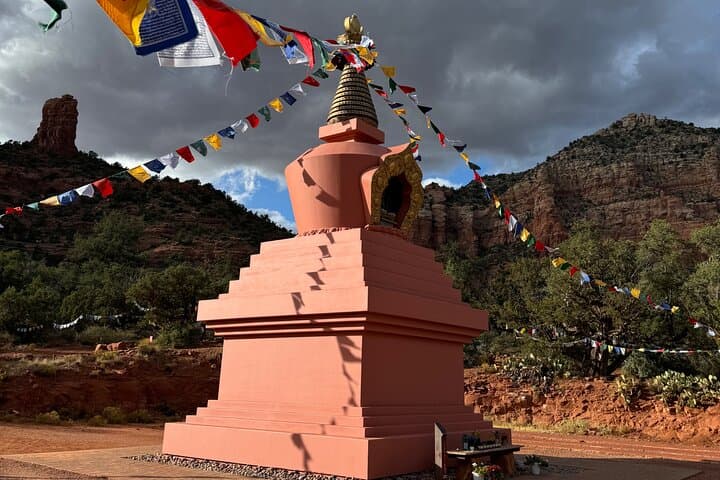
Morning light spills across the red rocks and the air has that dry, clear quality only the high desert can produce. A private vehicle eases out of Sedona’s center and climbs past juniper-dotted berms; the first stop is the Amitabha Stupa & Peace Park, where a white, sculpted stupa and fluttering prayer flags puncture the skyline and invite a quiet moment. The guide leads a short walk among basalt outcrops while explaining the site’s Buddhist roots and why so many visitors find it calming.
Morning light spills across the red rocks and the air has that dry, clear quality only the high desert can produce. A private vehicle eases out of Sedona’s center and climbs past juniper-dotted berms; the first stop is the Amitabha Stupa & Peace Park, where a white, sculpted stupa and fluttering prayer flags puncture the skyline and invite a quiet moment. The guide leads a short walk among basalt outcrops while explaining the site’s Buddhist roots and why so many visitors find it calming.
From this spiritual pause the tour threads to Rachel’s Knoll in Seven Canyons, a low-key vantage point known to many for its vortex energy. The knoll’s red sandstone faces push up like pages of geological history, tilted and scoured by ancient rivers. Visitors often stand still and feel the place in pulses — whether one calls it energy or simply the power of landscape immersion, the effect is unmistakable.
Next comes Tlaquepaque Arts & Shopping Village, a Spanish-style plaza where cobblestone courtyards, galleries and potters’ kilns offer the human side of Sedona’s creative culture. It’s an ideal counterpoint: after wide-open viewpoints, the village rewards slow browsing, espresso, and conversation with local makers.
The Sedona Heritage Museum follows, set on a preserved homestead that charts the region’s transition from ranchlands to film backdrop and artist colony. Exhibits on early settlers and Western movie shoots help place Sedona’s modern tourism in context — this was a working landscape long before it became a destination.
The finale is Airport Mesa Overlook. At 30 minutes here, the panorama unfolds in 360 degrees: cathedral-like fins of rock, a scattering of homes clinging to terraces, and the valley floor stretching away. The viewpoint is popular for sunset and for the anecdotal vortex experiences that keep curious travelers returning.
Practically speaking, the private tour is three to four hours, runs in an air-conditioned vehicle, and is accessible to most fitness levels — no hiking required. Guides typically include bottled water, snacks and insider commentary; many are Wilderness First Responder certified. Best times are early morning or late afternoon for cooler temperatures and cleaner light. Transportation is door-to-door in Sedona, and the tour is stroller-accessible with service animals allowed.
Beyond the stops, the tour acts as a primer: geology students of the road will notice sandstone layers tilted by ancient uplift; cultural observers will appreciate how artists, spiritual communities and film crews shaped Sedona’s identity. For travelers who want a concentrated, low-effort introduction to red-rock country — with meaningful context and a few secret viewpoints — this private circuit delivers.