THE ADVENTURE COLLECTIVE® · Independent discovery and booking for outdoor travel

Follow Casanova’s footsteps through foggy alleys and masked traditions on a two‑hour walking tour that pairs Carnival history with local stops for coffee and frittelle. Learn how masks, gambling houses and lagoon geology shaped the Venice we see today.
Follow Casanova’s footsteps through foggy alleys and masked traditions on a two‑hour walking tour that pairs Carnival history with local stops for coffee and frittelle. Learn how masks, gambling houses and lagoon geology shaped the Venice we see today.
A late-winter morning in Venice feels like stepping into a period film: fog drifts over narrow canals, alleyways hold the scent of espresso, and the city’s masks—plainly on display—suggest private stories behind every doorway.
Verified experiences and guided adventures in the surrounding area.
Operated by Venice Events srl · Venice, Veneto
A late-winter morning in Venice feels like stepping into a period film: fog drifts over narrow canals, alleyways hold the scent of espresso, and the city’s masks—plainly on display—suggest private stories behind every doorway.
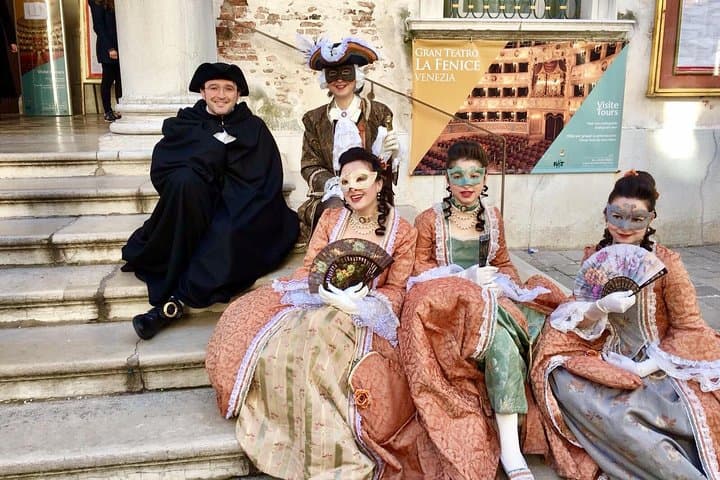
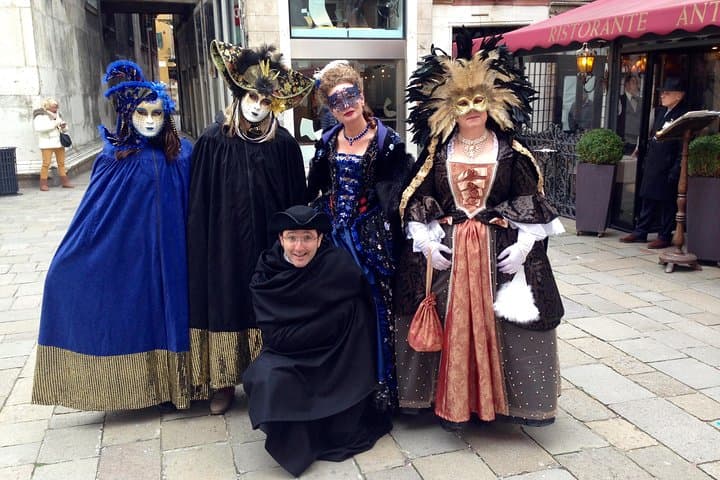
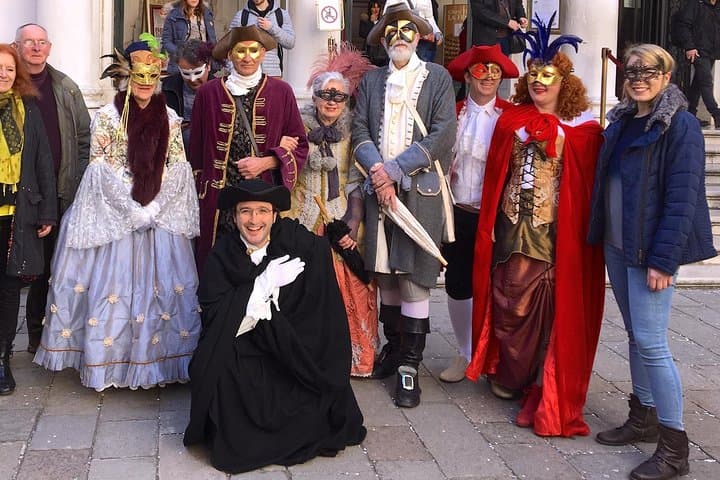
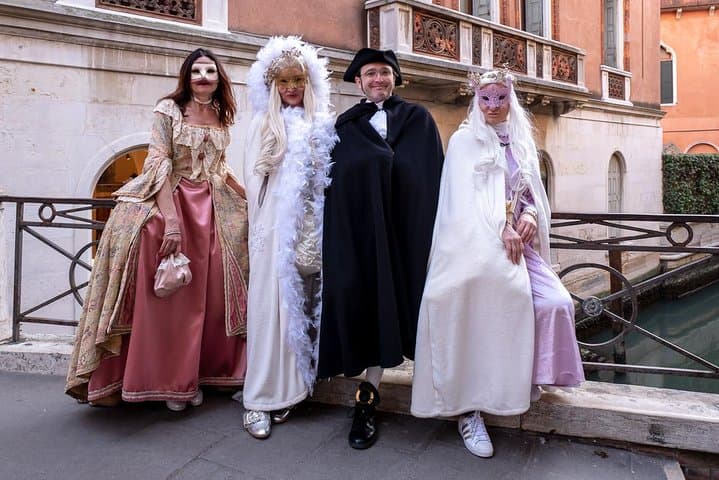
This two-hour walking tour begins at Teatro La Fenice and traces Giacomo Casanova’s footsteps through San Samuele, past the old Ridotto and into alleyways where 18th‑century pleasure and politics mixed freely. The guide, in a 17th‑century Venetian costume, explains how masks once dissolved social rank and how Carnival evolved from medieval revelry to an international spectacle. Beneath the marble palazzi lies a geological tale: Venice sits on a lagoon of marshes and silt, supported by timber piles driven into packed clay—conditions that shaped its narrow streets and low bridges and still demand careful preservation.
Cultural notes—on Freemasonry, courtesans, and the city’s gambling houses—are paired with practical stops: a small bacaro, a historic facade, and a final cappuccino with a Carnival frittella near St. Mark’s. Expect close pavements, stepped bridges, and pockets of crowds around main squares; gulls and pigeons will provide the soundtrack.
Practical guidance: wear sturdy shoes for cobbles and short staircases, bring a light layer for canal breezes, and allow extra time if you’re arriving by vaporetto (public waterbus). The tour is family‑friendly and mostly flat, but book in advance—Carnival season fills quickly. If you plan to wear a mask or costume, it’s encouraged and makes for great photos.
easy.
2 hours.
Light walking ability; able to handle short flights of stairs and cobbled surfaces.
The tour meets at Teatro La Fenice; meeting details are provided on your confirmation—arrive 10 minutes early to avoid delays.
Yes—costumes and masks are welcome and encouraged for photos; please avoid large or unwieldy props that block passageways.
Yes; it’s rated easy and family‑friendly, but participants should be prepared for short walks and a few steps.
The €5 city access fee (on certain dates) is not included—check local regulations to see if it applies to your visit.
Venice Carnival dates back to medieval times and rose to prominence in the 18th century; Casanova’s life intersected Venice’s salons, gaming houses and shifting social codes.
Venice’s built environment is fragile—stay on marked paths, support local cafes, and avoid touching fragile sculptures or frescoes to reduce wear.
Venice Events srl operates guided outdoor trips and adventures with an emphasis on safety, stewardship, and memorable experiences.
A late-winter morning in Venice feels like stepping into a period film: fog drifts over narrow canals, alleyways hold the scent of espresso, and the city’s masks—plainly on display—suggest private stories behind every doorway.
A late-winter morning in Venice feels like stepping into a period film: fog drifts over narrow canals, alleyways hold the scent of espresso, and the city’s masks—plainly on display—suggest private stories behind every doorway.
This two-hour walking tour begins at Teatro La Fenice and traces Giacomo Casanova’s footsteps through San Samuele, past the old Ridotto and into alleyways where 18th‑century pleasure and politics mixed freely. The guide, in a 17th‑century Venetian costume, explains how masks once dissolved social rank and how Carnival evolved from medieval revelry to an international spectacle. Beneath the marble palazzi lies a geological tale: Venice sits on a lagoon of marshes and silt, supported by timber piles driven into packed clay—conditions that shaped its narrow streets and low bridges and still demand careful preservation.
Cultural notes—on Freemasonry, courtesans, and the city’s gambling houses—are paired with practical stops: a small bacaro, a historic facade, and a final cappuccino with a Carnival frittella near St. Mark’s. Expect close pavements, stepped bridges, and pockets of crowds around main squares; gulls and pigeons will provide the soundtrack.
Practical guidance: wear sturdy shoes for cobbles and short staircases, bring a light layer for canal breezes, and allow extra time if you’re arriving by vaporetto (public waterbus). The tour is family‑friendly and mostly flat, but book in advance—Carnival season fills quickly. If you plan to wear a mask or costume, it’s encouraged and makes for great photos.