THE ADVENTURE COLLECTIVE® · Independent discovery and booking for outdoor travel

Walk a 90,000 m² cultural campus where basalt façades hum and dotted glass shimmers. This 60‑minute architectural overview of Vienna’s MuseumsQuartier pairs close readings of material and design with practical tips for further exploration.
Walk a 90,000 m² cultural campus where basalt façades hum and dotted glass shimmers. This 60‑minute architectural overview of Vienna’s MuseumsQuartier pairs close readings of material and design with practical tips for further exploration.
You step off the tram and into a broad urban courtyard where basalt and glass meet the city—light skips across the mumok façade and the MQ Libelle’s two‑and‑a‑half million white dots catch your eye like a woven net. Voices from cafés drift across the square; guides point out a basalt panel that literally rings when tapped and a succession of courtyards that fold into one another.
Verified experiences and guided adventures in the surrounding area.
Operated by MuseumsQuartier Wien · Vienna, Vienna
You step off the tram and into a broad urban courtyard where basalt and glass meet the city—light skips across the mumok façade and the MQ Libelle’s two‑and‑a‑half million white dots catch your eye like a woven net. Voices from cafés drift across the square; guides point out a basalt panel that literally rings when tapped and a succession of courtyards that fold into one another.
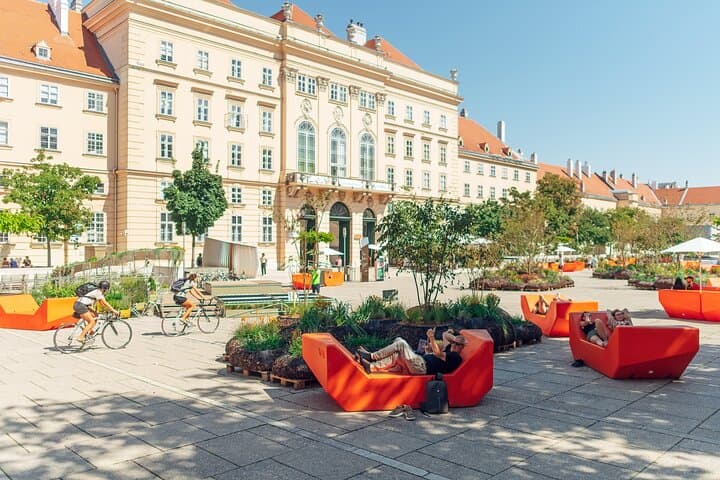
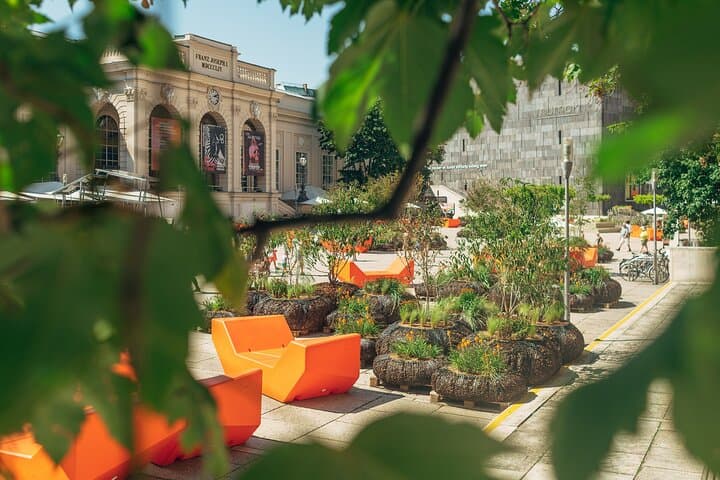
The MuseumsQuartier occupies roughly 90,000 m² within Vienna’s historic loop, built on the bones of imperial stables and reborn in the late 1990s as one of the world's largest cultural districts. Geology and craft mingle in basalt cladding and contemporary glasswork; architecture here is a conversation between Habsburg stonework and modern interventions. Culture is intentionally eccentric—high museums sit beside independent design shops, street art, and performance spaces.
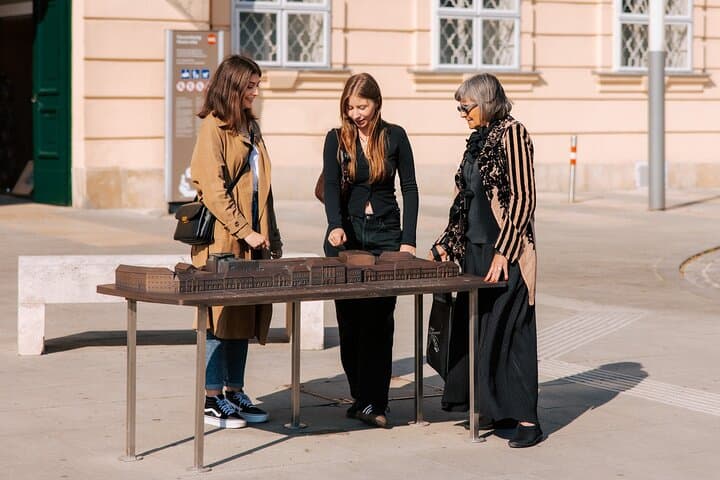
Practically speaking, the guided overview lasts about 60 minutes and moves at an easy pace across paved courtyards and accessible walkways. Expect close-up looks at façades, discussion of the district’s planning and institutions (some 60 cultural bodies), and pointers to side rooms worth revisiting on your own. Bring a camera, wear comfortable shoes, and plan for light changes—morning and late afternoon give the best shadow lines on the stone.
Public transport drops you nearby; the route and timing keep the tour compact and conversational. Guides invite questions—ask about material choices, adaptive reuse, and where to grab a post‑tour coffee. This is a short, sensory primer on how Vienna folds history and contemporary culture into a livable public room.
easy.
1 hour.
Suitable for most fitness levels; involves standing and short walking intervals
The guided overview is approximately 60 minutes and stays within the MuseumsQuartier precinct.
Yes—surfaces and routes on this tour are wheelchair and stroller accessible; indicate needs at booking.
Mobile tickets are accepted; bring the confirmation on your phone for quick check‑in.
Guides commonly offer the tour in German and English; check booking details for other language options.
The MuseumsQuartier was created by converting the imperial stables area into a cultural district in the late 20th century, bringing roughly 60 institutions together across renovated and new architecture.
The MQ balances heavy foot traffic with sensitive historic fabric—stay on designated paths, avoid touching artworks, and support local museums to fund upkeep.
MuseumsQuartier Wien operates guided outdoor trips and adventures with an emphasis on safety, stewardship, and memorable experiences.
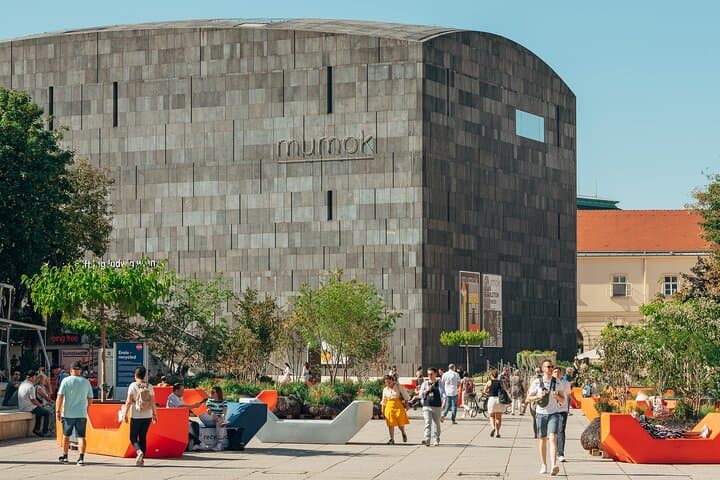
You step off the tram and into a broad urban courtyard where basalt and glass meet the city—light skips across the mumok façade and the MQ Libelle’s two‑and‑a‑half million white dots catch your eye like a woven net. Voices from cafés drift across the square; guides point out a basalt panel that literally rings when tapped and a succession of courtyards that fold into one another.
You step off the tram and into a broad urban courtyard where basalt and glass meet the city—light skips across the mumok façade and the MQ Libelle’s two‑and‑a‑half million white dots catch your eye like a woven net. Voices from cafés drift across the square; guides point out a basalt panel that literally rings when tapped and a succession of courtyards that fold into one another.
The MuseumsQuartier occupies roughly 90,000 m² within Vienna’s historic loop, built on the bones of imperial stables and reborn in the late 1990s as one of the world's largest cultural districts. Geology and craft mingle in basalt cladding and contemporary glasswork; architecture here is a conversation between Habsburg stonework and modern interventions. Culture is intentionally eccentric—high museums sit beside independent design shops, street art, and performance spaces.
Practically speaking, the guided overview lasts about 60 minutes and moves at an easy pace across paved courtyards and accessible walkways. Expect close-up looks at façades, discussion of the district’s planning and institutions (some 60 cultural bodies), and pointers to side rooms worth revisiting on your own. Bring a camera, wear comfortable shoes, and plan for light changes—morning and late afternoon give the best shadow lines on the stone.
Public transport drops you nearby; the route and timing keep the tour compact and conversational. Guides invite questions—ask about material choices, adaptive reuse, and where to grab a post‑tour coffee. This is a short, sensory primer on how Vienna folds history and contemporary culture into a livable public room.