THE ADVENTURE COLLECTIVE® · Independent discovery and booking for outdoor travel

Skip the lines and move at your group’s pace on a private half-day trip from Bath to Stonehenge. This tour includes fast-access tickets, round-trip transport, and a guide who frames the stones’ archaeology, alignments and modern cultural meaning.
Skip the lines and move at your group’s pace on a private half-day trip from Bath to Stonehenge. This tour includes fast-access tickets, round-trip transport, and a guide who frames the stones’ archaeology, alignments and modern cultural meaning.
You step out of the private minibus onto a broad chalk plain and the stones are already there—grey, deliberate, and larger than memory allows. Wind moves across the grass; a skylark threads the air. The stones seem to lean into the horizon, marking an alignment with sun and season that has drawn people for millennia.
Verified experiences and guided adventures in the surrounding area.
Operated by Opatrip England · Amesbury, Wiltshire
You step out of the private minibus onto a broad chalk plain and the stones are already there—grey, deliberate, and larger than memory allows. Wind moves across the grass; a skylark threads the air. The stones seem to lean into the horizon, marking an alignment with sun and season that has drawn people for millennia.
Stonehenge began taking shape around 3000 BCE and grew in phases through the Bronze Age. The massive sarsens that crown the circle sit alongside smaller bluestones—rocks transported across hundreds of miles—evidence of engineering ambition and ritual intent. Archaeologists have revealed burial mounds, ceremonial ditches and timber structures nearby; the site’s geometry still invites questions about astronomy, procession and community practice.
Local culture swings between reverence and tourism: modern solstice gatherings echo ancient timing, while nearby Bath and Amesbury host quieter pubs and local history museums. The experience is outdoors-first—open sky, wind, and the occasional sheep grazing the plain.
Practicalities: this private tour runs about four hours round trip from Bath with included fast-access Stonehenge tickets and a local guide. Expect roughly two hours total travel and two hours on site. Wear sturdy walking shoes for uneven turf and a windproof layer; weather changes rapidly on the plain. Photography is allowed but drone use is prohibited. Note that general admission keeps visitors on the designated path; close access to the inner stone settings is only available during special access events. Bring a charged phone for e-tickets, arrive in the quieter morning or late afternoon for softer light, and follow signage to protect fragile archaeology—Stonehenge asks visitors to observe barriers and staff instructions to preserve this prehistoric landscape.
easy.
4 hours.
Suitable for all fitness levels; involves short walks on uneven ground and standing periods.
The private half-day tour runs about four hours total: roughly two hours round-trip transport and about two hours allocated at Stonehenge.
Yes—fast-access entrance fees to Stonehenge are included in the tour price.
General admission keeps visitors on the designated path; access inside the circle is limited and only available during special access events or private hire.
The visitor center and some paths are accessible, but the grass areas near the stones are uneven; check with the operator about specific mobility needs and pickup points.
Stonehenge was built in stages beginning around 3000 BCE; later additions created the familiar sarsen circle and trilithons, and burials and ceremonial ditches reveal a complex ritual landscape.
Visitor access is managed to limit erosion and protect archaeological deposits; follow barriers, avoid picking plants, and adhere to staff guidance to reduce impact.
Opatrip England operates guided outdoor trips and adventures with an emphasis on safety, stewardship, and memorable experiences.

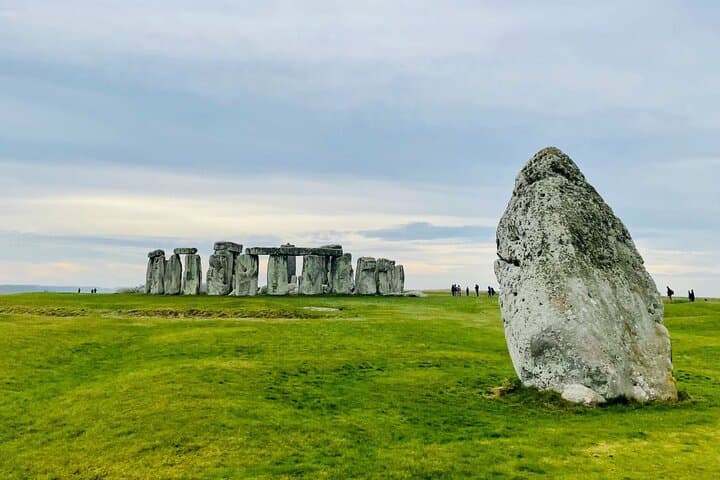
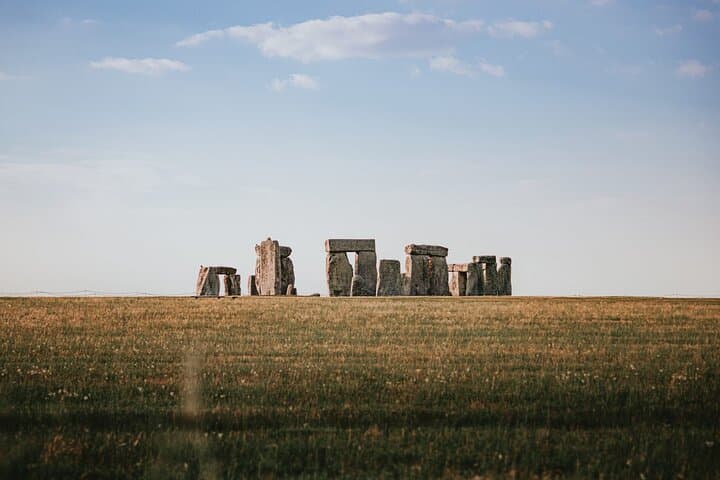
You step out of the private minibus onto a broad chalk plain and the stones are already there—grey, deliberate, and larger than memory allows. Wind moves across the grass; a skylark threads the air. The stones seem to lean into the horizon, marking an alignment with sun and season that has drawn people for millennia.
You step out of the private minibus onto a broad chalk plain and the stones are already there—grey, deliberate, and larger than memory allows. Wind moves across the grass; a skylark threads the air. The stones seem to lean into the horizon, marking an alignment with sun and season that has drawn people for millennia.
Stonehenge began taking shape around 3000 BCE and grew in phases through the Bronze Age. The massive sarsens that crown the circle sit alongside smaller bluestones—rocks transported across hundreds of miles—evidence of engineering ambition and ritual intent. Archaeologists have revealed burial mounds, ceremonial ditches and timber structures nearby; the site’s geometry still invites questions about astronomy, procession and community practice.
Local culture swings between reverence and tourism: modern solstice gatherings echo ancient timing, while nearby Bath and Amesbury host quieter pubs and local history museums. The experience is outdoors-first—open sky, wind, and the occasional sheep grazing the plain.
Practicalities: this private tour runs about four hours round trip from Bath with included fast-access Stonehenge tickets and a local guide. Expect roughly two hours total travel and two hours on site. Wear sturdy walking shoes for uneven turf and a windproof layer; weather changes rapidly on the plain. Photography is allowed but drone use is prohibited. Note that general admission keeps visitors on the designated path; close access to the inner stone settings is only available during special access events. Bring a charged phone for e-tickets, arrive in the quieter morning or late afternoon for softer light, and follow signage to protect fragile archaeology—Stonehenge asks visitors to observe barriers and staff instructions to preserve this prehistoric landscape.