THE ADVENTURE COLLECTIVE® · Independent discovery and booking for outdoor travel

Explore Spitalfields beyond the sensational headlines on a three-hour private walk that traces 2,000 years of London life. From Huguenot weaving houses to subterranean plague pits and lively markets, this tour prioritizes heritage, local culture and present-day flavors over the usual Ripper stories.
Explore Spitalfields beyond the sensational headlines on a three-hour private walk that traces 2,000 years of London life. From Huguenot weaving houses to subterranean plague pits and lively markets, this tour prioritizes heritage, local culture and present-day flavors over the usual Ripper stories.
Morning light slides down Brick Lane and the market stalls awake with spices and strong coffee; narrow streets push the city’s long stories into view.
Verified experiences and guided adventures in the surrounding area.
Operated by Ye Olde England Tours · London, Greater London
Morning light slides down Brick Lane and the market stalls awake with spices and strong coffee; narrow streets push the city’s long stories into view.
On this private three-hour walk through Spitalfields, guides lead guests past Tudor pubs, hidden cemeteries, and the white-walled Huguenot church while deliberately steering clear of the usual Ripper narrative to focus on two millennia of urban life instead. Archaeology turns up plague pits and charnel deposits beneath modern glass, while Georgian weavers' houses and Victorian alms-houses tell of industry, migration and social support systems that shaped the East End.
Geologically the area sits on London clay, which preserved subterranean remains and influenced early settlement patterns; culturally Spitalfields reads as a palimpsest—Huguenots, Jewish immigrants, Bangladeshi families and new creative businesses each left distinct marks. Expect a sensory mix: the sharp scent of curry competing with baking from century-old bakeries, and markets that argue for attention.
Practical points are straightforward. The route is mostly flat pavement with occasional cobbles; sessions last about three hours and cover roughly 2–3 miles at a relaxed pace. Bring sensible footwear, plan for urban rainfall, and allow time to sample markets or cafés at the tour's end. Photography is usually welcome, but interiors and private homes may restrict access. The walk suits travelers wanting history, architecture and food culture in one concentrated urban loop.
easy.
3 hours.
Suitable for most fitness levels; requires standing and walking for up to three hours over 2–3 miles.
Meeting points are typically near Spitalfields Market or a nearby landmark; the exact location is confirmed after booking and is accessible by public transport.
Most areas are wheelchair accessible, though some older streets may have cobbles—notify the operator of accessibility needs when booking.
This private tour intentionally focuses on broader social, architectural and cultural history rather than the well-known Ripper narratives.
Guides will point out cafés, markets and public restrooms; you can stop during the tour for a quick snack or drink but entry to paid attractions may be optional.
Spitalfields grew around medieval lanes outside the City walls and later became a center for Huguenot silk-weaving, then Jewish and South Asian communities—each wave reshaped the streets and trades.
Preserve fragile historic fabric by staying on public paths, supporting local independent businesses and avoiding flash photography in sensitive interiors.
Ye Olde England Tours operates guided outdoor trips and adventures with an emphasis on safety, stewardship, and memorable experiences.
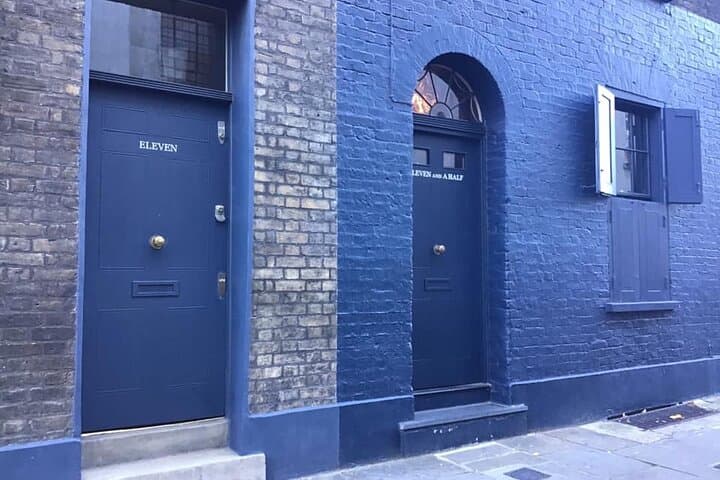


Morning light slides down Brick Lane and the market stalls awake with spices and strong coffee; narrow streets push the city’s long stories into view.
Morning light slides down Brick Lane and the market stalls awake with spices and strong coffee; narrow streets push the city’s long stories into view.
On this private three-hour walk through Spitalfields, guides lead guests past Tudor pubs, hidden cemeteries, and the white-walled Huguenot church while deliberately steering clear of the usual Ripper narrative to focus on two millennia of urban life instead. Archaeology turns up plague pits and charnel deposits beneath modern glass, while Georgian weavers' houses and Victorian alms-houses tell of industry, migration and social support systems that shaped the East End.
Geologically the area sits on London clay, which preserved subterranean remains and influenced early settlement patterns; culturally Spitalfields reads as a palimpsest—Huguenots, Jewish immigrants, Bangladeshi families and new creative businesses each left distinct marks. Expect a sensory mix: the sharp scent of curry competing with baking from century-old bakeries, and markets that argue for attention.
Practical points are straightforward. The route is mostly flat pavement with occasional cobbles; sessions last about three hours and cover roughly 2–3 miles at a relaxed pace. Bring sensible footwear, plan for urban rainfall, and allow time to sample markets or cafés at the tour's end. Photography is usually welcome, but interiors and private homes may restrict access. The walk suits travelers wanting history, architecture and food culture in one concentrated urban loop.