THE ADVENTURE COLLECTIVE® · Independent discovery and booking for outdoor travel

Turn Pisa into an interactive playground with a self-guided GPS game that sends you from the Leaning Tower through hidden alleys and riverside views. Solve puzzles, complete photo tasks, and discover local stories at your own pace.
Turn Pisa into an interactive playground with a self-guided GPS game that sends you from the Leaning Tower through hidden alleys and riverside views. Solve puzzles, complete photo tasks, and discover local stories at your own pace.
Morning light hits the Campo dei Miracoli and the Leaning Tower tilts a conspiratorial glance toward arriving players. Start at the stone-faced entrance of the Gipsoteca di Arte Antica and you’re immediately moving through lanes where marble faces and student backpacks share the same pace.
Verified experiences and guided adventures in the surrounding area.
Operated by City Game · Pisa, Tuscany
Morning light hits the Campo dei Miracoli and the Leaning Tower tilts a conspiratorial glance toward arriving players. Start at the stone-faced entrance of the Gipsoteca di Arte Antica and you’re immediately moving through lanes where marble faces and student backpacks share the same pace.
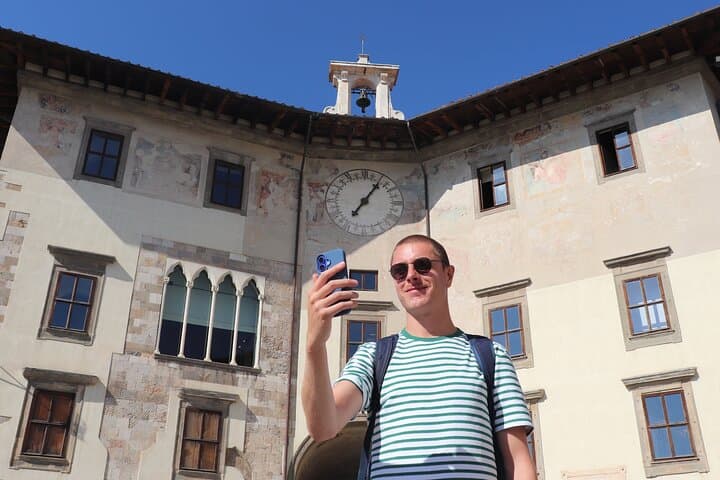
Pisa wears centuries on its streets: a medieval maritime republic that spent its wealth on cathedrals carved from Carrara marble, and a scientific legacy marked by Galileo’s early experiments. The route threads the cathedral, baptistery, and Piazza dei Cavalieri, but also diverts into quieter alleys and riverfront turns where the Arno dares you to look past the postcards.
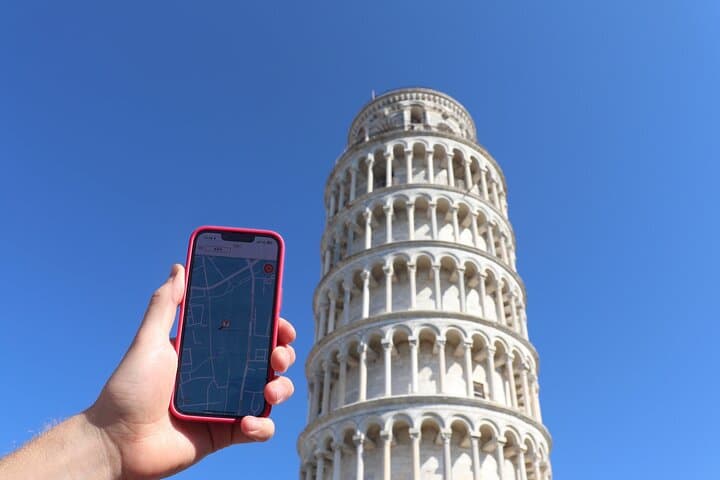
Geology shows in the bright marble and river-smoothed stones; culture arrives in coffee cups, student graffiti, and the low-key pride of a city that’s both museum and neighborhood. The game uses GPS to drop clues—riddles, photo tasks, and local lore—so you’ll learn names, dates, and hidden corners rather than just ticking monuments off a list.
Practical side: this is a self-guided, smartphone-based experience that takes around two hours, covers mostly flat cobbled streets, and is suitable for most fitness levels. One ticket covers 1–4 players; start anytime, pause the game, and continue later. Bring a charged phone and a power bank, wear comfortable shoes for uneven pavements, and plan to start early or late afternoon to avoid peak crowds. Keep steps respectful around holy sites and private courtyards—this is urban exploration with a conscience.
easy.
2 hours.
Suitable for most hikers and casual walkers; requires standing and 1–2 hours of walking on flat to cobbled surfaces.
The experience begins at the Gipsoteca di Arte Antica; after purchase you’ll receive a personal game link—open it at the start location and begin immediately.
One ticket covers 1–4 players; for larger groups buy additional tickets so everyone can participate.
Much of central Pisa is flat but includes cobbled streets and occasional steps; accessibility varies by exact path—contact local services if you need step-free routing.
Yes—the self-guided format allows you to pause at any time and resume from where you left off using the same game link.
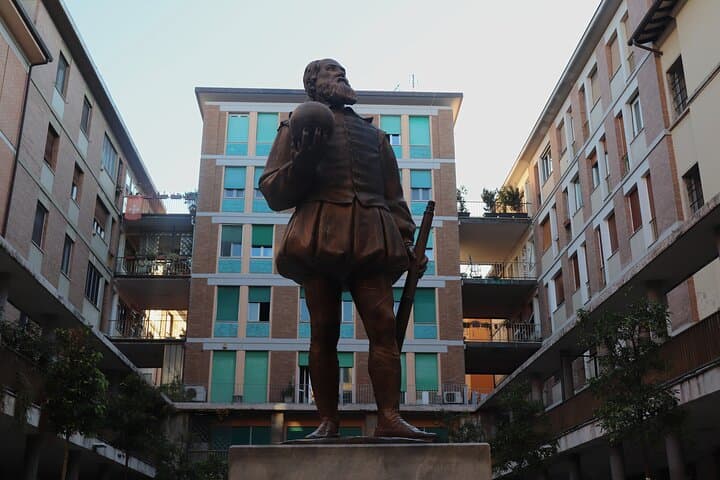
Pisa’s wealth in the Middle Ages funded the cathedral complex and marble façades; Galileo studied in the city, and the game leans into those scientific and civic stories.
Preserve fragile marble and frescoes by not touching surfaces, stay on marked paths, and support small local businesses rather than crowding fragile neighborhoods.
City Game operates guided outdoor trips and adventures with an emphasis on safety, stewardship, and memorable experiences.
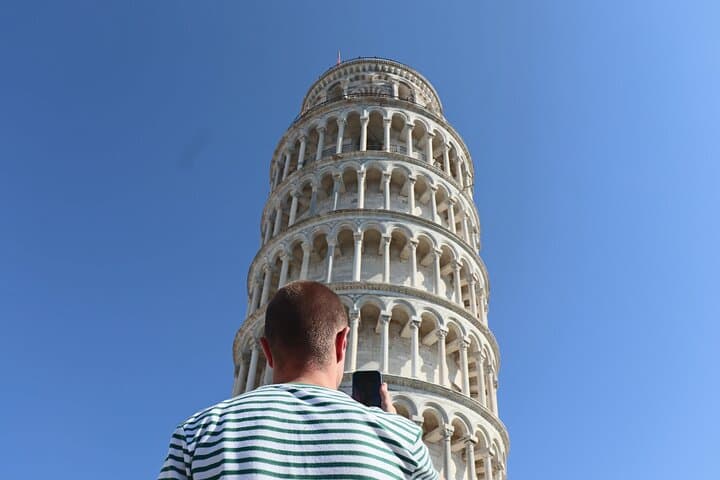
Morning light hits the Campo dei Miracoli and the Leaning Tower tilts a conspiratorial glance toward arriving players. Start at the stone-faced entrance of the Gipsoteca di Arte Antica and you’re immediately moving through lanes where marble faces and student backpacks share the same pace.
Morning light hits the Campo dei Miracoli and the Leaning Tower tilts a conspiratorial glance toward arriving players. Start at the stone-faced entrance of the Gipsoteca di Arte Antica and you’re immediately moving through lanes where marble faces and student backpacks share the same pace.
Pisa wears centuries on its streets: a medieval maritime republic that spent its wealth on cathedrals carved from Carrara marble, and a scientific legacy marked by Galileo’s early experiments. The route threads the cathedral, baptistery, and Piazza dei Cavalieri, but also diverts into quieter alleys and riverfront turns where the Arno dares you to look past the postcards.
Geology shows in the bright marble and river-smoothed stones; culture arrives in coffee cups, student graffiti, and the low-key pride of a city that’s both museum and neighborhood. The game uses GPS to drop clues—riddles, photo tasks, and local lore—so you’ll learn names, dates, and hidden corners rather than just ticking monuments off a list.
Practical side: this is a self-guided, smartphone-based experience that takes around two hours, covers mostly flat cobbled streets, and is suitable for most fitness levels. One ticket covers 1–4 players; start anytime, pause the game, and continue later. Bring a charged phone and a power bank, wear comfortable shoes for uneven pavements, and plan to start early or late afternoon to avoid peak crowds. Keep steps respectful around holy sites and private courtyards—this is urban exploration with a conscience.