THE ADVENTURE COLLECTIVE® · Independent discovery and booking for outdoor travel

Walk King’s Parade with a local historian and an audio guide that ties Newton, Darwin and Hawking to the streets and labs where they worked. This 40–50 minute self-guided tour maps inventions, pubs, and photography hotspots around Cambridge’s historic core.
Walk King’s Parade with a local historian and an audio guide that ties Newton, Darwin and Hawking to the streets and labs where they worked. This 40–50 minute self-guided tour maps inventions, pubs, and photography hotspots around Cambridge’s historic core.
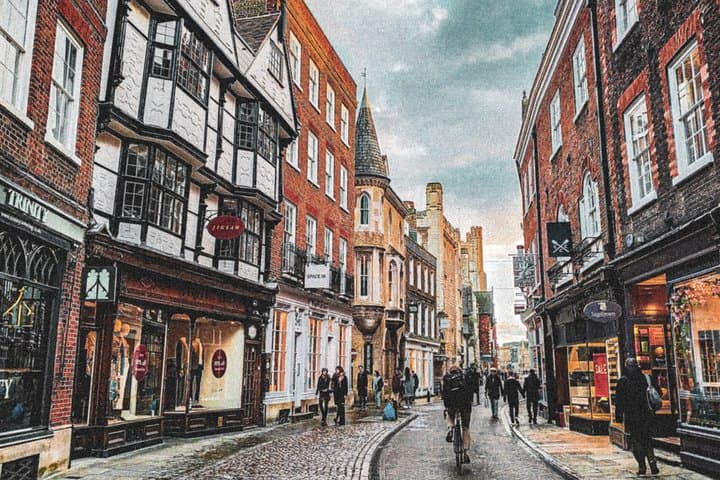
You step out onto King's Parade and the city changes cadence: bell towers mark steps, stone façades hold lectures centuries old, and the River Cam dares you to follow its slow current toward The Backs. Pigeons scatter as the chapel's perpendicular silhouette pins the sky; the air tastes faintly of baking from Fitzbillies and of pages turned in libraries nearby.
Verified experiences and guided adventures in the surrounding area.
Operated by Vidi Guides · Cambridge, Cambridgeshire
You step out onto King's Parade and the city changes cadence: bell towers mark steps, stone façades hold lectures centuries old, and the River Cam dares you to follow its slow current toward The Backs. Pigeons scatter as the chapel's perpendicular silhouette pins the sky; the air tastes faintly of baking from Fitzbillies and of pages turned in libraries nearby.
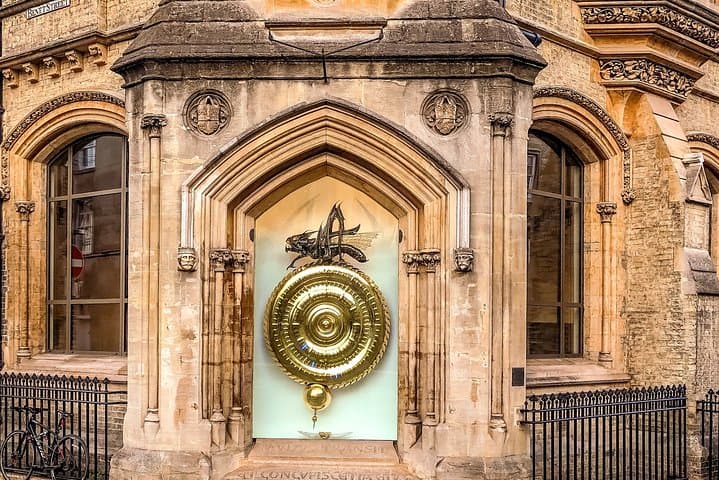
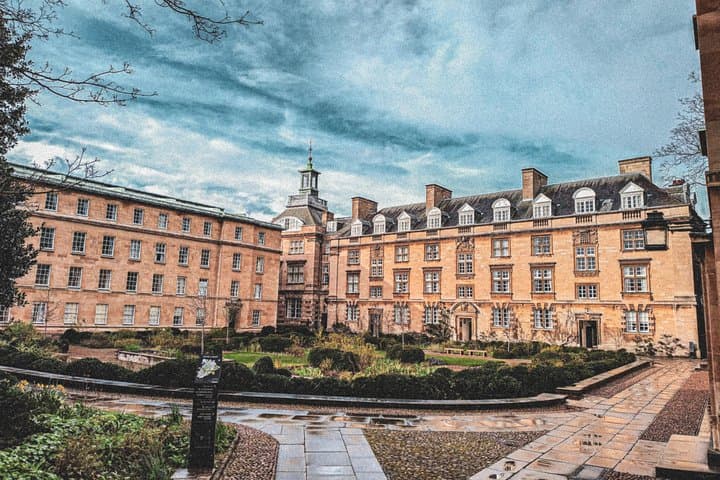
Cambridge grew from a medieval market into a global research hub. King's College Chapel—started in the 15th century—anchors the university's architectural story while nearby Trinity and Gonville & Caius carry echoes of Newton’s laws, Darwin’s early observations, and Hawking’s theoretical reach. The Corpus Clock, a modern mechanical beast, sits against this lineage, a playful reminder that invention here spans centuries. Geologically, you’re walking on fenland edge—flat, low-lying ground shaped by rivers and reclaimed marshes—so viewpoints are horizontal, not alpine.
The route threads past Cavendish Laboratory’s labs, the pub where scientists toasted breakthroughs, and small shops that keep photographic prints of the Boat Race. Local culture blends academic formality (gowns, formal halls) with canny student humor: look for carved graffiti and college memorials.
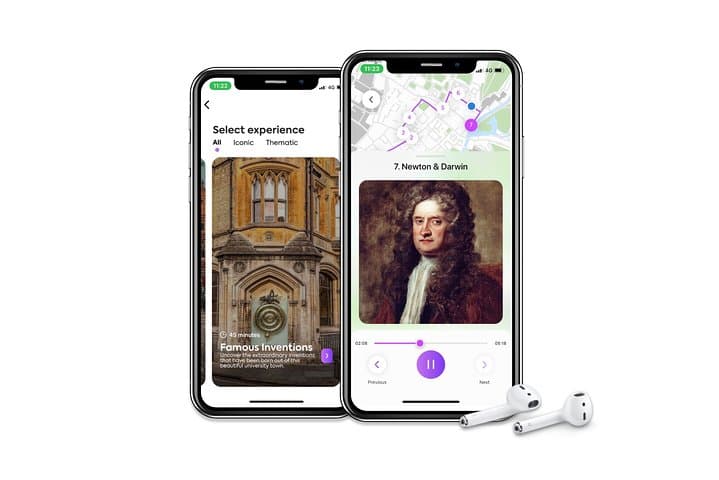
Practical guidance: this self-guided audio walk takes about 40–50 minutes—download the tour for offline use, use earphones to hear commentary in crowded spots, and plan for peak times (late morning and summer). Wear comfortable shoes for cobbles, respect college access rules, and pause at Fitzbillies for a Chelsea bun. The tour is wheelchair-accessible on main streets, but some college courts and riverbanks have steps.
Bring a charged phone, follow the GPS map, and leave time to sit by the Cam; the river’s current seems to push ideas forward as much as punts downstream.
easy.
40–50 minutes.
Minimal fitness required; mostly flat walking on paved streets and cobbles
No—this is a self-guided audio walking tour; any college entrance fees or special access must be paid separately at the site.
Plan 40–50 minutes for the core route; allow extra time if you want to enter colleges, visit exhibitions, or stop for food.
Main streets and King's Parade are wheelchair and stroller friendly, but some college courts and riverside paths have steps—check the GPS map and college access notes in the app.
Yes—public exteriors, the Corpus Clock, and The Backs are great photo spots; respect any signs restricting photography inside chapels or college interiors.
King's College Chapel began in the 15th century and stands as one of England’s finest examples of late Gothic architecture; the city expanded around its religious and academic institutions into a modern research center.
College grounds are cared for to protect historic masonry and green spaces; stick to paths near riverbanks to avoid trampling sensitive river-edge vegetation.
Vidi Guides operates guided outdoor trips and adventures with an emphasis on safety, stewardship, and memorable experiences.
You step out onto King's Parade and the city changes cadence: bell towers mark steps, stone façades hold lectures centuries old, and the River Cam dares you to follow its slow current toward The Backs. Pigeons scatter as the chapel's perpendicular silhouette pins the sky; the air tastes faintly of baking from Fitzbillies and of pages turned in libraries nearby.
You step out onto King's Parade and the city changes cadence: bell towers mark steps, stone façades hold lectures centuries old, and the River Cam dares you to follow its slow current toward The Backs. Pigeons scatter as the chapel's perpendicular silhouette pins the sky; the air tastes faintly of baking from Fitzbillies and of pages turned in libraries nearby.
Cambridge grew from a medieval market into a global research hub. King's College Chapel—started in the 15th century—anchors the university's architectural story while nearby Trinity and Gonville & Caius carry echoes of Newton’s laws, Darwin’s early observations, and Hawking’s theoretical reach. The Corpus Clock, a modern mechanical beast, sits against this lineage, a playful reminder that invention here spans centuries. Geologically, you’re walking on fenland edge—flat, low-lying ground shaped by rivers and reclaimed marshes—so viewpoints are horizontal, not alpine.
The route threads past Cavendish Laboratory’s labs, the pub where scientists toasted breakthroughs, and small shops that keep photographic prints of the Boat Race. Local culture blends academic formality (gowns, formal halls) with canny student humor: look for carved graffiti and college memorials.
Practical guidance: this self-guided audio walk takes about 40–50 minutes—download the tour for offline use, use earphones to hear commentary in crowded spots, and plan for peak times (late morning and summer). Wear comfortable shoes for cobbles, respect college access rules, and pause at Fitzbillies for a Chelsea bun. The tour is wheelchair-accessible on main streets, but some college courts and riverbanks have steps.
Bring a charged phone, follow the GPS map, and leave time to sit by the Cam; the river’s current seems to push ideas forward as much as punts downstream.