THE ADVENTURE COLLECTIVE® · Independent discovery and booking for outdoor travel

Escape the crowded torii and explore Mount Inari’s hidden trails with a Kyoto-born guide. This private 2.5-hour hike follows secret bamboo lanes and quiet torii clusters for a peaceful, local perspective on Fushimi Inari Taisha.
Escape the crowded torii and explore Mount Inari’s hidden trails with a Kyoto-born guide. This private 2.5-hour hike follows secret bamboo lanes and quiet torii clusters for a peaceful, local perspective on Fushimi Inari Taisha.
You step off the main avenue and the orange torii thin into a single-file rhythm — the crowd noise peels away and the path slopes into pine and bamboo.
Verified experiences and guided adventures in the surrounding area.
Operated by Tour bench Japan【Discover real Kyoto with a local】 · Kyoto, Kyoto Prefecture
You step off the main avenue and the orange torii thin into a single-file rhythm — the crowd noise peels away and the path slopes into pine and bamboo.
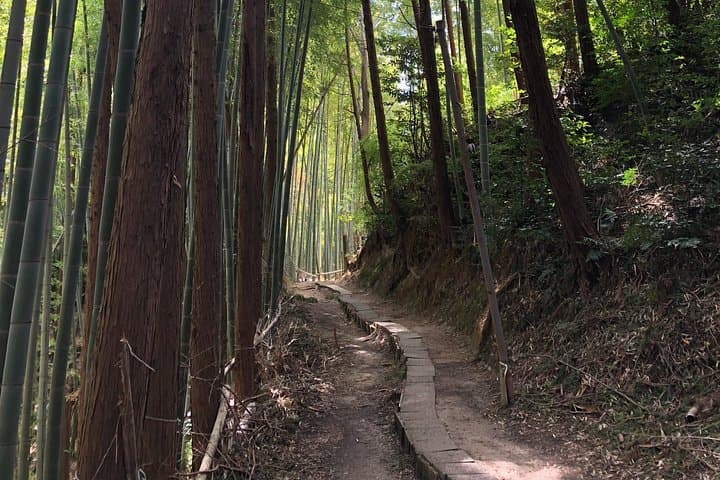
This private hike follows lesser-known tracks on Mount Inari, where the shrine’s history goes back to the early 8th century as a center of Inari worship for rice, business and the fox spirits that guard the gates. Geologically the hill is modest — roughly 200–233 meters high — but the old stone steps and compacted dirt trails carve through aged cedar and bamboo stands that cool the air and narrow sightlines.
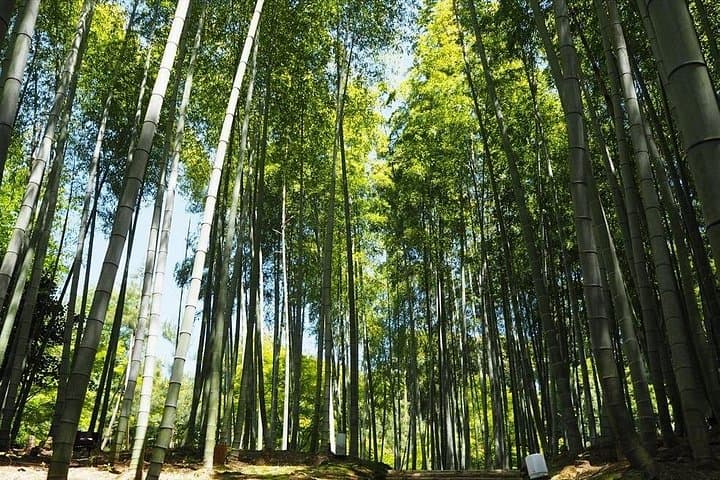
Locals once used these back routes to move between small shrines and agricultural plots; today many are off official maps and require local knowledge to navigate safely. The guide knows shortcuts, quiet torii clusters and a bamboo-lined approach that rarely sees tourists, offering a different rhythm to the usual tourist flow.
Practical guidance: expect uneven stone steps, short steep sections, and single-track trails that can be slippery when wet. The full loop to the summit and back along mixed secret paths is about 3–4 km round-trip with roughly 200 m of elevation gain — plan 2–3 hours at an easy but steady pace. Wear closed shoes with grip, bring 1L of water, and carry modest cash for small shrine offerings.
Respect the spiritual sites: stay on path, don’t climb small shrine fences, and leave no trace. With a knowledgeable local, this stretch of Mount Inari becomes quiet, focused, and distinctly Kyoto.
moderate.
2–3 hours.
You should be comfortable with sustained stair climbing and uneven trail surfaces; basic cardio and ankle stability help.
The route includes short steep sections and many stone steps; overall elevation gain is about 200–233 meters and is manageable at a steady walking pace.
Public toilets are common near the main shrine but become scarce on the back trails; use facilities before you head into the quieter sections.
Families can do sections of the path, but those with limited mobility may find stone steps and narrow trails challenging; notify the guide to tailor the route.
No general fee is required for Fushimi Inari Taisha, but small donations at subsidiary shrines are customary; admission fees are not needed for the hiking paths.
Fushimi Inari Taisha originated in the early 8th century as the head shrine of Inari, historically linked to rice agriculture and local commerce.
High foot traffic has eroded some steps and compacted soils; stick to established trails, avoid trampling understory, and pack out waste to protect the hillside.
Tour bench Japan【Discover real Kyoto with a local】 operates guided outdoor trips and adventures with an emphasis on safety, stewardship, and memorable experiences.
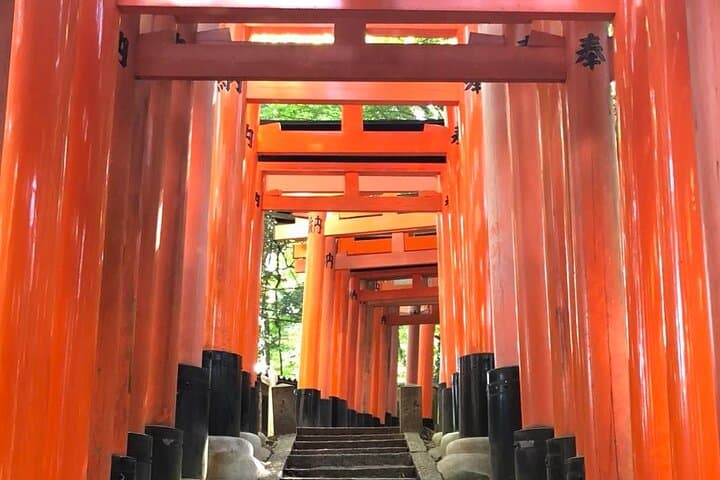
You step off the main avenue and the orange torii thin into a single-file rhythm — the crowd noise peels away and the path slopes into pine and bamboo.
You step off the main avenue and the orange torii thin into a single-file rhythm — the crowd noise peels away and the path slopes into pine and bamboo.
This private hike follows lesser-known tracks on Mount Inari, where the shrine’s history goes back to the early 8th century as a center of Inari worship for rice, business and the fox spirits that guard the gates. Geologically the hill is modest — roughly 200–233 meters high — but the old stone steps and compacted dirt trails carve through aged cedar and bamboo stands that cool the air and narrow sightlines.
Locals once used these back routes to move between small shrines and agricultural plots; today many are off official maps and require local knowledge to navigate safely. The guide knows shortcuts, quiet torii clusters and a bamboo-lined approach that rarely sees tourists, offering a different rhythm to the usual tourist flow.
Practical guidance: expect uneven stone steps, short steep sections, and single-track trails that can be slippery when wet. The full loop to the summit and back along mixed secret paths is about 3–4 km round-trip with roughly 200 m of elevation gain — plan 2–3 hours at an easy but steady pace. Wear closed shoes with grip, bring 1L of water, and carry modest cash for small shrine offerings.
Respect the spiritual sites: stay on path, don’t climb small shrine fences, and leave no trace. With a knowledgeable local, this stretch of Mount Inari becomes quiet, focused, and distinctly Kyoto.