THE ADVENTURE COLLECTIVE® · Independent discovery and booking for outdoor travel

Walk 2.5 miles from the brick streets of Pioneer Square to the futuristic grounds of Seattle Center. This guided tour pairs local history, immigrant neighborhood stories, and a monorail ride to give first-time visitors a clear, lively orientation to the city.
Walk 2.5 miles from the brick streets of Pioneer Square to the futuristic grounds of Seattle Center. This guided tour pairs local history, immigrant neighborhood stories, and a monorail ride to give first-time visitors a clear, lively orientation to the city.
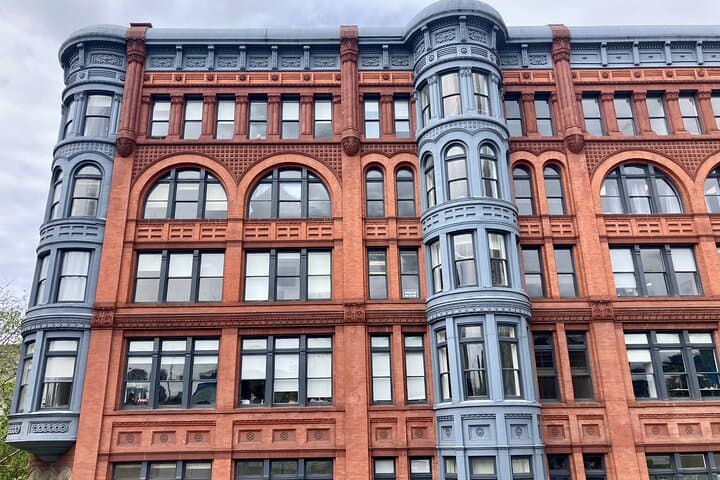
The drizzle is part of the city’s choreography: a soft percussion against awnings as a small group gathers in front of the Pioneer Building. The guide checks names, folds a map, and the group steps onto brick sidewalks that still remember horse hooves. Over the next 2.5 miles and roughly two and a half hours, the walking tour stitches together the founding stories, immigrant neighborhoods, and mid-century futurism that make Seattle feel like a city of constant reinvention.
Verified experiences and guided adventures in the surrounding area.
Operated by Wander Northwest Walking Tours · Seattle, Washington
The drizzle is part of the city’s choreography: a soft percussion against awnings as a small group gathers in front of the Pioneer Building. The guide checks names, folds a map, and the group steps onto brick sidewalks that still remember horse hooves. Over the next 2.5 miles and roughly two and a half hours, the walking tour stitches together the founding stories, immigrant neighborhoods, and mid-century futurism that make Seattle feel like a city of constant reinvention.
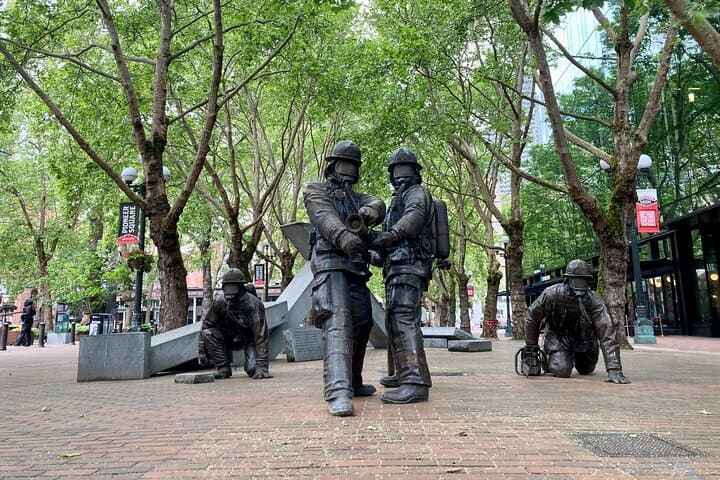
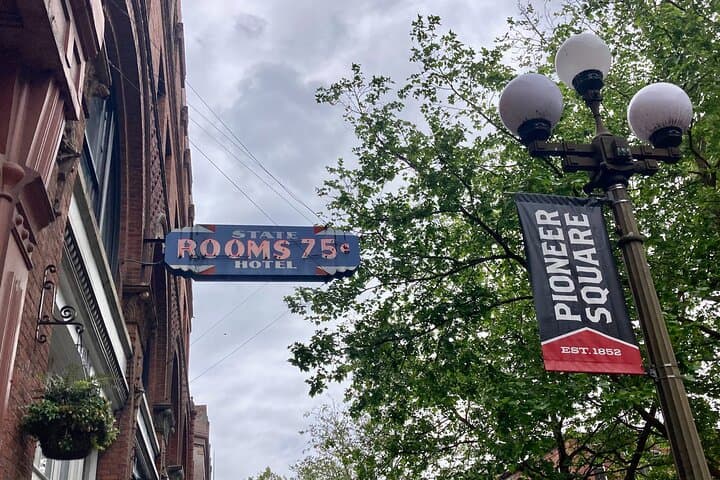
Pioneer Square is where Seattle was refounded after the Great Fire of 1889. The guide points out Romanesque facades and tells how the Klondike Gold Rush turned a regional outpost into a Pacific port. As the route threads through Occidental Park, the city’s industrial past gives way to the compact urban gardens and public sculptures installed after waves of redevelopment. Chinatown-International District holds the visible imprint of multiple migrations — Japanese, Chinese and Vietnamese storefronts sharing a single streetblock — while King Street Station’s clock tower recalls the era when rail and sea met here.
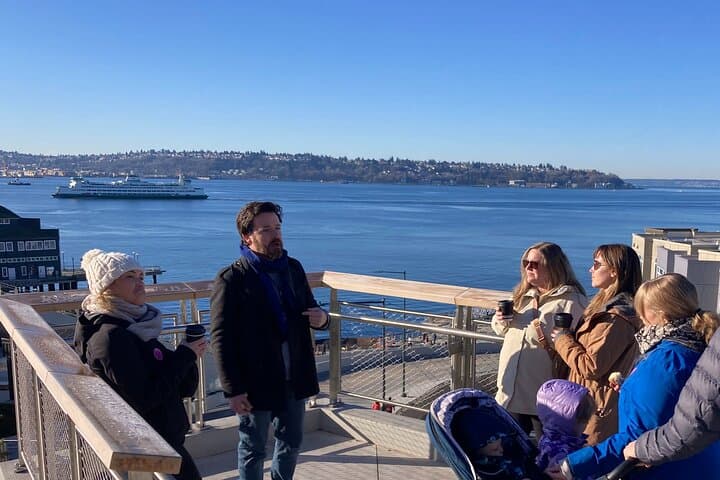
Geologically, the city sits where Puget Sound’s tidewater brushes against a series of drumlin-like hills carved by glacial ice. That topography explains the abrupt changes in elevation in some neighborhoods and the panoramic payoff on higher sidewalks. At Westlake the tour buys monorail tickets and rockets two stops to Seattle Center — the 1962 World's Fair left its most visible signature there: the Space Needle, which still swivels views across the Sound.
This is an urban walk, not a hike: mostly flat sidewalks, short staircases, and occasional cobblestone in older blocks. The group size caps at about 15, keeping conversation intimate and traffic maneuvers quick. The guide brings local color — where to find the best hand-pulled dim sum, which mural was painted by youth collectives, and which corner avoided redevelopment. The monorail fare is included, and the tour runs rain or shine unless a weather advisory forces a cancellation.
Practical guidance: wear waterproof shoes with good tread for slick streets, layer for sudden showers, and carry a small pack for water and a camera. Bring transit card or card-friendly bank app for extras after the tour. If mobility is a concern, note that some historic blocks use uneven paving; ask the operator about alternate routing.
At the tour’s close, the group disperses at KEXP, where you can grab locally roasted coffee, stay for a live set, or continue exploring the museums around Seattle Center. For first-time visitors, this walk is both orientation and invitation — it maps a city that moves between port, tech, and creative neighborhoods with quiet persistence.
moderate.
2–2.5 hours.
Moderate — participants should be able to walk 2.5 miles on paved surfaces and navigate short staircases.
Meet in front of the Pioneer Building in Pioneer Square; your confirmation will list the precise address and a photo of the meeting point.
Yes — a monorail ticket from Westlake to Seattle Center is included in the tour price.
Strollers are allowed and most of the route is on paved sidewalks, but some historic blocks have uneven surfaces; contact the operator with details to discuss options.
Museum admissions and Space Needle tickets are not included; the guide can recommend purchases at the tour’s end.
The tour operates in light rain, but will cancel for official weather advisories — refunds are available if canceled at least 24 hours in advance.
Service animals are allowed; general pets are not recommended due to the urban environment and group size.
Seattle’s rapid growth was catalyzed by the late-19th-century Great Fire and the Klondike Gold Rush, which positioned the city as a Pacific Northwest gateway.
Seattle’s parks emphasize urban habitat restoration and stormwater management; avoid feeding wildlife and support local businesses to keep neighborhoods vibrant.
Wander Northwest Walking Tours operates guided outdoor trips and adventures with an emphasis on safety, stewardship, and memorable experiences.
The drizzle is part of the city’s choreography: a soft percussion against awnings as a small group gathers in front of the Pioneer Building. The guide checks names, folds a map, and the group steps onto brick sidewalks that still remember horse hooves. Over the next 2.5 miles and roughly two and a half hours, the walking tour stitches together the founding stories, immigrant neighborhoods, and mid-century futurism that make Seattle feel like a city of constant reinvention.
The drizzle is part of the city’s choreography: a soft percussion against awnings as a small group gathers in front of the Pioneer Building. The guide checks names, folds a map, and the group steps onto brick sidewalks that still remember horse hooves. Over the next 2.5 miles and roughly two and a half hours, the walking tour stitches together the founding stories, immigrant neighborhoods, and mid-century futurism that make Seattle feel like a city of constant reinvention.
Pioneer Square is where Seattle was refounded after the Great Fire of 1889. The guide points out Romanesque facades and tells how the Klondike Gold Rush turned a regional outpost into a Pacific port. As the route threads through Occidental Park, the city’s industrial past gives way to the compact urban gardens and public sculptures installed after waves of redevelopment. Chinatown-International District holds the visible imprint of multiple migrations — Japanese, Chinese and Vietnamese storefronts sharing a single streetblock — while King Street Station’s clock tower recalls the era when rail and sea met here.
Geologically, the city sits where Puget Sound’s tidewater brushes against a series of drumlin-like hills carved by glacial ice. That topography explains the abrupt changes in elevation in some neighborhoods and the panoramic payoff on higher sidewalks. At Westlake the tour buys monorail tickets and rockets two stops to Seattle Center — the 1962 World's Fair left its most visible signature there: the Space Needle, which still swivels views across the Sound.
This is an urban walk, not a hike: mostly flat sidewalks, short staircases, and occasional cobblestone in older blocks. The group size caps at about 15, keeping conversation intimate and traffic maneuvers quick. The guide brings local color — where to find the best hand-pulled dim sum, which mural was painted by youth collectives, and which corner avoided redevelopment. The monorail fare is included, and the tour runs rain or shine unless a weather advisory forces a cancellation.
Practical guidance: wear waterproof shoes with good tread for slick streets, layer for sudden showers, and carry a small pack for water and a camera. Bring transit card or card-friendly bank app for extras after the tour. If mobility is a concern, note that some historic blocks use uneven paving; ask the operator about alternate routing.
At the tour’s close, the group disperses at KEXP, where you can grab locally roasted coffee, stay for a live set, or continue exploring the museums around Seattle Center. For first-time visitors, this walk is both orientation and invitation — it maps a city that moves between port, tech, and creative neighborhoods with quiet persistence.