THE ADVENTURE COLLECTIVE® · Independent discovery and booking for outdoor travel

Stand on the Sky View Observatory and watch Seattle unfold—then walk through architectural innovation, century-old market stalls, and waterfront panoramas. This private two-hour tour pairs big-picture views with neighborhood texture.
Stand on the Sky View Observatory and watch Seattle unfold—then walk through architectural innovation, century-old market stalls, and waterfront panoramas. This private two-hour tour pairs big-picture views with neighborhood texture.
You step out of the Columbia Center elevator and the city opens below—streets like gridlines, ferries like punctuation in Puget Sound, and, on clear days, Mount Rainier pinning the horizon. The Sky View Observatory raises you to nearly 900 feet, where Seattle’s scale and impulse are immediate: glass towers, rooftop gardens, and a waterfront that has always answered ships and settlers. From this height the city isn’t distant; it challenges you to walk it.
Verified experiences and guided adventures in the surrounding area.
Operated by Opatrip.com USA · Seattle, Washington
You step out of the Columbia Center elevator and the city opens below—streets like gridlines, ferries like punctuation in Puget Sound, and, on clear days, Mount Rainier pinning the horizon. The Sky View Observatory raises you to nearly 900 feet, where Seattle’s scale and impulse are immediate: glass towers, rooftop gardens, and a waterfront that has always answered ships and settlers. From this height the city isn’t distant; it challenges you to walk it.
This two-hour private walking tour stitches together Seattle’s architectural highs and the market’s human pulse. Begin at Columbia Center’s observatory for a 360-degree orientation—an aerial primer on the city’s geology and growth. You’ll trace the scars of the last ice age: glacially carved inlets, drumlin ridges, and the low bowl where Elliott Bay collects rain and river water. From there, the route drops toward the Seattle Central Library, an object lesson in contemporary design by Rem Koolhaas—plateaued floors, open stacks, and daylight that reads like an exhibit about civic knowledge.
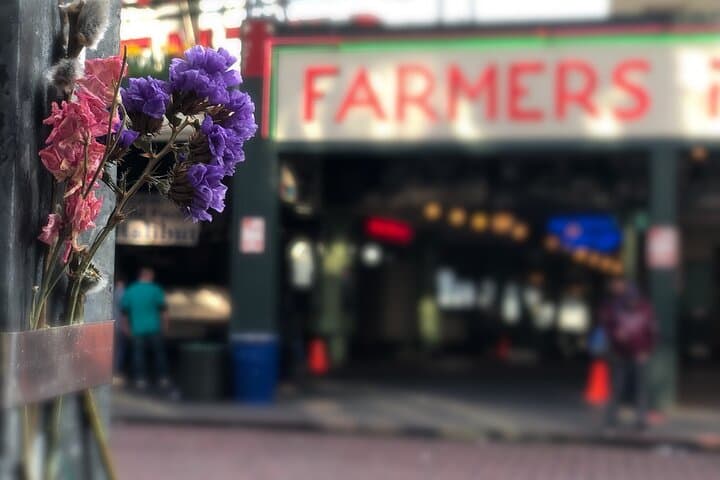
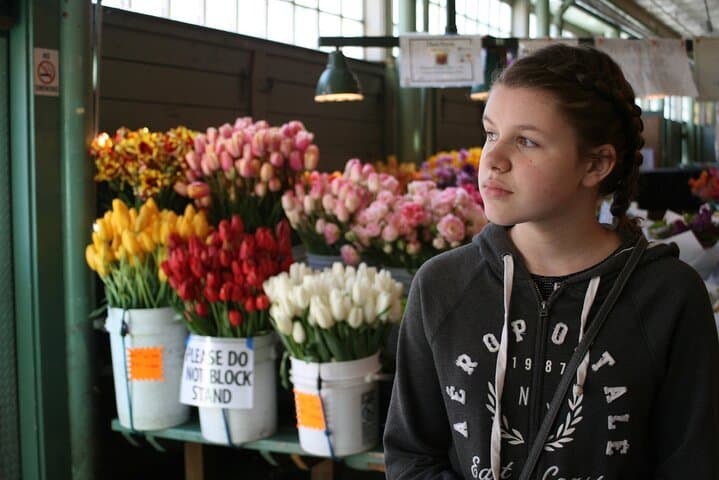
Continue to Pike Place Market, a place that has traded food and gossip since 1907. Vendors still call out the day’s catch and the flurry of fish throwing is both choreography and commerce. The market sits on ancestral Duwamish lands; local guides on this tour weave those histories—indigenous stewardship, immigrant entrepreneurship, and the city’s boom cycles—into the walking narrative.
Round the loop at the waterfront where the Seattle Great Wheel turns slowly against the Salish Sea. The wheel’s rotation offers a series of short panoramas—angles on ferries, piers, and the steam-gray geometry of the industrial shoreline.
Practical edge: this is a paved, urban route of roughly 1.5–2 miles with minimal elevation once you leave the Columbia Center elevator. Expect city sidewalks, occasional stairs, and stretches where crowds slow progress. The private format means you’ll have time to ask questions and pause for photos and food sampling.
Timing matters—late morning avoids the heaviest commuter crush and gives vendors time to set displays. If rain presses in, the library and observatory are dry refuges with long sightlines. Bring a lightweight rain shell, comfortable shoes with good traction, and a charged phone for quick photo edits and mobile ticketing. Public transit and ride-hail are straightforward; the tour meets at the Sky View entrance. For travelers who like structure without the crowd, two hours of guided focus will leave you with clear bearings, a few neighborhood invitations to return to, and a compact sense of why Seattle looks and moves the way it does.
easy.
2 hours.
Suitable for most fitness levels; basic mobility is needed for walking short city blocks and standing during viewpoints.
Meet at the entrance to the Sky View Observatory on the ground floor of Columbia Center (701 5th Ave); your guide waits by the observatory signage.
Yes—the tour inclusion covers Sky View Observatory admission as listed in the booking details.
Most of the route is on paved, accessible sidewalks and the observatory has elevator access; contact the operator beforehand to confirm full accessibility needs.
Yes—there are short food and coffee stops at Pike Place Market; the private format allows time for a quick purchase and tasting.
Note: Duplicate key avoided
Tours are private for your party; size limits are set by the operator—confirm maximum group numbers when booking for large parties.
Seattle grew around maritime trade and the Pike Place farmers market opened in 1907; the area sits on lands of the Duwamish people with layered waves of immigrant influence.
Downtown traffic and waterfront development are balanced by local initiatives to protect shoreline habitat; choose public transit and reusable containers to reduce impact.
Opatrip.com USA operates guided outdoor trips and adventures with an emphasis on safety, stewardship, and memorable experiences.
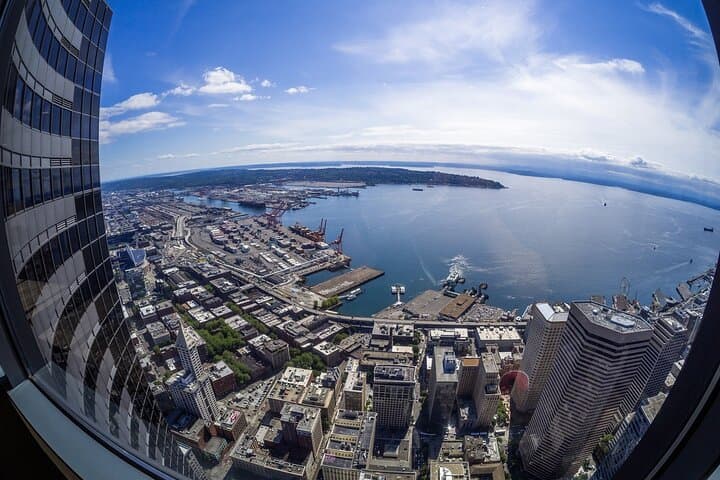

You step out of the Columbia Center elevator and the city opens below—streets like gridlines, ferries like punctuation in Puget Sound, and, on clear days, Mount Rainier pinning the horizon. The Sky View Observatory raises you to nearly 900 feet, where Seattle’s scale and impulse are immediate: glass towers, rooftop gardens, and a waterfront that has always answered ships and settlers. From this height the city isn’t distant; it challenges you to walk it.
You step out of the Columbia Center elevator and the city opens below—streets like gridlines, ferries like punctuation in Puget Sound, and, on clear days, Mount Rainier pinning the horizon. The Sky View Observatory raises you to nearly 900 feet, where Seattle’s scale and impulse are immediate: glass towers, rooftop gardens, and a waterfront that has always answered ships and settlers. From this height the city isn’t distant; it challenges you to walk it.
This two-hour private walking tour stitches together Seattle’s architectural highs and the market’s human pulse. Begin at Columbia Center’s observatory for a 360-degree orientation—an aerial primer on the city’s geology and growth. You’ll trace the scars of the last ice age: glacially carved inlets, drumlin ridges, and the low bowl where Elliott Bay collects rain and river water. From there, the route drops toward the Seattle Central Library, an object lesson in contemporary design by Rem Koolhaas—plateaued floors, open stacks, and daylight that reads like an exhibit about civic knowledge.
Continue to Pike Place Market, a place that has traded food and gossip since 1907. Vendors still call out the day’s catch and the flurry of fish throwing is both choreography and commerce. The market sits on ancestral Duwamish lands; local guides on this tour weave those histories—indigenous stewardship, immigrant entrepreneurship, and the city’s boom cycles—into the walking narrative.
Round the loop at the waterfront where the Seattle Great Wheel turns slowly against the Salish Sea. The wheel’s rotation offers a series of short panoramas—angles on ferries, piers, and the steam-gray geometry of the industrial shoreline.
Practical edge: this is a paved, urban route of roughly 1.5–2 miles with minimal elevation once you leave the Columbia Center elevator. Expect city sidewalks, occasional stairs, and stretches where crowds slow progress. The private format means you’ll have time to ask questions and pause for photos and food sampling.
Timing matters—late morning avoids the heaviest commuter crush and gives vendors time to set displays. If rain presses in, the library and observatory are dry refuges with long sightlines. Bring a lightweight rain shell, comfortable shoes with good traction, and a charged phone for quick photo edits and mobile ticketing. Public transit and ride-hail are straightforward; the tour meets at the Sky View entrance. For travelers who like structure without the crowd, two hours of guided focus will leave you with clear bearings, a few neighborhood invitations to return to, and a compact sense of why Seattle looks and moves the way it does.