THE ADVENTURE COLLECTIVE® · Independent discovery and booking for outdoor travel

Step onto the seafloor in Nusa Dua for a ten-minute helmet walk among shallow corals and tropical fish. This short, guided experience requires no SCUBA certification and suits travelers seeking a close reef view without getting their hair wet.
Step onto the seafloor in Nusa Dua for a ten-minute helmet walk among shallow corals and tropical fish. This short, guided experience requires no SCUBA certification and suits travelers seeking a close reef view without getting their hair wet.
The surface is a bright, flat mirror; below, a slow parade of yellow and silver fish threads through low coral ridges. Participants step down a short ladder into waist-deep water, swap a hooded sea-walking helmet over their heads and feel the world hush. For ten minutes the ocean becomes a room: currents nudge gently, fish circle like curious neighbors, and the full-face window frames reefs at arm’s length.
Verified experiences and guided adventures in the surrounding area.
Operated by Bali Day Tour · Nusa Dua, Bali
The surface is a bright, flat mirror; below, a slow parade of yellow and silver fish threads through low coral ridges. Participants step down a short ladder into waist-deep water, swap a hooded sea-walking helmet over their heads and feel the world hush. For ten minutes the ocean becomes a room: currents nudge gently, fish circle like curious neighbors, and the full-face window frames reefs at arm’s length.
The Nusa Dua shoreline was reshaped in the 1970s into a planned resort district; beneath the beaches, coral bommies and sandy flats record older shorelines and steady trade-wind circulation. The reef here is shallow volcanic substrate colonized by branching and brain corals, and the sea-walking format grew popular in Bali as a non-certified way for visitors to view reefs without SCUBA training.
Culturally, the trip moves between practical service and Balinese hospitality — briefings often include English-speaking instructors and a simple local meal afterward. Expect the rhythm of short briefings, helmet fittings and close supervision rather than long dives.
Practical guidance: bring reef-safe sunscreen, a towel and swimwear; hair remains dry under the helmet but ears are exposed. The activity is brief (10 minutes underwater) but includes safety instruction, changing rooms and often transport or lunch. Guests with heart, lung, respiratory conditions or pregnancy are advised not to participate. To protect the reef, avoid touching corals, wear soft-soled water shoes on the entry ladder, and photograph from a distance. Timing a morning slot reduces boat traffic and improves visibility; if swells rise, operators may cancel for safety.
easy.
1–2 hours (includes briefing, fittings and transfers; 10 minutes underwater).
Suitable for most travelers in basic physical health; requires ability to walk short steps and stand in shallow water.
Participants walk at depths up to about 15 feet (4.5 meters) while wearing a helmet that supplies air; the experience is kept in shallow, supervised zones.
No certification is required — sea walking uses a surface-supplied helmet and a short safety briefing in lieu of SCUBA training.
The helmet keeps hair mostly dry because it is supplied with air and rests on the shoulders, but some splashing during entry/exit is possible.
Guests with heart or lung problems, pregnancy, severe respiratory conditions or recent spinal injuries are typically restricted; operators will ask health questions during booking.
Nusa Dua was developed in the 1970s as a planned resort area; its beaches and shallow reefs now form a managed tourism zone with regular reef restoration efforts.
Coral communities here are vulnerable to sunscreen chemicals and physical contact; operators and visitors are encouraged to use reef-safe products and avoid touching or standing on coral.
Bali Day Tour operates guided outdoor trips and adventures with an emphasis on safety, stewardship, and memorable experiences.
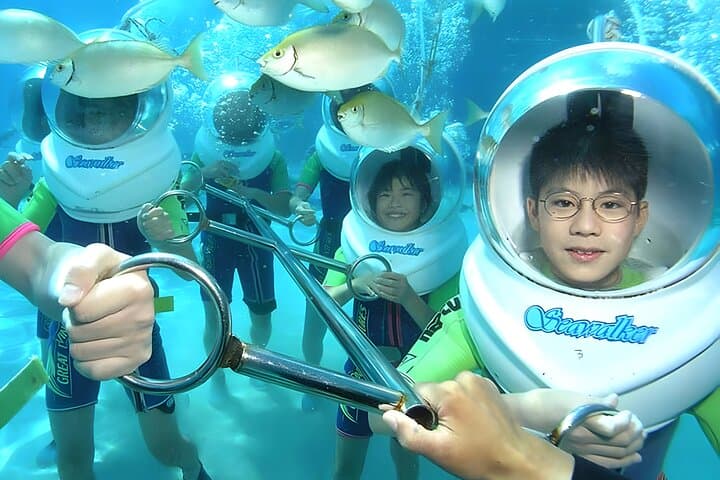
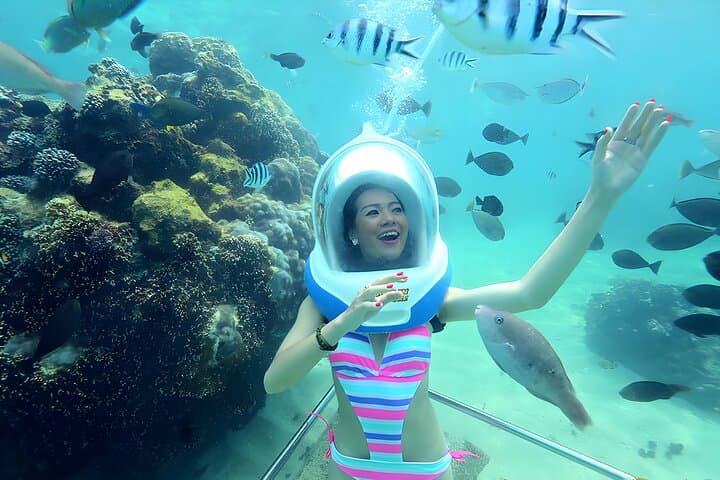
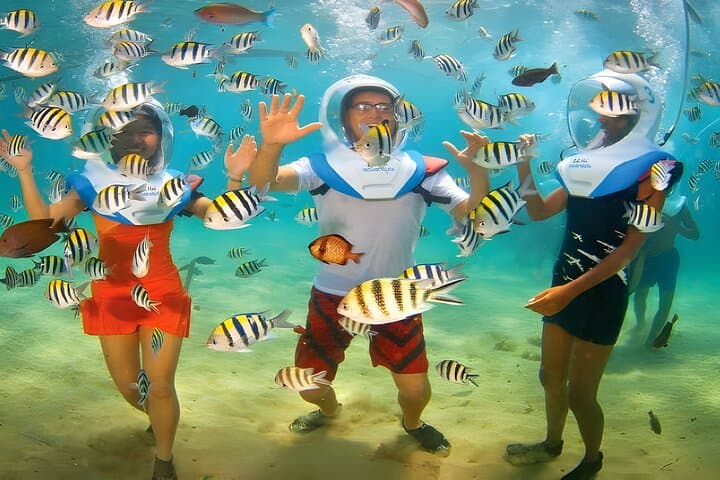
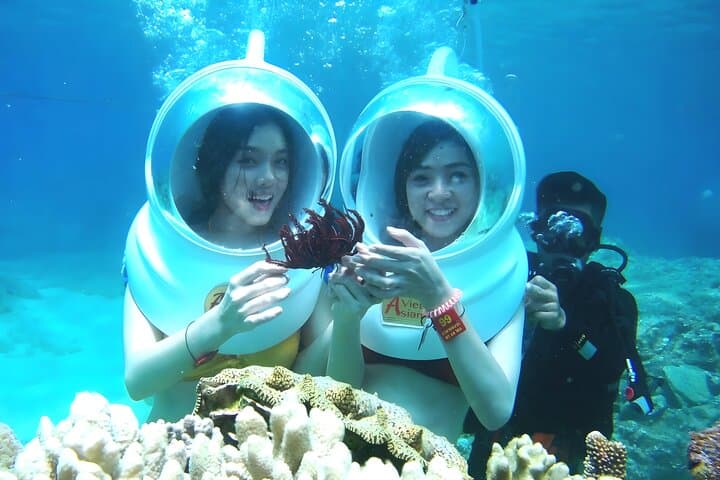
The surface is a bright, flat mirror; below, a slow parade of yellow and silver fish threads through low coral ridges. Participants step down a short ladder into waist-deep water, swap a hooded sea-walking helmet over their heads and feel the world hush. For ten minutes the ocean becomes a room: currents nudge gently, fish circle like curious neighbors, and the full-face window frames reefs at arm’s length.
The surface is a bright, flat mirror; below, a slow parade of yellow and silver fish threads through low coral ridges. Participants step down a short ladder into waist-deep water, swap a hooded sea-walking helmet over their heads and feel the world hush. For ten minutes the ocean becomes a room: currents nudge gently, fish circle like curious neighbors, and the full-face window frames reefs at arm’s length.
The Nusa Dua shoreline was reshaped in the 1970s into a planned resort district; beneath the beaches, coral bommies and sandy flats record older shorelines and steady trade-wind circulation. The reef here is shallow volcanic substrate colonized by branching and brain corals, and the sea-walking format grew popular in Bali as a non-certified way for visitors to view reefs without SCUBA training.
Culturally, the trip moves between practical service and Balinese hospitality — briefings often include English-speaking instructors and a simple local meal afterward. Expect the rhythm of short briefings, helmet fittings and close supervision rather than long dives.
Practical guidance: bring reef-safe sunscreen, a towel and swimwear; hair remains dry under the helmet but ears are exposed. The activity is brief (10 minutes underwater) but includes safety instruction, changing rooms and often transport or lunch. Guests with heart, lung, respiratory conditions or pregnancy are advised not to participate. To protect the reef, avoid touching corals, wear soft-soled water shoes on the entry ladder, and photograph from a distance. Timing a morning slot reduces boat traffic and improves visibility; if swells rise, operators may cancel for safety.